Prep time: 15 minutes
Cook time: 25 minutes
Total time: 40 minutes
Servings: 4
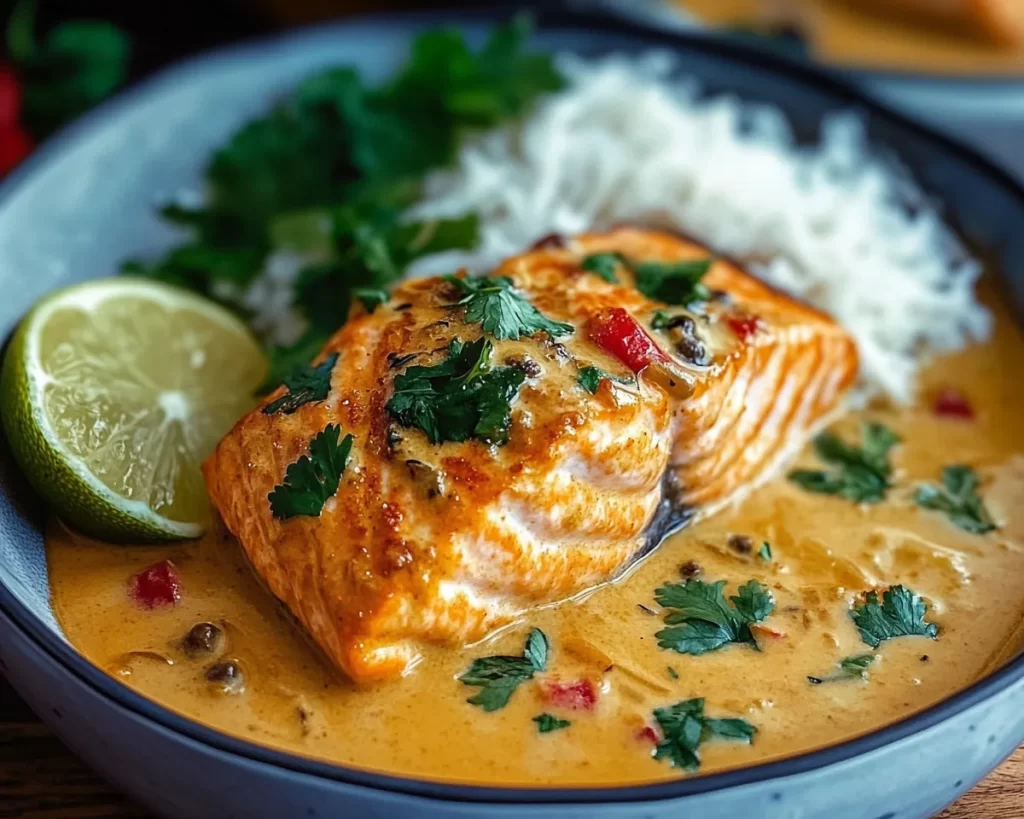
Savory Coconut Curry Salmon is the kind of meal that feels luxurious yet is straightforward enough for any weeknight dinner. Imagine the aromatic blend of spices wrapping around tender, flaky salmon, elevated further by the richness of coconut milk. This dish is special not just because of its vibrant flavors, but also due to its health benefits; salmon is packed with omega-3 fatty acids and high in protein.
In this article, you will learn how to create this delightful dish, including tips on perfecting the cooking process and variations to suit your personal taste. We’ll also explore the importance of each ingredient, common pitfalls to avoid, and answers to frequently asked questions that will help boost your culinary confidence.
What Is Savory Coconut Curry Salmon Recipe?
The Savory Coconut Curry Salmon is a fusion dish that beautifully merges flavors from various cuisines. With roots in Southeast Asian cooking, coconut curry isn’t merely a sauce; it’s a harmonious blend of spices, creaminess from coconut milk, and the natural flavors of fish. In this recipe, we use salmon for its rich taste and texture. The fish easily absorbs the curry’s aromatic flavors while retaining its moistness during cooking.
When you sear the salmon, its skin becomes irresistibly crispy, providing a delightful crunch that contrasts with the creamy coconut curry. The added vegetables—like bell peppers or spinach—bring a pop of color while enhancing the dish’s nutritional profile. As you cook, the fragrant aroma of spices like turmeric, ginger, and garlic will fill your kitchen, evoking warm memories or igniting excitement for a new culinary adventure.
Why You’ll Love This
One of the reasons you’ll fall in love with this recipe is its magnificent flavor profile. The combination of spices used in the curry creates a rich, mouthwatering experience that you won’t forget. Plus, the ease of preparation means you can whip this dish up even on the busiest of weeknights.
Another significant benefit is its health aspect. Salmon is a powerhouse of nutrients and has been linked to various health benefits, including improved heart health and cognitive function. With the additional veggies, you’re getting a well-rounded meal that doesn’t compromise on taste.
Many people may think that cooking with fish can be daunting, but this recipe debunks that myth. With straightforward instructions, even beginner cooks can achieve gourmet results. By using accessible ingredients, this dish is also budget-friendly, making it an ideal option for families looking to enjoy quality meals without breaking the bank.
Ingredients You’ll Need
- Salmon fillets: Choose skin-on salmon for added flavor. If you prefer a different fish, tilapia or trout can be great alternatives.
- Coconut milk: Full-fat coconut milk enhances creaminess. Light coconut milk works, but the dish may be less rich.
- Curry paste: Red or green curry paste will deliver different flavor profiles. Green tends to be more herbal, while red is more robust.
- Fresh ginger: Provides a zesty warmth. Ground ginger can be an alternative, but fresh is preferred for its strong flavor.
- Garlic: Essential for depth; freshly minced garlic will elevate the dish more than pre-minced varieties.
- Bell peppers: Add color and crunch. Feel free to mix colors for visual appeal or use different veggies like broccoli or snap peas.
- Spinach: A nutritious add-in that wilts beautifully into the curry.
- Lime: For acidity, balancing the richness from coconut milk; lemon can work too, but lime is optimal.
- Cooking oil: Use a neutral oil like canola or coconut oil for sautéing.
- Salt and pepper: Essential for seasoning. Adjust to your taste preference as you cook.
Each of these ingredients plays a crucial role in building the flavor and texture of the dish. For example, the salmon serves as the star ingredient, while coconut milk adds creaminess and richness. Be sure to use the freshest produce possible for the best results.
How to Make
- Prepare the ingredients: Gather all the ingredients listed above. Cut the salmon into evenly-sized fillets to ensure even cooking. Chop the bell peppers into bite-sized pieces and mince the garlic and ginger finely.
- Sauté the aromatics: In a large skillet, heat 1 tablespoon of cooking oil over medium heat. Add the minced garlic and ginger, cooking for about 1-2 minutes until fragrant. Be careful not to burn them, as this can create a bitter flavor.
- Add the curry paste: Stir in your choice of curry paste (red or green) and cook for 1-2 minutes. This step allows the spices to bloom, intensifying their flavors. You should notice a tantalizing aroma waft through your kitchen.
- Incorporate the coconut milk: Pour the coconut milk into the skillet, stirring it into the sautéed mix. Bring it to a gentle simmer, and let it cook for about 5 minutes. This waiting time allows your curry to thicken slightly while the flavors meld together.
- Add the vegetables: Toss in the bell peppers and spinach. Allow them to cook for 3-4 minutes, or until the spinach has wilted and the peppers have softened. This step not only adds flavor but also color and nutrients to your dish.
- Cook the salmon: Lower the heat and gently place the salmon fillets skin-side down into the curry sauce. Cover the skillet and let the salmon cook for 10-12 minutes, or until fish only flakes easily with a fork. This method ensures the salmon remains juicy and infused with the curry flavor.
- Finish with lime: Once the salmon is cooked, remove the skillet from heat. Squeeze fresh lime juice over the salmon and garnish with lime wedges. This brightens the dish and adds a refreshing element, enhancing all the rich flavors.
- Serve: Gently plate the salmon with the curry sauce and vegetables. Consider pairing it with jasmine rice or naan bread to soak up the delicious sauce. Enjoy your culinary creation!
Following these steps will help ensure your Savory Coconut Curry Salmon is both delicious and visually appealing. The texture of the flaky salmon combined with the creamy sauce creates an unforgettable experience that you’ll want to repeat.
Variations & Substitutions
Vegetarian Version: If you prefer a vegetarian option, you can easily swap out salmon for firm tofu or chickpeas. Tofu will absorb the flavors wonderfully; just press it to remove excess moisture, then cube it and fry until golden before adding it to the curry. This variation retains the dish’s creamy texture while catering to plant-based diets, and it’ll still receive rave reviews at the dinner table.
Spicy Kick: For those who enjoy heat, consider adding sliced red chilies or extra curry paste. You can choose to sauté them along with garlic and ginger to build an even more complex flavor base. Alternatively, a sprinkle of red pepper flakes before serving can achieve the same effect. This ensures that everyone at the table can adjust the spice level according to their taste.
Coconut Lime Shrimp: If you wish to change the protein entirely, shrimp can be a fantastic alternative to salmon. The cooking time will be shorter, usually around 5-7 minutes, as shrimp cooks quickly. Simply add them to the curry after the vegetables but before the cover step. This adaptation brings a completely different texture and flavor while still enjoying the beloved coconut curry.
Alternative Sauces: If you’re looking to switch up the flavor profile, consider using different sauces. A red sauce can add a deeper, bolder flavor, while a yellow curry paste can lend a milder tone. Each sauce variation changes the overall dish sentiment, allowing for endless customization possibilities.
Common Mistakes to Avoid
One common mistake is **overcooking the salmon**, which can result in a dry texture. Always keep an eye on your fish, and check for doneness by gently inserting a fork; it should flake easily if properly cooked.
Another pitfall is **not seasoning the dish adequately**. Each component, especially the coconut milk and vegetables, needs salt for flavor enhancement. Always taste your curry as you cook, and adjust the seasoning to balance the flavors harmoniously.
Failing to let the cooking processes occur at the right pace can lead to unevenly cooked ingredients. Remember to sauté aromatics gently before adding other components. This layering of flavors is essential for building a rich, robust taste in your final dish.
Storage, Freezing & Reheating Tips
To store any leftover Savory Coconut Curry Salmon, place it in an airtight container in the refrigerator for up to three days. Be sure to let it cool to room temperature first before sealing it up.
If you wish to freeze it, it is best to do so without the vegetables, which may become mushy after thawing. Store just the salmon with the curry sauce separately. When you’re ready to enjoy it again, defrost in the refrigerator overnight before reheating.
For reheating, I’d recommend using a stovetop skillet over medium-low heat to heat up leftovers gently. You may want to add a splash of water or more coconut milk to restore creaminess as the dish warms up, preventing dryness.
Frequently Asked Questions
Can I use a different type of fish for this recipe? Yes, you can use a variety of fish such as tilapia, trout, or even cod. However, keep in mind that each type has different cooking times, so monitor the fish closely to avoid overcooking.
Can I make this dish spicy? Absolutely! You can increase the amount of curry paste to your preferred spice level, or add fresh chilies. Tailor it to your tastes and those of your guests!
Is coconut milk healthy? Yes, coconut milk is recognized for its health benefits. It contains medium-chain triglycerides (MCTs), which can aid in weight loss and improve energy levels. However, because it is high in calories, enjoy it in moderation as part of a balanced diet.
Can I substitute fresh vegetables in this dish? Yes, feel free to substitute any fresh vegetables you prefer or what you have on hand. Creative options could include broccoli, zucchini, or even snap peas.
What should I serve with Savory Coconut Curry Salmon? This dish pairs wonderfully with jasmine rice, quinoa, or naan bread, which can soak up the delicious sauce. You could even serve it with a light salad on the side for extra crunch and nutrients.
Conclusion:
Savory Coconut Curry Salmon is not just a dish; it’s a comforting experience full of vibrant flavors and aromas. With easy preparation, this meal offers something for everyone while being customizable to fit your tastes or dietary needs. Don’t hesitate to try this recipe for your next dinner party or busy weekday meal. Share your culinary journey with friends and family, and encourage others to discover the joys of homemade cooking!