Prep time: 20 minutes
Cook time: 1 hour 30 minutes
Total time: 1 hour 50 minutes
Servings: 6
There’s something utterly comforting about a homemade roasted chicken dinner, especially when the occasion is as special as Easter. This Easter Roasted Chicken Dinner is not just a meal; it’s a celebration. The aroma of roasted herbs and garlic fills your kitchen, tempting even the pickiest eaters from afar. Picture your family gathered around the table, laughter and love blending seamlessly with the flavorful bites of tender chicken. This recipe embraces tradition while adding a dash of creativity, making it perfect for both seasoned cooks and those just beginning their culinary adventures.
What sets this recipe apart is its simplicity combined with robust flavors. You will feel accomplished preparing this dish and sharing it with loved ones. You will learn about the steps to create the most succulent roasted chicken, the role of each ingredient, and variations that cater to different tastes or dietary needs. Whether you’re stepping up your cooking game or cooking for the first time, this recipe is bound to be a hit!
What Is Easter Roasted Chicken Dinner?
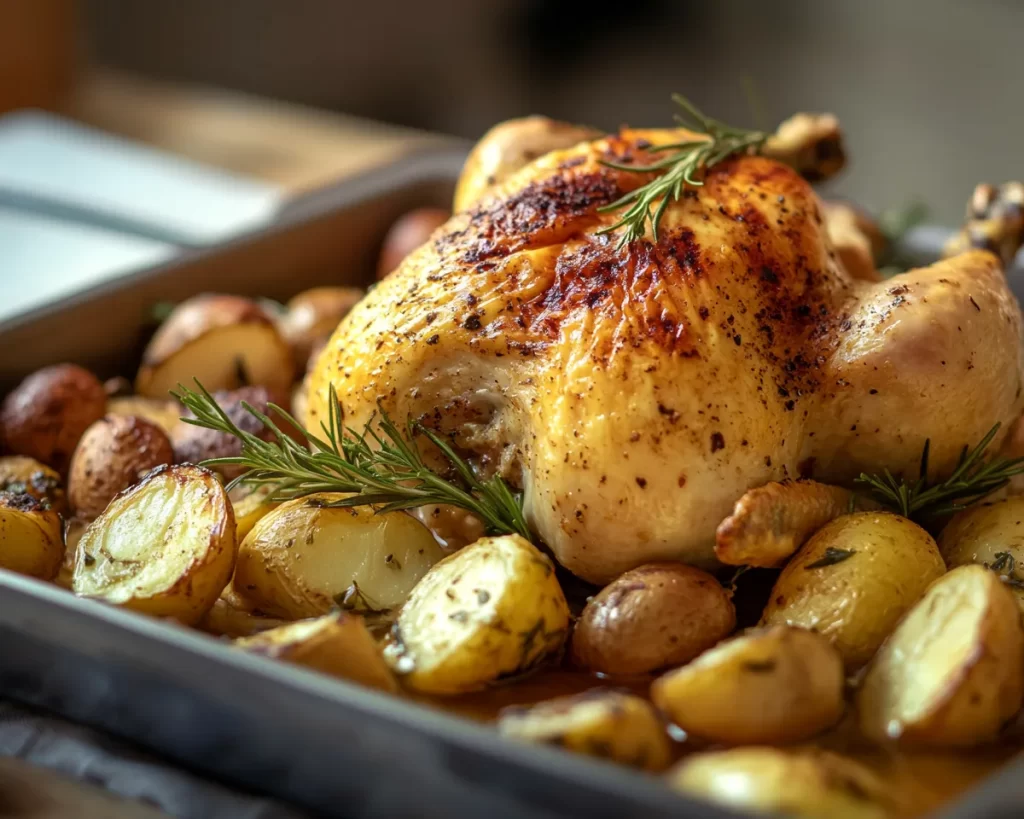
Easter Roasted Chicken Dinner has its roots steeped in the tradition of gathering for celebratory meals during the Easter holiday. The main attraction here is, of course, the roasted chicken, which serves as a canvas for a variety of flavors and textures. The chicken is marinated and baked until it’s tender, juicy, and imbued with the earthy notes of herbs like rosemary and thyme. The skin turns golden and crispy, providing a beautiful contrast to the moist meat underneath.
Aside from the chicken, this dinner typically features seasonal vegetables that are roasted alongside it. This not only makes for a colorful plate but also allows the flavors to meld together beautifully. The combination of savory chicken, fragrant herbs, and sweet caramelized vegetables creates a harmony of flavors that perfectly embodies a festive spirit. You can feel the heartwarming sights and smells of home as this dish comes together in your kitchen.
In essence, this dish is not just about the food; it embodies gathering, celebration, and the joy of cooking for your loved ones. It entices you to make memories around the dining table and allows you to showcase your culinary skills while enjoying an effortlessly sophisticated centerpiece for your Easter meal.
Why You’ll Love This
There are countless reasons why this Easter Roasted Chicken Dinner will capture your heart. Firstly, its taste is simply unparalleled. The chicken turns out succulent while the blend of herbs works its magic, creating a dish that is both remarkably flavorful and aromatic. Secondly, it is remarkably easy to prepare, making it suitable for all levels of cooking expertise. You hardly need kitchen wizardry to impress your guests with this simple yet delightful meal.
Cost-effectiveness is another important factor. Compared to other holiday meals that can break the bank, roasting a chicken is one of the more budget-friendly options. The ingredients are economical without sacrificing quality. Furthermore, this dish is versatile; it offers plenty of room for customization based on the dietary preferences of your guests. Whether your guests are gluten-free, vegetarian, or simply picky eaters, there are easy variations to suit everyone.
There are also common misconceptions about roasted chicken meals being tedious or overly complicated, but this recipe will show you otherwise. By following a few simple steps, you can achieve a beautiful and savory meal without the hassle. With proper techniques and a splash of love, you’ll see that cooking doesn’t have to be overwhelming. You can create memories one bite at a time.
Ingredients You’ll Need
- Whole Chicken: A 4-5 pound bird is ideal for a family meal. You can substitute with a free-range or organic chicken for better flavor.
- Olive Oil: This adds moisture and helps the skin crisp up beautifully. Feel free to use melted butter for richer taste.
- Fresh Rosemary: Known for its aromatic flavor, it adds a lovely fragrance. Dried rosemary works as a substitute, though fresh is recommended for best results.
- Fresh Thyme: Another wonderful herb that complements chicken exceptionally well. If unavailable, consider using dried thyme.
- Garlic: A key ingredient that infuses flavor deep into the meat. Whole cloves are preferred here, but minced garlic will suffice.
- Carrots: These add sweetness and color to the dish. Feel free to substitute with parsnips or potatoes.
- Onions: They help build the base flavor of the pan juices. You can use white, yellow, or even red onions depending on preference.
- Salt & Pepper: Essential for enhancing flavors; adjust according to your preference.
- Lemon: A squeeze of fresh lemon juice brightens the chicken’s flavor. Lemon zest can also add a punch.
Each ingredient plays a crucial role in creating the mouthwatering Easter Roasted Chicken Dinner you’ve been dreaming of. Understanding these ingredients will enhance your cooking skills and ultimately lead to a more flavorful dish.
How to Make
- Begin by preheating your oven to 425°F (220°C). This high temperature will help lock in moisture while allowing the skin to crisp up to perfection. As it heats, you can prepare the chicken.
- While the oven heats, rinse the whole chicken under cold water and pat it dry using paper towels. Drying the chicken thoroughly is crucial as it helps achieve crispy skin.
- In a small bowl, combine ¼ cup of olive oil, minced garlic, chopped rosemary, thyme, salt, and pepper. Mix until well incorporated. This herb-infused mixture will be your basting sauce that not only flavors the meat but also creates a beautiful crust.
- Rub the oil mixture all over the chicken, ensuring that you cover every nook and cranny. Lift the skin of the chicken gently and spread some of the mixture underneath for an extra punch of flavor.
- Slice the lemon in half and place one half inside the cavity of the chicken. This will instill a refreshing citrus note during the roasting process. Use the other half for squeezing over vegetables later.
- Next, chop the carrots and onions into large chunks. Place them in a roasting pan and drizzle them with a little olive oil, salt, and pepper. This will serve as a flavorful bed for the chicken to rest on while it cooks.
- Now, place the chicken on top of the vegetables in the roasting pan. This clever technique helps elevate the chicken, allowing the air to circulate around it, ensuring even cooking.
- Transfer the roasting pan to the preheated oven and roast the chicken for about 1 hour and 20 minutes, or until the internal temperature reaches 165°F (74°C) when checked at the thickest part of the thigh. Make sure to baste the chicken with the drippings every 30 minutes for extra juiciness.
- Once cooked, remove the chicken from the oven and allow it to rest for about 15 minutes before carving. This resting time will allow the juices to redistribute, resulting in a moist chicken.
- Serve the succulent chicken with the caramelized vegetables for a complete meal. Enjoy the delightful taste, aroma, and textures that fill your home.
Cooking successfully is all about attention to detail, and following these comprehensive steps will yield a gorgeous Easter Roasted Chicken Dinner that your family will rave about for years.
Variations & Substitutions
Herb Butter Roasted Chicken: For a richer flavor, consider making a herb butter by mixing softened butter with chopped fresh herbs (like rosemary and thyme) and garlic. Spread this mixture under the skin of the chicken before roasting. This variation will make the meat exceptionally flavorful and add a luxurious touch to your dinner. It’s perfect for those who enjoy indulgent, aromatic dishes.
Vegetable Medley: You can customize the roasted vegetables according to your preference or the seasons. Consider using zucchini, bell peppers, or sweet potatoes. These vegetables will not only add sweet notes but also contribute to a colorful and vibrant presentation. This variation is excellent for picky eaters or those looking to sneak in more vegetables.
Spicy Roasted Chicken: If your family enjoys a kick, consider adding spices like paprika, cayenne pepper, or chili powder to the oil mixture used for rubbing the chicken. This variation provides excellent depth and complexity to the flavor. It’s especially suited for adventurers in the kitchen or anyone who loves a bold taste experience.
Citrus Herb Chicken: Adding a variety of citrus fruit, such as oranges or limes, to the cavity along with lemon will enhance the citrus notes even more. Slice them and lay them underneath the chicken for a zesty, fragrant touch. It’s a fantastic option for those who enjoy fresh and vibrant flavors on their plates.
Slow Cooker Roasted Chicken: If you prefer a “set it and forget it” method, consider using a slow cooker. Season the chicken as mentioned, then place it in the slow cooker with the vegetables and cook on low for 6-8 hours. This method makes the chicken incredibly tender, and the flavors meld beautifully. It’s an ideal choice for busy families who need a hands-off approach to dinner.
These variations ensure that every Easter Roasted Chicken Dinner can be unique, allowing you to adapt based on mood, dietary restrictions, or even culinary curiosity.
Common Mistakes to Avoid
One common mistake when roasting chicken is not adequately drying the skin. This vital step will prevent that beautifully crispy texture you aim for. Always pat the chicken dry before seasoning. Another key aspect is undercooking the chicken; ensure to check that the internal temperature reaches at least 165°F (74°C). Using a meat thermometer can often save you from serving undercooked poultry.
Overcrowding the roasting pan can also lead to uneven cooking. It may cause the chicken to steam rather than roast, affecting the crispiness of the skin. Make sure to spread out the vegetables and give the chicken enough space. Not resting the chicken before carving is another error; this easy step ensures more flavorful and juicy meat as it allows the juices to settle back into the fibers.
Lastly, don’t skip the basting step. Regularly basting the chicken with the drippings adds flavor and moisture; however, be cautious about opening the oven too frequently, as this can lead to inconsistent cooking temperatures.
Storage, Freezing & Reheating Tips
To properly store leftover Easter Roasted Chicken, allow it to cool to room temperature, then place it in an airtight container. It can be stored in the refrigerator for up to 3-4 days. Always ensure it’s adequately sealed to prevent drying out and absorbing other odors.
For those looking to enjoy it later, freezing is an excellent option. Shred or carve the chicken first, then place it in freezer-safe bags, making sure to remove as much air as possible. It can be stored in the freezer for up to 2-3 months. When you’re ready to enjoy it, thaw it overnight in the refrigerator.
To reheat, use an oven to retain moisture and crispiness. Preheat your oven to 350°F (175°C), place the chicken in an oven-safe dish, and cover it with aluminum foil to avoid drying out. Heat for about 25-30 minutes or until warmed through. This method helps ensure that the chicken remains tender while getting the skin crispy again.
Always remember to maintain food safety practices, such as keeping your chicken at safe temperatures and using clean utensils to avoid cross-contamination.
Frequently Asked Questions
What is the best way to ensure my chicken stays juicy?
To ensure your chicken remains juicy, consider using techniques such as brining it beforehand or rubbing herb-infused butter under the skin. Additionally, allowing the bird to rest after roasting is crucial, as it redistributes the juices.
Can I use a frozen chicken for this recipe?
While it’s possible to use frozen chicken, it’s best to thaw it completely before cooking for even cooking. Roasting a frozen chicken will greatly increase cooking time and may lead to uneven results, so always plan ahead.
How do I know when the chicken is fully cooked?
The most reliable method to check if your chicken is fully cooked is by using a meat thermometer. Insert it into the thickest part of the thigh; it should read at least 165°F (74°C). The juices should run clear when the chicken is pierced.
What side dishes pair well with this roasted chicken?
Delicious side dishes to accompany your Easter Roasted Chicken Dinner include creamy mashed potatoes, seasoned steamed vegetables, or a fresh, vibrant salad. You can also pair it with traditional Easter dishes such as glazed carrots or a rich, buttery bread.
How can I make this a quicker meal prep?
To save time, consider prepping your ingredients the night before. Season the chicken and chop the vegetables, and then store them in the refrigerator overnight. When you’re ready, simply pop everything in the oven for a stress-free cooking experience.
Conclusion:
In conclusion, Easter Roasted Chicken Dinner is not just a meal; it’s a delightful experience filled with warmth and family bonding. Its succulent, juicy flavor complemented by aromatic herbs makes it a standout choice for any celebration, especially Easter. Consider trying this recipe as it provides endless opportunities for customization based on your taste preferences and dietary needs. Gather your loved ones around the table and savor this dish that’s sure to create lasting memories. Don’t hesitate to dive into this culinary adventure and elevate your family dinners with this extraordinary recipe!