Prep time: 30 minutes
Cook time: 30 minutes
Total time: 1 hour
Servings: 12
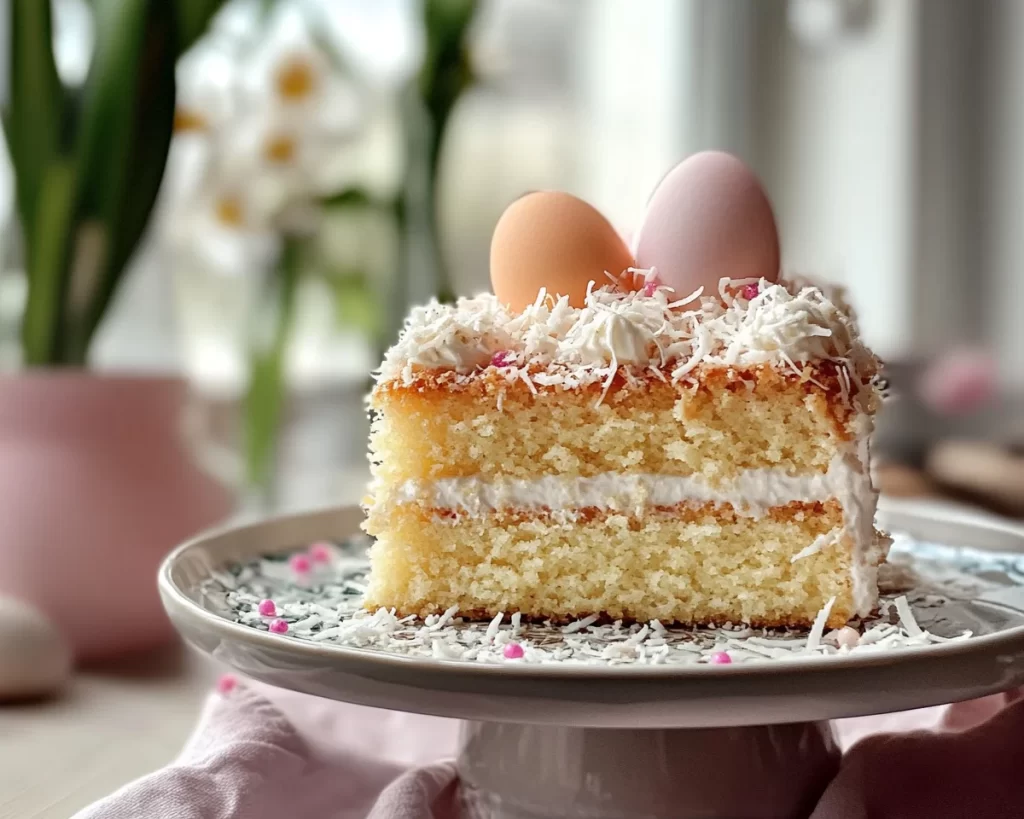
Ah, Easter Coconut Cake! This delightful dessert has a way of making every celebration feel a little more special. Picture this: a fluffy, moist cake bursting with sweet, tropical coconut flavor, beautifully topped with whipped frosting and shredded coconut. It evokes memories of family gatherings, where laughter and joy fill the air, and the fragrant aroma of baking permeates the kitchen. If you’ve ever been intimidated by the idea of making a cake from scratch, fear not! This recipe is simple, packed with tips, and will wow your guests.
Throughout this article, you will discover the secret to achieving the perfect Easter Coconut Cake, from selecting fresh ingredients to mastering the cake-baking process. You’ll not only learn about how to bring this scrumptious dessert to life but also realize how easy it is to adapt it to suit personal tastes or dietary preferences.
What Is Easter Coconut Cake?
Easter Coconut Cake is a classic dessert particularly associated with celebrations during the Easter holiday. Traditionally, this cake consists of layers of soft, tender sponge cake infused with shredded coconut, topped with a light and creamy frosting. The texture is a delightful combination of fluffy and moist, with the coconut creating a unique chewiness that harmonizes perfectly with the cake’s airy lightness.
The origins of coconut cakes stretch back to the Southern United States, where coconut has always been a beloved ingredient in baking. The flavor is light and sweet, making it a perfect match for the vibrant, celebratory spirit of Easter. Imagine taking that first bite—the cake yields easily to your fork, and the taste of coconut dances lightly across your palate. The slight crunch of the coconut flakes on top adds another layer of delight, making it a sensory experience you’ll crave again and again.
Typically served during festive occasions, this cake showcases not only the beauty of springtime ingredients but also serves as a symbol of renewal and joy. It’s enriched with the warmth of family bonding and is often made as a centerpiece for your holiday dessert table. You’ll find that once you learn to make this cake, it becomes a beloved tradition you’ll look forward to each Easter.
Why You’ll Love This
The Easter Coconut Cake is loved for several reasons. Firstly, it’s incredibly delicious; the combination of coconut and vanilla envelops your senses with every bite. That springy texture pairs so beautifully with a light frosting, making this cake an instant favorite for both kids and adults alike. The recipe is also budget-friendly, providing satisfying results without breaking the bank—perfect for busy parents or those working within a budget.
One might think that baking a cake from scratch could be complicated, but this recipe is designed with ease in mind. With clear step-by-step instructions and tips throughout, even beginners in the kitchen will find themselves succeeding. It’s an opportunity to show off your baking skills without needing to be a pro.
Moreover, the versatility of this cake cannot be overstated. Want to make it gluten-free? You can substitute traditional flour with a gluten-free blend. Have family members who are dairy-free? Simple substitutions exist that will keep your cake delicious and safe for everyone. Plus, its delightful presentation makes for a lovely centerpiece, ensuring that it will be the star of your Easter celebrations.
Ingredients You’ll Need
- All-Purpose Flour: Provides structure and is the primary ingredient for the cake. Look for high-quality flour for the best texture.
- Granulated Sugar: Sweetens the cake and contributes to its moistness. You can substitute with coconut sugar for a healthier option.
- Baking Powder: This leavening agent is crucial for achieving that light, fluffy texture. Always check its expiration date for effectiveness.
- Salt: Enhances flavors and balances sweetness. Just a pinch will do!
- Unsalted Butter: Adds richness and moisture. Make sure it’s softened for easier mixing.
- Eggs: These bind the ingredients together and add moisture. Use room-temperature eggs for best results.
- Vanilla Extract: Adds a warming flavor that complements the coconut beautifully. Pure vanilla extract is recommended for optimal flavor.
- Coconut Milk: Keeps the cake moist and adds an extra coconut flavor. Make sure to use full-fat coconut milk for richness.
- Shredded Coconut: A key ingredient for both the cake batter and the topping. Opt for sweetened or unsweetened based on your preference.
- Whipped Cream: For frosting; light and fluffy, it enhances the coconut flavor without overpowering it.
How to Make
- Preheat your oven: Start by preheating your oven to 350°F (175°C). Prepare two 9-inch round cake pans by greasing them with butter and lining the bottoms with parchment paper. This will prevent the cake from sticking and make it easier to pop them out after baking.
- Mix dry ingredients: In a medium bowl, sift together 2 cups of all-purpose flour, 1 and ½ teaspoons of baking powder, and a pinch of salt. This aerates the flour and ensures an even distribution of the leavening agent.
- Beat sugar and butter: In a large mixing bowl, combine 1 cup of granulated sugar and ½ cup of softened unsalted butter. Beat them together until light and fluffy, approximately 3-5 minutes. A hand mixer or stand mixer works great for this task.
- Add eggs and vanilla: Beat in 2 large eggs, one at a time, ensuring each egg is well incorporated before adding the next. Add 1 teaspoon of vanilla extract and mix well. The batter will appear light and creamy at this stage.
- Combine wet and dry ingredients: Gradually add the dry ingredients to the butter mixture, alternating with 1 cup of coconut milk. Start and end with the dry ingredients to maintain the batter’s structure. Mix just until combined—be careful not to overmix as it can lead to a dense cake.
- Add shredded coconut: Fold in 1 cup of shredded coconut into the cake batter. This step adds texture and moistness, making your cake a delightful tropical treat.
- Pour the batter: Divide the batter evenly between the prepared cake pans. Smooth the tops with a spatula to ensure even baking. Tap the pans gently on the counter to eliminate any air bubbles.
- Bake: Place the pans in the oven and bake for 25-30 minutes or until a toothpick inserted in the center comes out clean. Keep an eye on them; oven temperatures can vary, so start checking for doneness at around 25 minutes.
- Cool the cakes: Once baked, remove the cake layers from the oven and allow them to cool in the pans for about 10 minutes. Run a knife around the edges to help release them before flipping them out onto a wire rack to cool completely.
- Prepare the frosting: While the cakes are cooling, you can prepare the frosting. In a mixing bowl, whip 1 cup of heavy cream until stiff peaks form. Gently fold in 1 cup of shredded coconut for extra flavor.
- Assemble the cake: Once completely cool, place one cake layer on a serving plate. Spread a generous amount of whipped frosting on top, then place the second cake layer on top. Frost the top and sides of the cake beautifully with more whipped cream frosting.
- Garnish: Finish by gently pressing additional shredded coconut onto the sides and top of the cake. This not only adds visual appeal but also enhances the coconut flavor.
- Serve and enjoy: Cut into slices and serve. Your Easter Coconut Cake is now ready to be enjoyed by family and friends, who will surely love each delectable bite!
Variations & Substitutions
Gluten-Free Coconut Cake: For those needing to avoid gluten, substituting the all-purpose flour with a gluten-free flour blend works wonders. Make sure the blend contains a stabilizing agent, like xanthan gum, to replicate the structure of traditional cake. This variation allows those with dietary restrictions to indulge in the deliciousness of coconut cake without feeling left out!
Coconut Lime Cake: If you want a citrus twist, add the zest of a lime to the batter. You can also incorporate some lime juice into the frosting for a refreshing tartness that beautifully complements the sweet coconut. This version is perfect for those who love a contrast of flavors!
Dairy-Free Coconut Cake: To make this cake dairy-free, simply replace the butter with a dairy-free alternative, such as coconut oil or vegan butter. For the frosting, use coconut whipped cream or a vegan cream cheese frosting. This ensures everyone at your gathering can enjoy a slice without worrying about dairy ingredients.
Layered Coconut Cake: Want to impress your guests with more layers? You can make this cake in a tiered format by baking each layer into 8-inch pans and stacking them with frosting in between each layer. The extra layers not only look stunning but also offer a beautiful slice of joy.
Chocolate Coconut Cake: For chocolate lovers, consider folding in cocoa powder into the batter. This creates a rich chocolate base that pairs delightfully with the coconut. Top it off with chocolate ganache instead of whipped cream for an extra indulgent experience.
Common Mistakes to Avoid
Baking is a science, and mistakes can sometimes creep into the process. One common mistake is overmixing the batter. This can lead to a dense cake instead of the light, fluffy texture that we desire. Be gentle when combining the wet and dry ingredients; a few lumps are perfectly fine!
Another potential pitfall is not properly measuring your ingredients. Too much flour can alter the texture dramatically, so use the spoon-and-level method rather than scooping the flour directly out of the bag. Always sift your flour, baking powder, and other dry ingredients; this helps aerate them and ensures a smoother batter.
Lastly, cooling the cakes too quickly can cause them to dry out. After taking them out of the oven, let them sit in the pan for the recommended time. This brief resting period allows moisture to redistribute throughout the cake, making it tender and moist.
Storage, Freezing & Reheating Tips
To ensure that your Easter Coconut Cake remains fresh and delicious, proper storage is key. If you have leftovers, cover the cake tightly with plastic wrap or store it in an airtight container to prevent it from drying out. The cake can be kept at room temperature for a few days, but if you want to extend its freshness, refrigerate it.
If you wish to freeze any leftover cake, slice it into individual portions and wrap each piece tightly in plastic wrap. Place the wrapped slices in a freezer-safe container or a zip-top bag to protect against freezer burn. When you want to enjoy a slice, allow it to thaw in the refrigerator overnight for optimal texture.
Reheating is generally not necessary, as the cake is best enjoyed at room temperature. However, if you prefer to enjoy it warm, you can microwave individual slices for about 10-15 seconds, just to take off the chill without drying them out.
Frequently Asked Questions
Can I make this cake a day in advance?
Absolutely! In fact, letting the cake sit overnight allows the flavors to meld beautifully. Just make sure to store it in an airtight container to keep it fresh. It will be just as delicious the next day!
Can I substitute fresh coconut for shredded coconut in the recipe?
You can use fresh coconut, but it is important to properly prepare it. Fresh coconut will add a different texture and moisture level, which might change the final outcome slightly. If you like the chewier texture, feel free to give it a try!
How do I know when the cake is fully baked?
The best way to check for doneness is by inserting a toothpick into the center of the cake. If it comes out clean or with just a few crumbs, your cake is ready. If it comes out wet with batter, it needs more time in the oven.
Is this cake suitable for freezing?
Yes, this cake freezes well! Just make sure to slice it beforehand, wrap it well in plastic, and store it in a freezer-safe container or bag. It will typically keep well for up to three months in the freezer.
Can I make this recipe without eggs?
Yes, you can substitute eggs in this recipe. A common substitute is 1/4 cup of unsweetened applesauce per egg. This will help bind the ingredients together while still keeping the cake moist.
Conclusion:
The Easter Coconut Cake is not just a dessert; it’s a heartfelt creation that brings loved ones together. With a light and fluffy texture, combined with the sweet burst of coconut, it’s sure to become a favorite for years to come. I encourage you to try this recipe, make it your own, and don’t hesitate to share your personalized version with friends and family. Happy baking, and enjoy the smiles that this delightful cake will surely bring!
[Read also: Easy Dessert Recipes for Beginners]