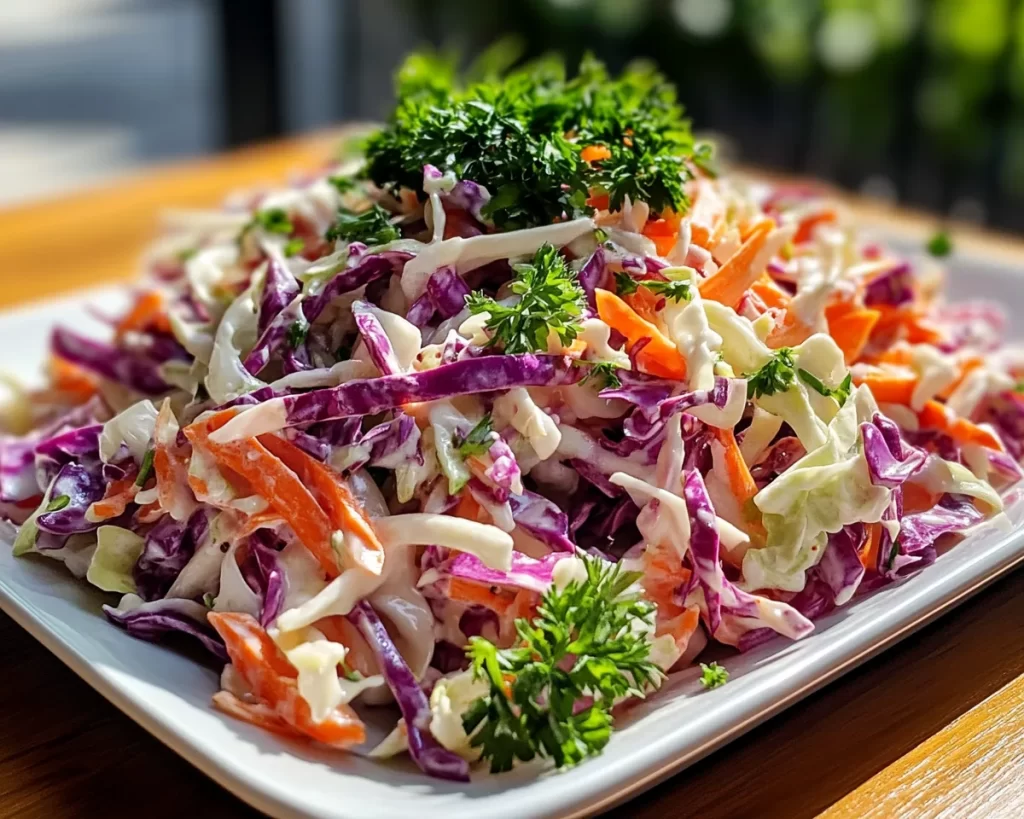
Prep time: 15 minutes
Cook time: 0 minutes
Total time: 15 minutes
Servings: 4
There’s something irresistible about a refreshing coleslaw, especially when it’s paired with a tangy, vibrant lemon vinaigrette. Picture a hot summer day, the grill sizzling nearby, and you’re craving a side dish that’s not just crisp but also bursting with flavor. This Summer Side Dishes: Easy Coleslaw with Lemon Vinaigrette is more than just a salad; it’s a perfect balance of sweetness, acidity, and crunch that elevates any meal. What makes this recipe special is its simplicity and ability to complement a variety of main dishes—from grilled meats to fish tacos. Throughout this article, you will learn how to craft this delicious coleslaw, explore variations to suit your taste, and discover simple tips to ensure a delightful experience in your kitchen.
What Is Summer Side Dishes: Easy Coleslaw with Lemon Vinaigrette?
Coleslaw originated in the 18th century, primarily as a way to combine cabbage with oil and vinegar. This simple dish has evolved over time, gaining numerous interpretations and variations across cultures. At its core, coleslaw features shredded vegetables, predominantly cabbage, mixed with a dressing. This Summer Side Dish takes a traditional approach and enhances it with the *freshness* of a lemon vinaigrette, making it more invigorating and light than heavier creamy dressings.
The texture of this coleslaw is a key aspect—crisp and crunchy vegetables blend seamlessly with a zesty dressing. You’ll experience the burst of flavors from the *tartness* of lemon paired with a hint of sweetness from ingredients like honey or a touch of maple syrup. The balance is refreshing, making this dish not just a summer staple but an all-around favorite for any occasion.
One of the best things about coleslaw is its versatility. While traditional recipes might stick to cabbage and carrots, there are endless possibilities for customization to suit your dietary needs or flavor preferences. This Easy Coleslaw with Lemon Vinaigrette can quickly transform based on the vegetables in your fridge or whatever spices catch your eye on that particular day.
Why You’ll Love This
This coleslaw is not merely a side dish; it’s a harmony of flavors and textures that you and your family will appreciate. First and foremost, the taste is refreshing and perfectly balanced, making it an ideal accompaniment to grilled meats, sandwiches, or even as a topping for tacos. The ease of preparation adds another layer to its allure—no cooking is required! Just a few fresh ingredients tossed together, making it perfect for busy parents or beginners in the kitchen.
In addition to its deliciousness, this recipe is economical. The ingredients are widely available and affordable, ensuring you can enjoy this culinary treat without stretching your budget. The coleslaw also boasts health benefits due to the abundance of *fiber* and *vitamins* found in its fresh ingredients, making it a wise choice for health-conscious individuals.
There’s a misconception that coleslaw is only relevant for summer barbecues, but in reality, it is a versatile salad that can be enjoyed year-round. It holds up well in the fridge, allowing for meal prep enthusiasts to whip up a batch in advance. A well-made coleslaw is a great companion for a hearty stew or a light lunch. Let this recipe guide you to discover why this dish deserves a regular spot on your dining table.
Ingredients You’ll Need
- 1 small head of green cabbage, shredded (approx. 4 cups) – This is the main ingredient, providing crunch and a neutral base.
- 2 medium carrots, grated – Adds color and natural sweetness to the salad.
- 1/2 red onion, finely sliced – Provides a sharpness that cuts through the richness of other dishes.
- 1/4 cup fresh lemon juice – The star of the vinaigrette, bringing brightness and acidity.
- 1/4 cup extra-virgin olive oil – Provides a smooth texture and richness to balance the dressing.
- 1 tablespoon honey or maple syrup – Adds a touch of sweetness; can be adjusted to taste.
- Salt and pepper to taste – Essential for enhancing all the flavors in the dish.
- Optional: chopped fresh herbs like parsley or cilantro for garnish
Each ingredient plays a distinct role in shaping the final dish, from texture to taste. The use of fresh, high-quality ingredients is highly recommended to achieve the best results. You can substitute the cabbage with purple cabbage for additional color, or use a mix of vegetables, such as broccoli or bok choy, if you wish to change things up. For those with specific dietary restrictions, consider using agave syrup instead of honey, or make your coleslaw entirely vegan.
How to Make
Follow these steps to create your coleslaw with absolute ease and satisfaction:
- Begin by preparing your vegetables. Using a sharp knife or a mandoline, shred the cabbage into thin strips. Aim for even cuts to ensure a uniform texture. Place the shredded cabbage into a large mixing bowl. Add a pinch of salt to the cabbage and let it sit for about 10 minutes. This process helps to soften the cabbage, enhancing its texture.
- Next, take the two medium carrots and peel them. Grate them coarsely and add them to the bowl with cabbage. The carrots will not only add a sweet taste but also bring a nice pop of color to the dish.
- For your next step, thinly slice the red onion. Be careful with your knife skills here, especially if you’re not accustomed to cutting onions. The thin slices will impart just the right amount of flavor without overpowering the salad. Add the sliced onion to the bowl.
- Now, it’s time to whip up the lemon vinaigrette. In a separate mixing bowl, combine the fresh lemon juice, extra-virgin olive oil, honey (or maple syrup), and a generous pinch of salt and pepper. Whisk until the dressing is well blended and emulsified. This step allows the ingredients to meld together, creating a smooth and tangy dressing.
- Pour the lemon vinaigrette over the cabbage, carrots, and onion in your mixing bowl. Toss everything together gently but thoroughly to ensure every piece of vegetable is coated with the dressing. This is where you can assess if you need to adjust the sweetness or acidity—taste and feel free to add more seasoning if needed.
- Finally, let the coleslaw sit for about 15 minutes before serving. This resting period allows the flavors to develop and the vegetables to absorb the dressing, enhancing the overall taste. You can refrigerate it for longer to chill and intensify the flavors even more. Serve it chilled or at room temperature, and enjoy the freshness!
Variations & Substitutions
Creamy Coleslaw Variation: If you prefer a creamier texture, simply add 1/2 cup of mayonnaise to the dressing. This variation provides a rich mouthfeel and makes the coleslaw more indulgent. The key here is to combine the mayonnaise with lemon juice and honey until fully mixed before tossing it with the vegetables.
Asian-Inspired Coleslaw Variation: For a delightful twist, replace the lemon juice with rice vinegar and add a splash of soy sauce. Also, consider incorporating sliced bell peppers, shredded radishes, or even edamame to enhance the dish’s flavor and texture. A sprinkle of sesame seeds or chopped peanuts can add crunch and nuttiness.
Spicy Coleslaw Variation: If you enjoy heat, mix in some finely chopped jalapeños or a splash of hot sauce into the dressing. The additional spice will invigorate the salad and create a unique flavor profile, perfect for pairing with Southwestern or barbecue dishes.
Fruit-Infused Coleslaw Variation: Add diced apples, pears, or pineapple for a summery fruit twist. Just make sure the fruits are cut into small, bite-sized pieces and combined in right before serving to avoid soggy textures. This will not only enhance the taste but also provide additional nutrients.
Grains and Protein Toss-In Variation: To make the coleslaw more filling, toss in cooked quinoa, chickpeas, or shredded chicken. This transforms your side dish into a hearty salad, making it suitable as a light main course, especially for meal prep lunches.
Common Mistakes to Avoid
When making coleslaw, one common mistake is using *old or wilted vegetables*. Freshness is critical for this dish to deliver the right flavor and texture. Make sure to choose vibrant cabbage, firm carrots, and crisp onions for the best results.
Another issue is over-dressing. Too much vinaigrette can drown the veggies and make them soggy instead of crisp. Start with a little dressing and add more as needed until you achieve the desired taste without overpowering the vegetables.
Lastly, forgetting to rest the coleslaw before serving can be detrimental. Allowing the salad to sit for at least 15 minutes helps flavors meld together and enhances the eating experience. Serving immediately without rest can result in a bland taste.
Storage, Freezing & Reheating Tips
When it comes to storing the coleslaw, make sure it is in an airtight container in the refrigerator. Properly stored, it can last for up to three days. However, the crunchiness of the vegetables will start to diminish as time goes on, so it is ideal to consume it within the first day or two.
If you anticipate having leftovers, consider keeping the dressing separate until ready to serve. This will help maintain the fresh texture of the vegetables. You can also opt to store the dressed salad in the fridge for an hour to allow the flavors to develop before serving, but for extended storage, keep everything uncombined.
Freezing coleslaw is not recommended, as it can lead to a mushy texture once thawed. Fresh vegetables don’t fare well in the freezer. As for reheating, coleslaw is generally served chilled or at room temperature, so it’s best enjoyed fresh right after preparation.
Frequently Asked Questions
Can I make coleslaw ahead of time?
Absolutely! You can prepare the coleslaw a day before serving. Just keep in mind to store the dressing separately until you are ready to serve. This ensures that the vegetables stay crisp and fresh.
What if I don’t like cabbage?
If cabbage isn’t your favorite, feel free to substitute it with other crunchy vegetables like *broccoli slaw*, shredded carrots, or even coleslaw blends that might feature kale or Brussels sprouts. Adaptability is one of coleslaw’s strong suits, allowing you to find what you enjoy!
Can I make this coleslaw vegan?
Yes! This recipe is very easy to adapt to a vegan diet. Simply substitute honey with maple syrup or agave nectar, and use plant-based mayonnaise if you prefer a *creamy coleslaw*.
What type of vinegar can I use besides lemon juice?
While lemon juice gives a bright flavor, you can use apple cider vinegar, white wine vinegar, or rice vinegar for a somewhat different taste profile. Each type of vinegar will influence the final flavor in a unique way.
Can I add protein sources to the coleslaw?
Yes, incorporating protein into the coleslaw is a great idea! Adding shredded chicken, canned chickpeas, or cooked quinoa can turn this side dish into a more filling main course, making it a versatile salad for any occasion.
Conclusion:
To wrap it all up, this Summer Side Dishes: Easy Coleslaw with Lemon Vinaigrette is a delightful powerhouse of flavors, versatility, and ease. It invites you to mix and match ingredients to suit your lifestyle, making every meal a chance for creativity. By trying this recipe, you are set to elevate your dining experience while ensuring your family enjoys fresh, healthy ingredients. Don’t hesitate to get into the kitchen and whip up this easy, delicious coleslaw—you won’t regret it! Share your experience, customize it to your taste, and relish every bite!