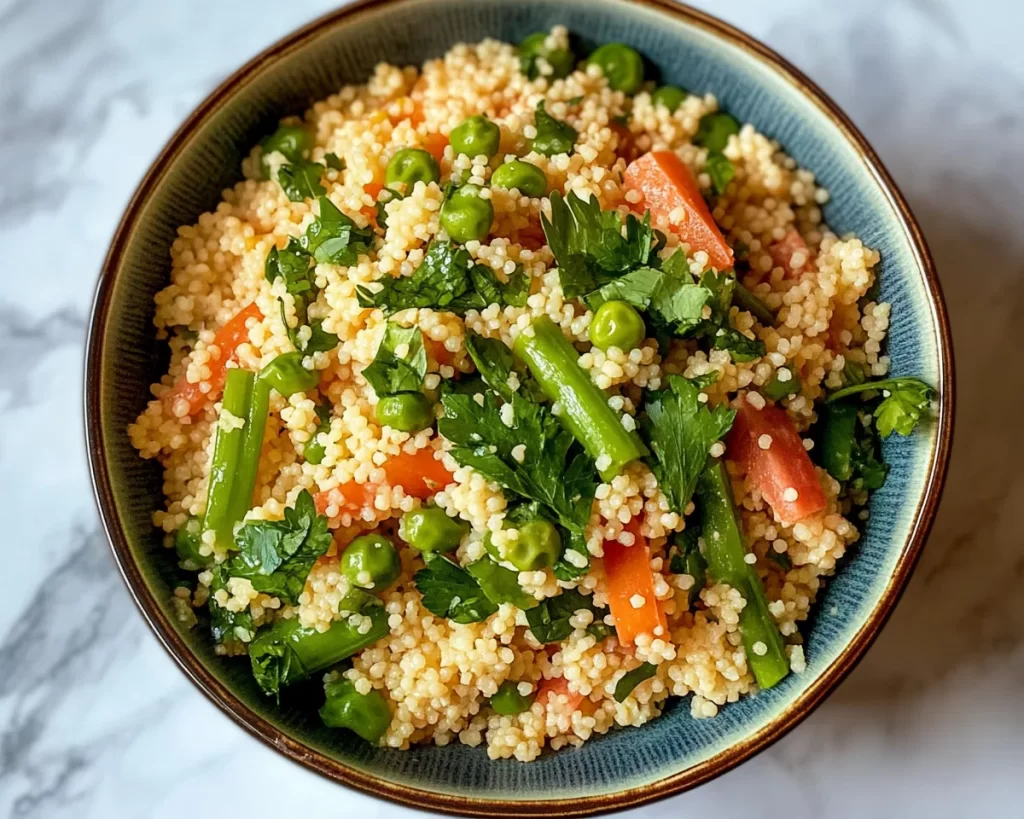
Prep time: 10 minutes
Cook time: 5 minutes
Total time: 15 minutes
Servings: 4
Spring is an exciting time in the culinary world. As the weather warms up, the vibrant vegetables begin to take center stage, offering a multitude of flavors and colors. When you’re pressed for time but still want a delicious and healthy meal, this Spring Veggie Couscous recipe is your go-to solution. Ready in just **15 minutes**, it showcases seasonal veggies and is perfect for busy parents or anyone wanting to whip up a quick meal without sacrificing taste or nutrition. This dish not only delights your taste buds but also makes dinnertime stress-free.
What Is Spring Dinner Recipes: Spring Veggie Couscous in 15 Minutes?
Spring Veggie Couscous is a perfect representation of fresh, vibrant ingredients coming together to create a quick and healthy meal. Couscous, a small pasta made traditionally from semolina wheat, acts as a wonderful base that absorbs flavors beautifully. In this dish, you will find a variety of spring vegetables, such as zucchini, bell peppers, and asparagus. Combining these ingredients results in a dish that’s not only packed with nutrients but is also visually appealing. The light, fluffy texture of couscous pairs delightfully with the crisp-tender veggies, offering a satisfying experience in every bite.
Why You’ll Love This
1. **Quick Preparation**: This Spring Veggie Couscous can be made in **just 15 minutes**, making it an ideal choice for a weeknight dinner.
2. **Versatile Ingredients**: You can easily switch out vegetables based on what’s in season or your personal preferences. This flexibility ensures you can create a dish that suits your tastebuds.
3. **Healthy and Nutritious**: The inclusion of fresh vegetables allows for a nutrient-rich meal that is low in calories yet high in flavor.
4. **Family-Friendly**: The colorful presentation and pleasant taste appeal to all ages, making it a perfect choice for busy families.
5. **Meal Prep Heaven**: Leftovers can be stored easily, allowing you to enjoy this dish for lunch the following day.
Ingredients You’ll Need
- Couscous: 1 cup – A quick-cooking grain that provides a fluffy base for the dish.
- Vegetable broth: 1 cup – Adds depth of flavor and enriches the overall taste of the couscous.
- Zucchini: 1 medium, diced – Offers a mild flavor and soft texture that cooks quickly.
- Bell pepper: 1 medium, chopped – Provides a sweet crunch and vibrant color.
- Asparagus: 1 cup, cut into 1-inch pieces – Adds an earthy taste and slightly crisp texture.
- Olive oil: 2 tablespoons – A healthy fat that enhances flavor and texture.
- Lemon juice: 1 tablespoon – Brightens the dish and balances the flavors.
- Salt: To taste – Enhances the overall flavor of the ingredients.
- Pepper: To taste – A simple seasoning that adds warmth.
- Fresh herbs: Chopped parsley or basil for garnish – Infuses freshness and color.
INSERT IMAGE HERE according to image insertion rule
How to Make
- In a medium saucepan, combine the couscous and vegetable broth, bringing it to a boil over medium heat. Once it boils, remove it from the heat, cover, and let it sit for about 5 minutes. This allows the couscous to absorb the flavors while it becomes tender.
- While the couscous is resting, heat the olive oil in a large skillet over medium heat. Add the diced zucchini, chopped bell pepper, and asparagus pieces. Sauté the vegetables for about 3-4 minutes, or until they are tender but still crisp. The colors will brighten, enhancing the visual appeal of the dish.
- Once the vegetables are cooked, fluff the couscous with a fork to separate the grains and add it to the skillet. Stir gently to incorporate the couscous with the sautéed vegetables. This allows the grains to soak up the vegetable juices, enhancing the overall flavor.
- Drizzle the lemon juice over the mixture and season with salt and pepper according to your taste. Toss everything together, ensuring every bite is bursting with flavor. You’ll notice how the lemon juice brightens the dish, adding a refreshing zing.
- After tossing, remove the skillet from the heat and let it sit for a minute to allow the flavors to meld together. Garnish with fresh herbs, providing an aromatic finish that complements the dish perfectly. The herbs not only add flavor but also a pop of color.
Variations & Substitutions
Alternative Grains: Instead of couscous, consider using quinoa or farro for a heartier option. These grains offer different textures and flavors, which can elevate the dish. Quinoa is protein-packed, making it an excellent choice for vegetarians.
Add Protein: For those looking to enhance the dish’s protein content, consider adding grilled chicken, shrimp, or chickpeas. This can turn it into a more substantial meal, satisfying appetite while still keeping it light.
Cheese Additions: Incorporating feta or goat cheese adds a creamy texture and tangy flavor that contrasts beautifully with the crunchy vegetables. Just crumble some on top before serving.
Spice It Up: If you enjoy heat, add some crushed red pepper flakes or diced jalapeños for an extra kick. This can transform the dish into a whole new experience, catering to those who love spicy food.
Seasonal Vegetables: Feel free to experiment with other seasonal vegetables. Think about adding peas, cherry tomatoes, or carrots to suit your preference or what you have on hand. Mixing seasonal produce can enhance the flavor while keeping the dish fresh and exciting.
Common Mistakes to Avoid
One common mistake is overcooking the vegetables. It’s important to sauté them until they are just tender to maintain their vibrant color and crisp texture. Overcooking can lead to mushy veggies and a less appealing dish.
Another mistake is not measuring the broth properly. Couscous requires the right amount of liquid for perfect fluffiness. Ensure you have the correct ratio to avoid a dry or overly mushy outcome.
Also, don’t forget to fluff the couscous before mixing with the vegetables. This step is essential; it separates the grains, ensuring every mouthful is flavorful and textured.
Lastly, be cautious with the seasoning. Start with a smaller amount of salt and pepper, and always taste as you go. This allows you to find the perfect balance without overpowering the dish.
Storage, Freezing & Reheating Tips
To store your Spring Veggie Couscous, let it cool down completely at room temperature before transferring it to an airtight container. This will prevent condensation and keep it fresh. You can refrigerate it for up to **3-5 days**.
If you want to keep it longer, consider freezing it. Place portions in freezer-safe bags or containers, ensuring you remove as much air as possible. It can last up to **2-3 months** in the freezer.
For reheating, the best method is to use the microwave. Simply place the desired portion in a bowl and add a splash of water to prevent drying out. Cover it and heat in 30-second increments until warmed through. Another option is to reheat it in a skillet over low heat, adding a bit of olive oil to keep it moist.
Frequently Asked Questions
Can I use a different type of broth besides vegetable broth?
Absolutely! You can use chicken broth for a richer flavor or even water if you’re in a pinch, though using broth enhances the overall taste significantly. The broth you choose can add a unique character to the dish, depending on your preference.
Is couscous gluten-free?
Traditional couscous is made from wheat; therefore, it is not gluten-free. However, you can find gluten-free couscous alternatives made from corn or rice. Always check the label to ensure it’s safe for gluten-sensitive individuals.
How can I enhance this dish’s nutritional value?
Adding more fresh vegetables is a great way to enhance the nutritional profile. Consider incorporating spinach, kale, or sweet potatoes for added vitamins and minerals. You could also sprinkle in some nuts or seeds for healthy fats and extra crunch.
What can I serve with Spring Veggie Couscous?
This dish pairs well with grilled meats, fish, or even a side salad. You could also serve it alongside a yogurt dip or hummus, creating a lovely Mediterranean-inspired meal that complements the flavors beautifully.
Can I prepare this ahead of time?
Yes, you can prepare the couscous and sauté the veggies ahead of time. Store them separately in the fridge. When you’re ready to eat, simply reheat and combine, ensuring a fresh meal even when prepared in advance.
Conclusion:
Spring Veggie Couscous is not only a quick and vibrant dish perfect for busy nights, but it also brings the delightful flavors of spring to your table. With a myriad of variations and the ease of preparation, it’s a great addition to your recipe repertoire that caters to the entire family. Enjoy the embrace of this light, nutritious meal that can be tailored to your tastes, making dinnertime a pleasant experience!