**Meta Title**: Irresistible Pavlova Dessert Recipe – Light & Refreshing
**Meta Description**: Discover the delightful pavlova dessert recipe! This light meringue treat topped with whipped cream and fresh fruits is a perfect showstopper for any occasion.
—
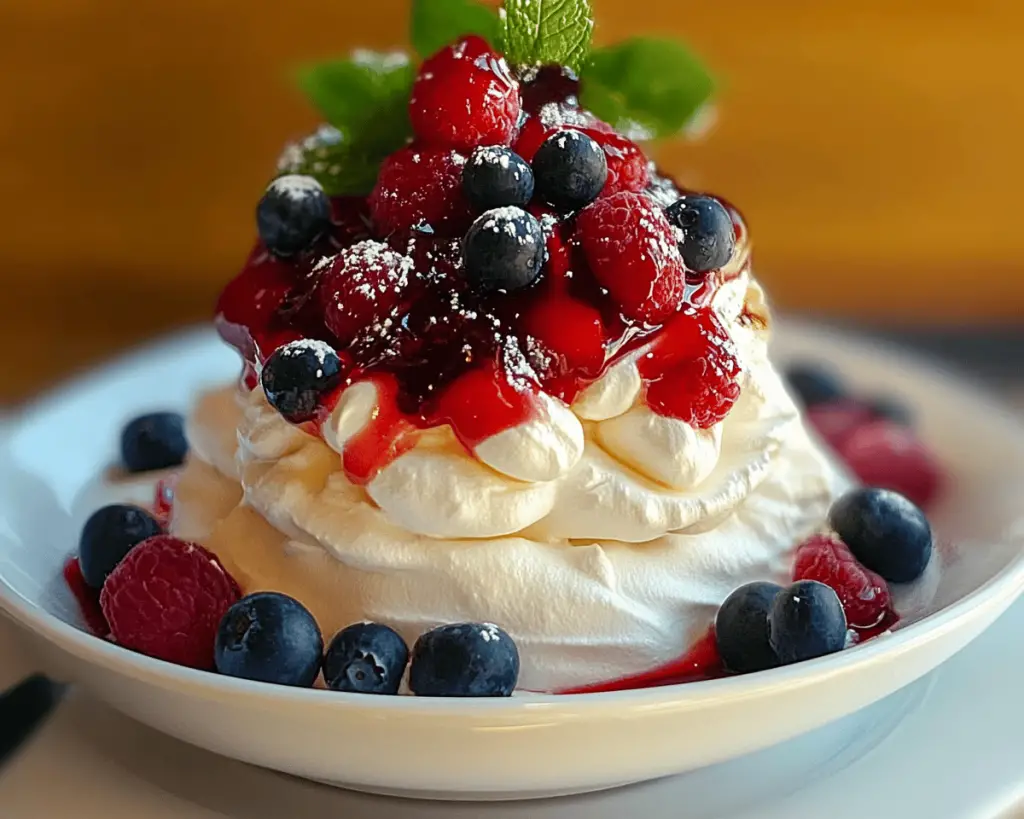
You know that feeling when a dessert looks so stunning that it takes your breath away? I remember the first time I laid eyes on a pavlova. The delicate, crisp meringue shell was crowned with a cloud of whipped cream and an array of vibrant fruits that seemed to call my name. It was like a beautiful piece of art, one that you can eat—a harmonious balance of textures and flavors that ignites the senses.
Today, I’m excited to share with you my beloved pavlova dessert recipe. It’s a light and airy treat that is not only impressive to behold but also incredibly satisfying to eat. Whether you are hosting a fancy dinner party, celebrating a birthday, or simply wish to indulge in a guilt-free dessert, pavlova is the answer. Let’s dive in and uncover the magic of this delectable creation!
What is Pavlova?
Pavlova is a show-stopping dessert named after the Russian ballerina Anna Pavlova, who toured Australia and New Zealand in the 1920s. This dessert has since captured hearts and taste buds with its unique combination of textures. The base consists of a **meringue** that is crisp on the outside yet soft and marshmallow-like on the inside. It’s typically topped with a generous layer of **whipped cream** and fresh, seasonal **fruits**—like strawberries, kiwis, and passion fruit—that provide a delightful contrast to the sweetness of the meringue.
The lightness of pavlova makes it a go-to choice for warm-weather gatherings. The meringue’s slight chewiness pairs beautifully with the creamy topping and juicy fruits, creating a symphony of flavors and textures. The rich sweetness of the dessert feels balanced and refreshing rather than overwhelming, making every bite a heavenly experience.
Why You’ll Love This Pavlova Dessert
What sets this pavlova dessert apart? For starters, it’s a simple recipe that comes together without a fuss, making it approachable even for beginner bakers. Its impressive presentation will surely captivate your guests, becoming a centerpiece at any gathering. It’s also incredibly versatile—feel free to customize the toppings with your favorite fruits, experiment with sauces, or add a splash of citrus for brightness.
This pavlova can be made in advance, which is a lifesaver for busy hosts. Imagine pulling out a beautifully crafted meringue from your kitchen that’s ready to be topped with whipped cream and fresh fruit right before serving. It’s an impressive dessert that won’t break the bank either, as most ingredients are pantry staples. Plus, with its gluten-free nature, it caters to various dietary needs!
Ingredients You’ll Need
Here’s a straightforward list of ingredients to create your mouth-watering pavlova dessert:
1. **Egg whites (4 large)** – Essential for making meringue; they contribute to that airy texture. Use fresh eggs for the best results. Older eggs can often be harder to whip satisfactorily.
2. **Granulated sugar (1 cup)** – This sweetens the meringue and creates its desired crisp texture. Fine sugar works best.
3. **Cornstarch (1 teaspoon)** – Helps stabilize the meringue, ensuring it holds its shape throughout baking. Alternatively, you can use arrowroot if preferred.
4. **White vinegar (1 teaspoon)** – A crucial component that adds acidity, helping to create a firmer meringue.
5. **Heavy whipping cream (1 cup)** – For that luscious topping, yielding a rich and creamy texture.
6. **Fresh fruits** – Strawberries, kiwis, passion fruit, and blueberries add color, freshness, and a touch of tang. Use seasonal fruits for the best flavor.
7. **Powdered sugar (2 tablespoons)** (optional) – For sweetening the whipped cream, although this can be adjusted based on your preference.
How to Make Pavlova Dessert
Creating a pavlova is a fun and satisfying experience, guiding you through crafting this delightful dessert step by step.
1. **Prepare your oven**: Preheat your oven to 225°F (110°C). Line a baking sheet with parchment paper, and using a pencil, draw a large circle (about 8 inches in diameter) on the paper as a guide for shaping the meringue.
2. **Beat the egg whites**: In a clean, dry mixing bowl, add the **egg whites**. Using an electric mixer, begin beating on medium speed until soft peaks form—this should take about 3-5 minutes. You’re looking for peaks that gently curve.
3. **Add sugar gradually**: Once soft peaks form, gradually add the **granulated sugar**, one tablespoon at a time, while continuing to beat on high speed. This process can take an additional 5-7 minutes. The mixture should become glossy and hold stiff peaks. If you turn the bowl upside down, the meringue should stay in the bowl—a promise of success!
4. **Include the stabilizers**: Gently fold in the **cornstarch**, **vinegar**, and a pinch of salt. Make sure you do this carefully; you want to keep that beautiful airiness intact.
5. **Shape the meringue**: Spoon the meringue onto the prepared parchment paper within the circle drawn. Use a spatula or the back of a spoon to shape it into a gorgeous nest with slightly raised edges to cradle the whipped cream and fruits later.
6. **Bake**: Place the meringue in the preheated oven and bake for 1.5 hours. Bake until it is crisp on the outside and dry to the touch. If it turns slightly golden, that’s a sign it’s starting to cook a bit too quickly—reduce the heat if needed. Once done, turn off the oven, crack the door open slightly, and let the meringue cool inside. This prevents any sudden temperature change that may crack it.
7. **Whip the cream**: While the meringue cools, in a separate bowl, pour in the **heavy cream** and whip it until soft peaks form. If you prefer a sweeter topping, add the **powdered sugar** during this process.
8. **Assemble the pavlova**: Once the meringue is completely cool, gently remove it from the parchment paper and place it on a serving platter. Spread the whipped cream generously on top and adorn it with your selection of **fresh fruits**, arranging them as artistically as your heart desires. Drizzle some passion fruit juice over the top for an exotic touch!
9. **Serve immediately**: Enjoy your pavlova right after assembling it for the best texture. The addition of fruits and cream on the soft meringue remains a beautiful treat; however, serve it promptly as the meringue can become soggy over time.
Tips, Tricks & Variations
– **Prepping in Advance**: You can prepare the meringue up to one day in advance. Store it in an airtight container at room temperature. If made properly, it will maintain its delightful crispiness!
– **Flavor Enhancements**: Consider adding a splash of vanilla extract or lemon zest to the **whipped cream** for an additional layer of flavor.
– **Fruit Variations**: Feel free to switch up the fruits based on availability. Seasonal berries, peaches, or even caramelized bananas can add delightful flavor combinations.
– **Vegan Alternative**: For a plant-based version, try using aquafaba (the liquid from canned chickpeas) in place of egg whites. Follow the same process, adding sugar gradually until stiff peaks form.
– **Reheating Tips**: If you have leftover pavlova, reheat it in a low oven (around 200°F or 95°C) for about 10 minutes to regain some of its crisp texture before serving. Add fresh toppings afterward.
What to Serve With Pavlova Dessert
Pavlova pairs beautifully with a variety of accompaniments that elevate the experience. Consider serving it alongside a **bold dessert wine** or a **sparkling white wine** for a celebratory feel. For a contrasting flavor, a light citrus sorbet would create a delicious palate cleanser, refreshing your taste buds between bites.
If you’re feeling adventurous, drizzle a fruity sauce made from blended berries or a caramel sauce around the plate for added flair. A dusting of **cocoa powder or edible flowers** can also enhance the aesthetic appeal of your pavlova, making it an even more tempting treat.
Nutrition & Health Benefits
While pavlova is undeniably a dessert worth indulging in, it’s also fairly light in calories, depending on how much cream and fruit you use. A single serving usually contains about 120-150 calories, primarily from sugar and cream.
Fruits, especially berries and kiwis, provide essential vitamins and antioxidants, offering a nutritious punch alongside the sweetness of the meringue. For more information on the nutritional benefits of fruit, check out credible sources like Healthline .
Frequently Asked Questions
1. **Can I use powdered sugar instead of granulated sugar?**
Yes, you can use powdered sugar, but its composition may alter the texture slightly. If using it, add it slowly, and ensure it’s well-mixed for the best results.
2. **How do I store leftovers?**
Store any leftover assembled pavlova in the fridge to keep the cream fresh. However, meringue will lose its crispness over time, so it’s best consumed within 6 hours of assembly.
3. **What if my meringue cracks?**
Don’t worry! Cracks are normal, especially with homemade pavlovas. You can cover them with whipped cream or fruit to disguise imperfections.
4. **Can I freeze pavlova?**
It’s not recommended to freeze assembled pavlova due to the cream. However, you can freeze the meringue itself. Place it in an airtight container for up to a month. When ready to use, let it thaw at room temperature and top with cream and fruits.
5. **What fruits do you recommend for toppings?**
Seasonal fruits work beautifully; traditional choices include strawberries, kiwi, and passion fruit. You can also use citrus segments or any berries like raspberries and blueberries for a colorful touch.
—
I invite you to take your time and savor the process of creating this beautiful pavlova dessert. As you whip and fold, take a moment to appreciate not only the delightful aroma wafting through your kitchen but also the joy you’re about to bring to the table. Imagine the smiles as friends and family dig into this light, fluffy treat! If you loved making it, please leave a comment or tag me on Instagram—let’s celebrate together!