Prep time: 30 minutes
Cook time: 15 minutes
Total time: 2 hours
Servings: 24 macarons
When it comes to special occasions, few things evoke romance quite like homemade macarons. These delicate, colorful cookies are often mistaken for being overly complicated, but I’m here to assure you that they can be easier than you think! This Valentine’s Day, why not whisk up a batch of gorgeous macarons to surprise your loved ones? The crisp exterior, luxurious filling, and perfect chew are bound to impress. If you’re new to macarons, don’t fret! I’ll guide you through the entire process, so you can create these stunning treats with confidence.
In this article, you’ll not only learn how to make classic macarons but also how to customize them for Valentine’s Day. We’ll cover flavors, fillings, and even decorating techniques to make them look exceptional. Whether you’re a beginner in the kitchen or a seasoned baker, these macarons will be the star of your Valentine’s Day celebrations!
What Are Valentine’s Day Macarons?
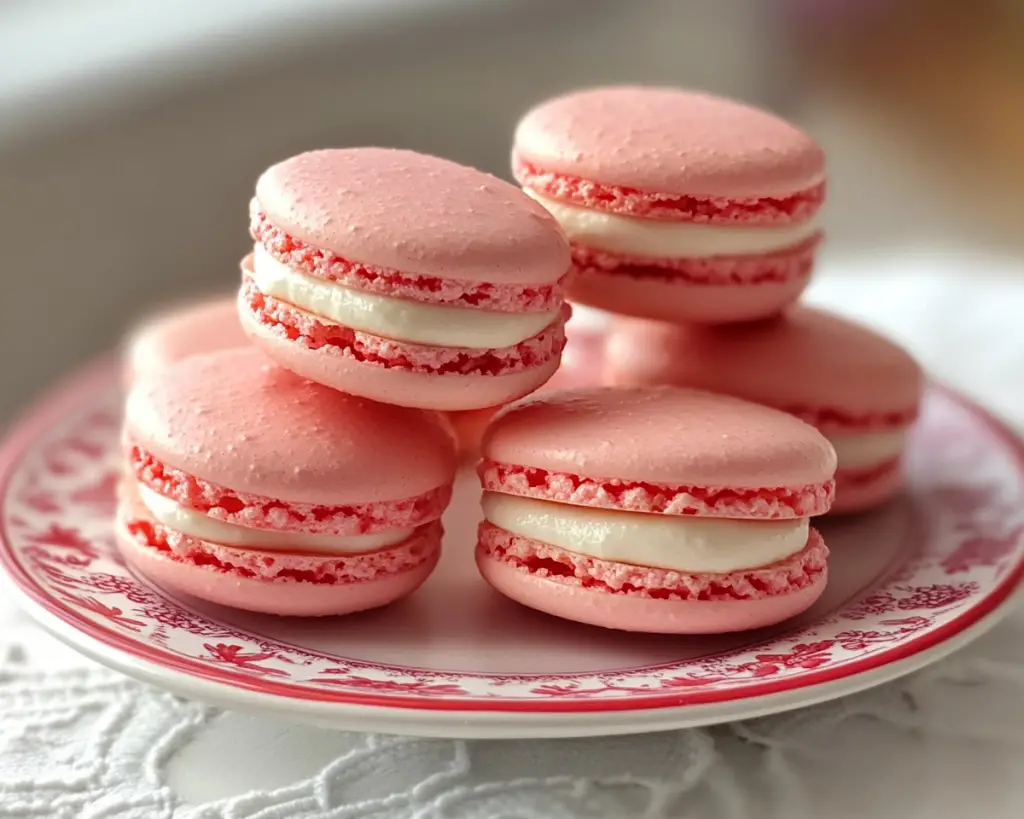
Valentine’s Day macarons are a delightful and elegant dessert that originated from France. They’re made up of two almond meringue cookies sandwiched together with a luscious filling—often ganache, buttercream, or jam. The texture of macarons is unique: crisp on the outside, chewy on the inside, and bursting with flavor. Traditionally, macarons come in a wide variety of colors and flavors, making them perfect for any occasion, especially a romantic one like Valentine’s Day.
The key ingredient in macarons is ground almonds, which give them their signature nutty flavor and slightly chewy texture. The use of egg whites and superfine sugar in the meringue creates their airy structure. For our Valentine’s edition, we’ll infuse these cookies with bright colors and sweet flavors to evoke the essence of love and affection. Whether you choose to make them in heart shapes or classic rounds, these macarons are versatile and sure to melt hearts.
Why You’ll Love This Valentine’s Day Macarons Recipe
You’ll love this recipe for several reasons. Firstly, macarons are the ultimate **showstopper**; their impressive appearance is sure to make any occasion feel special. Secondly, they’re surprisingly easy to make at home with just a few basic ingredients. Many home bakers are intimidated by the idea of making macarons, but once you understand the technique, you’ll find the process is quite straightforward.
While many people believe macarons are only for experienced bakers, this recipe breaks down each step, making it accessible for anyone. Plus, you can personalize your macarons by experimenting with various fillings and colors, making them perfect for Valentine’s Day or any celebration. Lastly, homemade macarons are a wonderful way to express love and creativity—the joy of gifting these little treats is indescribable!
Ingredients You’ll Need
To make these delightful Valentine’s Day macarons, you’ll need the following ingredients:
- Almond flour: 1 cup (provides the unique texture and nutty flavor)
- Powdered sugar: 1 ¾ cups (adds sweetness and helps form the shells)
- Egg whites: 3 large (essential for meringue; use room temperature for better foam)
- Granulated sugar: ¼ cup (stabilizes the meringue)
- Vanilla extract: 1 teaspoon (for flavor)
- Pink or red food coloring: gel type (optional, for festive color)
- Your choice of filling: (ganache, buttercream, or jam – see below)
Each ingredient plays a crucial role in this recipe. The almond flour provides flavor and texture, while powdered sugar helps to sweeten and stabilize the macarons. Room temperature egg whites whip up better and create a more stable meringue. Granulated sugar is added slowly to help the whites reach stiff peaks, creating the right structure for the cookie.
When it comes to filling, you have endless possibilities! A chocolate ganache adds richness, while fruit-flavored buttercreams contribute a lovely zest. You can even try variegated fillings to create artistic designs. Feel free to get creative with flavors that will resonate with your Valentine’s taste!
How to Make Valentine’s Day Macarons
Making macarons does require some attention to detail, but it’s a wonderfully satisfying process. Follow these step-by-step instructions to create your own Valentine’s Day macarons:
- Prepare your baking sheets: Line two baking sheets with parchment paper or silicone mats. You can draw circles (about 1.5 inches in diameter) on the underside of the parchment paper to act as a guide, ensuring all your macarons are uniform in size.
- Sift dry ingredients: In a medium bowl, sift together the almond flour and powdered sugar to remove any lumps. This step is crucial for a smooth, shiny surface on your macarons.
- Prepare the meringue: In a clean, dry bowl, beat the egg whites on medium speed until frothy. Gradually sprinkle in the granulated sugar, increasing the speed to high. Beat until the mixture achieves stiff peaks and has a glossy finish. If using food coloring, add it midway through mixing to reach your desired hue.
- Fold in dry ingredients: Gently fold the sifted almond and powdered sugar mixture into the meringue using a rubber spatula. Use a technique known as the “macaronage,” where you scoop from the bottom and fold over until just combined, being careful not to deflate the meringue. The batter should flow like lava and be smooth and glossy.
- Pipe the macarons: Transfer the batter to a piping bag fitted with a round tip (about ½ inch in diameter). Pipe small circles onto the prepared baking sheets, leaving space between each cookie as they will spread slightly.
- Tap the baking sheets: Once piped, gently tap the baking sheets against the counter to release any air bubbles and to help the macarons develop their feet.
- Let them rest: Allow the macarons to sit at room temperature for 30-60 minutes, or until they form a dry skin. The tops should feel dry to the touch when you lightly press them.
- Bake the macarons: Preheat your oven to 300°F (150°C). Bake one tray at a time for about 15 minutes. You’ll know they are done when they have risen and have a firm base. Avoid opening the oven door while baking, as this can interrupt the process.
- Cool and fill: Let the macarons cool completely before removing them from the tray. Once cooled, pipe your filling of choice onto the flat side of one macaron and sandwich another macaron on top. Be generous with the filling!
- Let them mature: For the best flavor and texture, let your assembled macarons rest in the refrigerator for 24 hours before serving.
With these careful steps, you’ll create beautiful macarons that are a feast for the eyes as well as the palate. Remember, practice makes perfect! Your first batch may not be flawless, but each attempt will bring you closer to mastering the art of macaron-making.
4 Variations & Substitutions
Chocolate Raspberry Macarons: For a delicious twist, add cocoa powder to the almond flour for chocolate-flavored shells. You can then fill them with raspberry buttercream for a fruity and rich combination that’s perfect for Valentine’s Day!
Matcha Green Tea Macarons: Incorporate matcha powder into the almond flour for a vibrant green color and earthy flavor. Pair these with white chocolate ganache for a unique sweet and bitter contrast that is sure to impress.
Lavender Vanilla Macarons: Infuse your meringue with dried culinary lavender before whipping the egg whites. This delightful floral flavor pairs beautifully with a sweet vanilla bean buttercream, making it a romantic treat.
Salted Caramel Macarons: Use a homemade or store-bought salted caramel sauce as a filling for a deliciously sweet and salty flavor combination. The caramel adds richness, while a pinch of sea salt on top of the filling enhances the overall taste.
Feel free to mix and match flavors and colors to make your Valentine’s Day macarons even more special!
Common Mistakes to Avoid
Making macarons can be tricky, and several common mistakes often lead to less-than-perfect results. Here are a few pitfalls to avoid:
Not sifting the dry ingredients: Skipping this essential step can result in a gritty texture in your macarons. Always sift your almond flour and powdered sugar to achieve a smooth batter.
Overmixing or undermixing the batter: If you overmix, your macarons could lose their structure, resulting in flat cookies. If you undermix, the batter won’t flow properly, leading to lumpy or cracked shells. Aim for a lava-like consistency; it should flow smoothly when piped.
Inadequate ageing of egg whites: Fresh egg whites can hinder the meringue from achieving the right volume and stability. To avoid this, separate your egg whites at least a day before making macarons and store them covered in the refrigerator. Bring them to room temperature before whipping.
Incorrect oven temperature: Oven temperature matters significantly in baking macarons. If too hot, the shells can crack; too cool, and they won’t rise properly. Invest in an oven thermometer to ensure your oven is at the correct temperature.
By paying attention to these common pitfalls, you’ll increase your chances of creating perfectly crafted macarons every time!
Storage, Freezing & Reheating Tips
Proper storage of macarons is essential to maintain their deliciously delicate texture and flavor. Here are some tips:
To store macarons, keep them in an airtight container, preferably in the refrigerator. They can last up to a week when properly stored. Allow them to come to room temperature before serving for the best flavor and texture.
If you want to make your macarons ahead of time, you can freeze the shells. Place the unfilled shells in a single layer on a baking sheet and freeze them until solid. Once frozen, transfer them to an airtight container and store them for up to a month. When ready to use, allow them to thaw at room temperature before filling.
It’s important to note that filled macarons do not freeze well, so always fill and serve them fresh for the best experience. If you have leftover filled macarons, store them in the fridge in an airtight container for up to 3 days.
Frequently Asked Questions
Can I make macarons without almond flour?
Yes, while almond flour is traditional for macarons, you can substitute it with sunflower seed flour or a gluten-free all-purpose flour blend. Be advised, however, that the flavor and texture will differ from traditional macarons.
What can I do if my macarons crack?
Cracking macarons can often result from either an overheated oven or an uneven baking surface. Ensure that you have a flat baking tray, and use an oven thermometer to maintain the correct temperature. If you find your shells crack frequently, try reducing the temperature slightly and monitoring them closely during baking.
How do I prevent my macarons from being hollow inside?
To achieve a more stable structure and avoid hollow macarons, make sure your meringue is whipped to stiff peaks. You also want to incorporate the dry ingredients gently without deflating the batter too much. Lastly, ensure you tap the baking sheets thoroughly after piping to release any air bubbles.
What is the difference between macarons and macaroons?
While the names are similar, macarons and macaroons differ significantly. Macarons are delicate French cookies made with almond flour and meringue, while macaroons are dense coconut cookies typically made with sweetened shredded coconut, egg whites, and sugar.
How do I know if my macarons are done baking?
Perfectly baked macarons will have formed feet (the frilly base) and a smooth, shiny surface. They should not wobble when touched lightly; if they do, give them a couple more minutes in the oven. It’s essential to cool them before removing them from the baking sheet to prevent sticking.
Conclusion:
In summary, homemade Valentine’s Day macarons are a delightful treat that can easily impress a loved one or enhance a festive occasion. While they may seem intimidating, this guide breaks down the process into manageable steps. With attention to detail and creativity, you’ll master these charming confections in no time. So, roll up your sleeves, gather your ingredients, and get ready to create macarons that will spread love with every bite. I encourage you to experiment with different flavors and fillings—let your creativity flourish! Share your creations with friends and family, and enjoy the joy these sweet treats bring to your celebrations. Happy baking!