Prep time: 15 minutes
Cook time: 50 minutes
Total time: 1 hour 5 minutes
Servings: 8 servings
Hashbrown casserole is a beloved dish that combines crispy potatoes, creamy flavor, and gooey cheese into a comforting meal. This recipe stands as a staple at family gatherings, holiday dinners, and potlucks. Not only is it packed with flavor, but it also brings with it a sense of nostalgia, often reminding you of cozy home-cooked meals shared with loved ones. In this guide, you’ll discover the deliciousness of hashbrown casserole, its origins, and the secrets to perfecting this classic dish.
Hashbrown casserole originated in the United States and has become a popular side dish at gatherings. Its base ingredient, frozen hashbrowns, effortlessly delivers fluffiness and crispiness while allowing the other flavors to shine without much fuss. The blend of cheese, cream, and seasoning creates an irresistibly creamy dish that can please a crowd, making it not only a great complement to any meal but also a fantastic standalone option.
In this article, you will learn how to create a rich, decadent hashbrown casserole from scratch. We’ll cover the essential ingredients, step-by-step cooking instructions, variations you can explore, common mistakes to avoid, and how to store any leftovers. Let’s dive in and elevate your next meal!
What Is Hashbrown Casserole?
Hashbrown casserole, often referred to as potato casserole or cheesy potato bake, is a comforting dish made primarily of frozen hashbrowns, cheese, cream, and a few simple seasonings. This dish has gained popularity because of its creamy texture, cheese pull, and satisfying potato base, making it ideal for any occasion—from casual family dinners to festive holiday feasts.
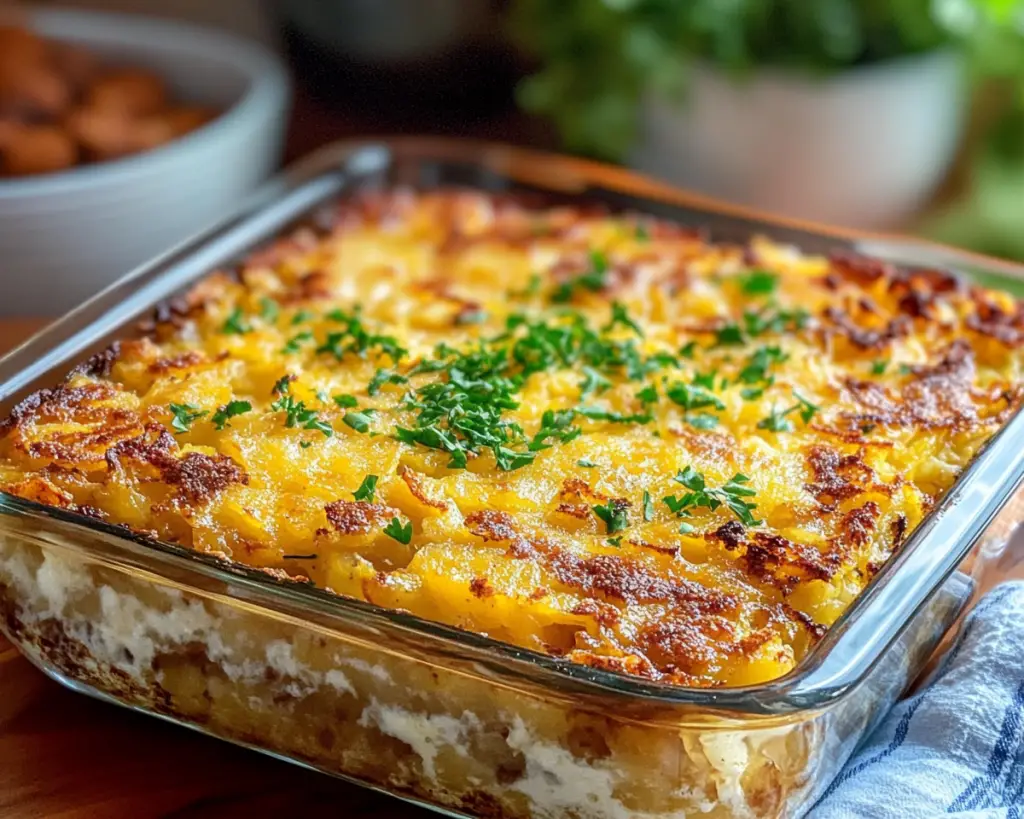
The base of this casserole is typically composed of frozen hashbrowns, which are grated or shredded potatoes. These hashbrowns are convenient as they save the peeling and chopping time while giving you that delightful potato flavor and texture. When baked, they create a fluffy interior with a crunchy top layer that is simply irresistible.
Culinary experts often describe the flavor profile of hashbrown casserole as rich and savory, with the cheese providing a delightful creaminess. You may also notice the subtle hints of spices and seasonings that elevate the potatoes, making each bite memorable.
Why You’ll Love This Hashbrown Casserole
There are numerous reasons to adore hashbrown casserole:
- Flavorful and Comforting: The creamy texture combined with gooey cheese makes this casserole incredibly satisfying and comforting, serving as the ultimate comfort food.
- Easy to Prepare: With simple and straightforward steps, even beginners can whip up this fantastic dish without any hassle.
- Versatile Dish: It’s perfect for breakfast, lunch, or dinner. Serve it alongside eggs in the morning or as a side dish during dinner!
- Cost-Effective: The main ingredients are inexpensive and can serve a large number of people, making it a great budget-friendly option.
- Customizable: You can add various ingredients based on your preferences, such as meats, vegetables, or different cheeses.
Common misconceptions include the idea that it’s too rich or unhealthy. While it can be indulgent, you can easily make health-conscious adjustments by using lighter cream, low-fat cheese, or adding vegetables for extra nutrients.
Ingredients You’ll Need
To create a classic hashbrown casserole, gather the following ingredients:
- Frozen hashbrowns: The star ingredient that forms the base of the casserole. Opt for shredded hashbrowns for the best texture.
- Shredded cheddar cheese: This cheese melts beautifully and adds a rich, cheesy flavor to the dish. You can substitute with your favorite cheese for different flavor profiles.
- Sour cream: Adds creaminess and tanginess to balance the rich flavors. Greek yogurt is a nice alternative for a healthier version.
- Cream of chicken soup: This adds moisture and enhances the flavor profile, giving the casserole a velvety texture. You can replace it with cream of mushroom soup for a vegetarian option.
- Onion: Diced onions contribute a subtle sweetness and depth of flavor; they can be skipped if you prefer milder flavors.
- Butter: Used to grease your casserole dish and provide richness. Substitute with olive oil for a healthier option.
- Seasonings: Typically, a pinch of salt, pepper, and garlic powder can bring the dish together. Customize to your taste!
Each ingredient plays an essential role, so while substitutions can be made, try to retain the core components for the best results.
How to Make Hashbrown Casserole
Follow these step-by-step instructions to create your delicious hashbrown casserole:
- Preheat your oven: Start by preheating your oven to 350°F (175°C). This will ensure your casserole bakes evenly.
- Prepare your baking dish: Take a 9×13 inch casserole dish and grease it generously with butter to prevent sticking.
- Mix ingredients: In a large bowl, combine the frozen hashbrowns, shredded cheddar cheese, sour cream, cream of chicken soup, and diced onion. Stir until all ingredients are thoroughly mixed. This step is crucial as evenly distributing the ingredients helps to create a cohesive casserole.
- Season well: Add salt, pepper, and garlic powder to taste. Don’t be afraid to sample the mixture to ensure the seasonings are to your liking!
- Transfer mixture: Pour the mixture into the prepared casserole dish, spreading it evenly across the surface with a spatula or spoon.
- Bake: Cover the casserole with aluminum foil (to prevent over-browning) and bake in the preheated oven for 30 minutes. After this point, remove the foil and bake for an additional 15-20 minutes, or until the top is golden brown and the casserole is bubbly.
- Cool and serve: Once baked, remove the casserole from the oven and let it cool for about 5-10 minutes. This cooling period will help the casserole firm up before serving, allowing easier portioning. Cut into squares and enjoy!
Throughout the process, pay attention to the texture and appearance. The casserole should have a golden top and a bubbly appearance indicating it’s ready to serve. The smell alone will have everyone lining up for seconds.
5 Variations & Substitutions
Vegetarian Hashbrown Casserole: For a vegetarian option, simply replace the cream of chicken soup with cream of mushroom soup. You can also add vegetables like bell peppers, mushrooms, or spinach to enhance the flavor and increase nutrients. Precook the vegetables slightly to remove excess moisture before adding them to the hashbrowns to avoid a watery casserole.
Loaded Hashbrown Casserole: For a heartier dish, add diced cooked bacon or crumbled sausage to the mixture for an extra punch of flavor. You may also add jalapeños for a spicy kick. This substitution makes the casserole filling enough to serve as a main dish.
Breakfast Hashbrown Casserole: Incorporate eggs to transform this side dish into a full breakfast meal. Whisk 4-6 eggs and stir them into the hashbrown mixture before baking. This will create a delightful breakfast casserole that is perfect for morning gatherings or brunch.
Sweet Potato Hashbrown Casserole: For a twist on the traditional recipe, substitute frozen hashbrowns with grated sweet potatoes. This variation adds a wonderful sweetness and a host of additional nutrients. Adjust the seasoning to balance the natural sweetness of the potatoes.
Low-Carb Hashbrown Casserole: To create a lower-carb option, consider using cauliflower rice instead of hashbrowns. This variety maintains the casserole’s texture while keeping the overall carb count lower. You can also use light cream cheese instead of sour cream for a lighter version.
Each of these variations offers a unique spin on the classic hashbrown casserole, ensuring that you’ll never get bored with the dish!
Common Mistakes to Avoid
When making hashbrown casserole, several common pitfalls could hinder your final product:
Overmixing the ingredients: While mixing ingredients, be careful not to overdo it. Overmixing can lead to mushy hashbrowns instead of the desired fluffy texture.
Using thawed hashbrowns: Always use frozen hashbrowns straight from the freezer; thawing can result in excess moisture, causing a soggy casserole.
Not seasoning sufficiently: Season your mixture adequately; bland casseroles can be a disappointment. Instead of relying solely on salt and pepper, consider adding other spices like onion powder and paprika to enhance the flavor profile.
Baking without foil: If you skip covering the casserole with foil initially, you risk burning the top while leaving the insides undercooked. Always cover for the first part of the baking process to ensure even cooking.
If you stay clear of these common mistakes, you’re guaranteed a successful hashbrown casserole that will have everyone raving!
Storage, Freezing & Reheating Tips
Storing your hashbrown casserole properly ensures you can enjoy it later without sacrificing flavor. Here are some best practices:
Storage: Allow the casserole to cool completely before transferring it to an airtight container. You can store leftovers in the refrigerator for up to 3-4 days.
Freezing: To freeze, prepare the casserole as directed but before baking. Cover it tightly with plastic wrap and then with foil to protect against freezer burn. It can be frozen for up to 2-3 months. When ready to bake, thaw overnight in the refrigerator before baking it as directed.
Reheating: To reheat leftovers, preheat your oven to 350°F (175°C). Place the casserole in an oven-safe dish and cover with foil to retain moisture. Bake for about 20-30 minutes or until heated through. You can also microwave individual portions for quicker reheating, though the oven method ensures better texture.
Always remember food safety best practices—never leave cooked leftovers at room temperature for more than 2 hours, and ensure they’re heated to at least 165°F (74°C) when serving again.
Frequently Asked Questions
Can I prepare hashbrown casserole the night before?
Yes, you can prepare the casserole a day ahead. Assemble all the ingredients in the baking dish, cover tightly with plastic wrap and refrigerate overnight. When ready to bake, remove the plastic wrap and bake as instructed. If the casserole is cold from refrigeration, you may need to extend the baking time by a few minutes.
Can I use fresh potatoes instead of frozen hashbrowns?
While you can use fresh potatoes, they require additional processing—peeling and grating—before use. Frozen hashbrowns save time and maintain a consistent texture, but fresh potatoes can work if you don’t mind the extra effort.
What types of cheese work best in hashbrown casserole?
While shredded cheddar cheese is the classic choice, you can experiment with a variety of cheeses. Monterey Jack, Gouda, or even pepper jack cheese can add different flavors and richness to your casserole. Combine different cheeses for a complex flavor profile.
Can I make this casserole gluten-free?
Absolutely! Just ensure you use a gluten-free cream of chicken soup, and you’ll have a fantastic gluten-free hashbrown casserole.
How do I know when the casserole is finished cooking?
The casserole is done when the edges bubble, the center is set, and the top is golden brown. A toothpick inserted into the center should come out clean.
Conclusion:
Hashbrown casserole is a delightful dish that resonates comfort and satisfaction, perfect for any occasion. Its versatility, ease of preparation, and incredible flavor make it an instant go-to recipe for busy weeknights or festive celebrations. Try it out today, and feel free to customize it according to your taste! Whether you serve it as a side dish or the main event, it’s bound to impress everyone at the table. Don’t forget to share your delicious creation with friends and family—they’ll thank you for this wonderful addition to their meal repertoire!