Prep time: 15 minutes
Cook time: 0 minutes
Total time: 15 minutes
Servings: 6
Fresh fruit salad is a dish that evokes memories of sunny brunches, picnics in the park, and wholesome gatherings with friends and family. The beauty of this vibrant medley lies not only in its refreshing taste but also in its ability to bring people together. Whether you’re preparing for a brunch, a summer potluck, or simply seeking a nutritious snack to brighten your day, this sweet and juicy fruit salad serves as the perfect solution. In this article, you’ll learn the art of crafting a beautiful fruit salad, the tips to enhance its flavors, various twists to suit different tastes, and answers to common questions. Get ready to enjoy a delicious symphony of flavors!
What Is Fresh Fruit Salad Recipe – Perfect for Easy Brunches?
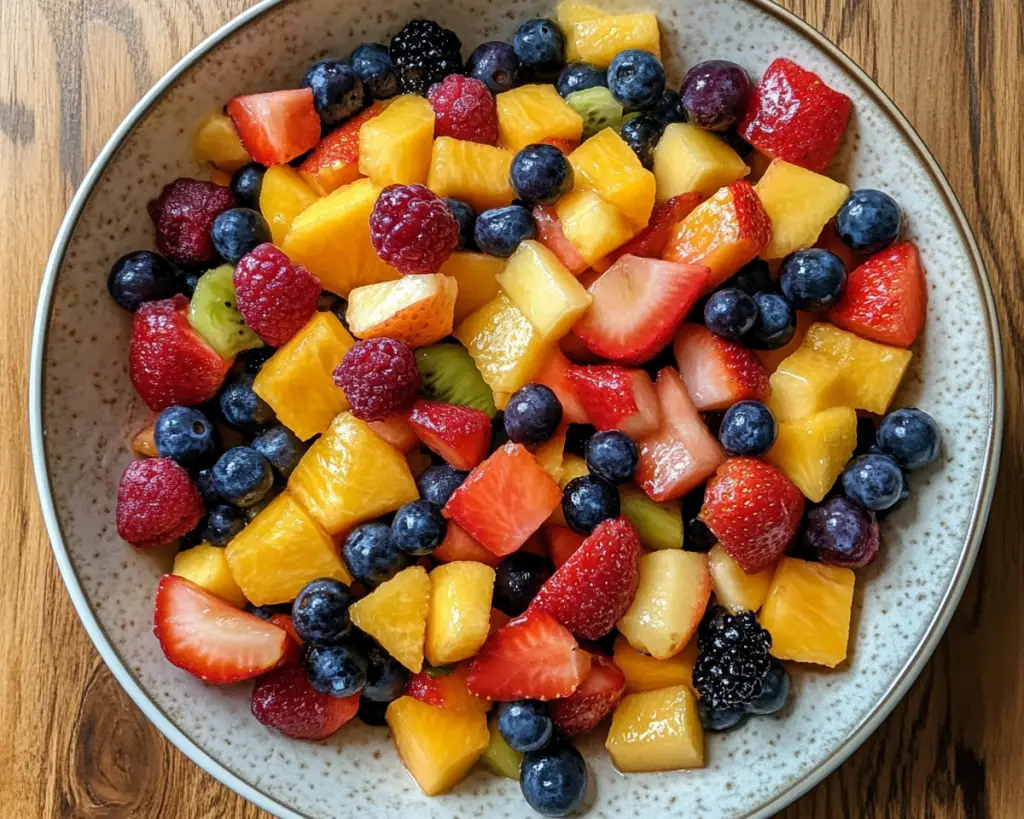
Fresh fruit salad can be defined simply: it is a colorful combination of seasonal fruits, brought together to create a refreshing treat. Originating from various culinary traditions, fruit salads can be found in countless forms. Typically, this recipe combines a variety of textures—from the crunchy snap of apples to the soft sweetness of ripe bananas and the juicy burst of berries.
The flavor palette is equally enjoyable; sweet, tangy, and sometimes even exotic, depending on the choice of fruits. The salad is not only pleasing to the eyes, with its vivid colors and textures, but it also delights the palate with its harmonious balance of sweetness and acidity. Each ingredient plays a role in enhancing the overall experience, making it a staple in easy brunches, potlucks, or simply as a healthy snack.
Why You’ll Love This
You’ll love this fresh fruit salad because it’s incredibly versatile and easy to prepare. Not only can you customize it according to the ingredients you have on hand, but it also allows you to cater to various dietary preferences. Packed with vitamins, minerals, and fiber, this fruit salad is both satisfying and healthful, making it perfect for anyone looking to eat cleaner.
Another reason to adore this dish is its affordability. Fresh fruits can often be found in seasonal sales, allowing you to whip up a stunning dish without breaking the bank. And, as a bonus, unlike many elaborate recipes, fruit salad requires no cooking—just chopping and mixing! It is perfect for busy parents, novice cooks, or anyone looking for a quick and delightful meal option. Common misconceptions suggest that fruit salads can be monotonous or overly sweet; however, when crafted mindfully, they can be both refreshing and satisfying.
Ingredients You’ll Need
- Strawberries: Fresh and juicy, strawberries bring a burst of sweetness. Look for bright red, firm berries without any blemishes.
- Blueberries: These tiny, nutrient-packed gems add a pop of color and a mildly sweet tang. They are also a great source of antioxidants.
- Kiwi: This exotic fruit contributes a tropical flair with its unique sweet-tart flavor and vibrant green color. Selecting ripe kiwis is essential; they should yield slightly to pressure.
- Bananas: Soft and sweet, bananas bring creaminess to the mix. Remember, the best bananas for salad are those that are ripe but not overly brown.
- Apples: Crisp and refreshing; apples lend a nice crunch to your salad. Choose varieties like Granny Smith for tartness or Honeycrisp for sweetness.
- Melon: Both cantaloupe and honeydew offer a refreshing element. Ensure the melon is fully ripened to enhance its natural sweetness.
- Mint: Fresh mint leaves add a delightful herbal note, elevating the flavor profile. Adding mint also invigorates the aroma.
- Honey: Optional but highly recommended, a drizzle of honey will enhance the natural sweetness if you prefer it a touch sweeter.
Each ingredient serves a specific purpose: from flavor and texture to nutrition. Don’t hesitate to substitute any of the fruits based on availability or personal preference. For example, if you cannot find kiwis, you can easily swap them with peaches or nectarines for a similar effect.
How to Make
- Begin by preparing your fruits. Wash all the strawberries, blueberries, and kiwis thoroughly under cold water. Pat them dry with a clean kitchen towel to remove excess moisture.
- Next, hull the strawberries by removing their green tops, then slice them into bite-sized pieces. This will help integrate their sweetness into the salad while making them easy to eat.
- Now, take the blueberries and add them whole to your mixing bowl. They’re small enough that you don’t need to cut them up, so toss them right in!
- Proceed to peel the kiwi. Use a knife or a spoon to scoop out the green flesh, then slice it into rounds. This adds a lovely touch of color and excellent texture contrast.
- Peel and slice the banana into half-moons. Be mindful that bananas brown quickly, so it’s best to add them just before serving or coat them in a little lemon juice to maintain their vibrant hue.
- Core and dice the apples. You may choose to leave the skin on for extra nutrients and texture, which pairs wonderfully with the soft fruits in the salad.
- Cube your preferred melon and add it to the bowl. The melon’s refreshing nature complements the other fruits beautifully, creating a juicy, sweet mixture.
- Gently toss the fruit mixture to combine all the flavors without bruising the more delicate pieces like bananas and berries. This should take no more than a minute.
- If using, drizzle honey over the salad and sprinkle fresh mint leaves for garnish. Gently fold them in to distribute the flavors. The mint not only adds flavor but also enhances the visual appeal with its bright green color.
- Serve immediately in chilled bowls for the best experience. You can also refrigerate it for about 30 minutes if you prefer a cooler salad, but don’t let it sit too long to avoid mushiness.
This step-by-step process ensures that your fruit salad is not only visually striking but also flavorful and enjoyable. Remember to experiment and let your creativity flow.
Variations & Substitutions
Tropical Paradise Variation: If you’re craving a more tropical experience, consider adding pineapple, mango, and papaya. These fruits will not only infuse your salad with sweetness but also a delightful juiciness. This variation is perfect for summer gatherings or vacations, making you feel like you’re on an island getaway.
Berry Medley Variation: If you’re a berry enthusiast, try incorporating raspberries, blackberries, or even currants into your fruit salad. This variation intensifies the berry flavor, providing a tart edge to the sweetness. It’s an excellent option for those who enjoy a tangy contrast.
Winter Fruit Salad Variation: Seasons dictate fruit availability, so for a winter twist, include slices of citrus like oranges and grapefruit, alongside pomegranate seeds. This not only adds color and brightness but the citrus will also offer an invigorating zing during the cooler months.
Protein-Packed Variation: To turn this salad into a more filling option, consider adding Greek yogurt or cottage cheese on the side. This balance between sweet fruit and creamy protein can serve as a nutritious breakfast or snack option for busy mornings.
Vegan-Friendly Variation: If you’re catering to vegans, ensure that any added sweeteners are plant-based like **agave syrup** instead of honey. This keeps the dish 100% vegan while still being delicious.
Each variation provides an opportunity to experiment and cater to different dietary preferences, textures, and tastes. Enjoy customizing your fruit salad to create an array of flavor sensations.
Common Mistakes to Avoid
One common mistake people make when preparing fruit salad is using overripe or underripe fruit. Using overripe fruit can lead to a mushy salad, while underripe fruit may lack the sweetness and flavor you expect. Always check for ripeness and select your fruits based on expected texture and sweetness.
Another common pitfall is preparing the salad too far in advance. Fruits like bananas and apples can brown quickly when exposed to air, diminishing the visual appeal. To avoid this, consider adding these fruits closer to serving time, or lightly coat them in lemon juice to help maintain their color.
Don’t forget about seasoning; a little bit of fresh lemon or lime juice can greatly enhance flavors and balance sweetness. Experimenting with small amounts will help you find the right balance for your palate.
Storage, Freezing & Reheating Tips
When it comes to storage, the best approach is to keep your fruit salad in an airtight container and refrigerate it. It can typically hold up for about 1-2 days; however, for optimal freshness, try to eat it the day it is made. Leaving the fruit salad at room temperature for prolonged periods may contribute to spoilage.
If you’re preparing fruit salad for a gathering, consider how you can store leftovers. Keep different fruits in separate containers until just before serving to maintain freshness and prevent sogginess.
Freezing fruit salad is generally not advisable as it can alter the texture of the fruits, making them mushy once thawed. If you do wish to freeze some fruits like berries or melons separately, make sure to thaw them in the refrigerator before using.
Always prioritize food safety by keeping your fruits clean and pest-free. Washing produces thoroughly and storing salad preparations in the fridge at appropriate temperatures will help keep your dish nutritious and enjoyable.
Frequently Asked Questions
Can I use canned fruits instead of fresh fruits? Using canned fruits can be convenient, but be cautious as they often contain added sugars or syrup that can affect the taste and healthiness of your salad. If you do choose canned options, look for those packed in juice or water with no added sugars to keep it healthier.
Should I add dressing to my fruit salad? It’s entirely a matter of personal preference. Some may prefer their fruit salad plain to let the natural sweetness shine, whereas others may enjoy a light dressing made from yogurt or a splash of citrus. Keep it light to avoid overpowering the fresh flavors.
How can I make fruit salad last longer? As noted earlier, air exposure is the enemy of fresh fruit salads. Keeping your salad in an airtight container and chilling it as soon as you make it will help preserve its freshness. Also, storing the more perishable fruits separately until serving could extend its lifespan.
Can I prepare fruit salad the night before? Yes, you can! It’s best to prepare most of the salad the night before; just avoid adding bananas and apples until closer to serving time to prevent browning. This makes your morning roadside easier and faster!
What fruits work best together for a salad? The key is to balance flavors and textures. Contrasting fruits—both sweet and tart—like strawberries with kiwi or adding creaminess from bananas work wonderfully together. The beauty of fruit salad lies in its versatility, so feel free to experiment with whatever combinations entice you.
Conclusion:
In summary, the fresh fruit salad is a delightful and healthful option that can easily elevate any meal—especially brunch. Its strengths lie in its flexibility, vibrancy, and nutritional benefits. Feel free to customize it, swap ingredients, or add your favorite flavors. Whether serving it at a gathering or enjoying it solo, this dish is sure to bring joy with every bite. I encourage you to give this recipe a try, make it your own, and watch as your guests rave about this vibrant, flavorful salad that celebrates all the best fruits have to offer. Happy cooking!