Prep time: 15 minutes
Cook time: 20 minutes
Total time: 35 minutes
Servings: 4
Are you ready to dive into the delightful world of Thai cuisine? Imagine twirling thin, chewy rice noodles on your fork, coated in a savory, aromatic sauce. This recipe for Kuay Tiew Kua Gai, or Thai Chicken Stir-Fried Rice Noodles, will not only quench your cravings but introduce you to vibrant flavors and the joy of home-cooked authenticity. What makes this dish stand out? It’s the perfect balance of textures and taste—the richness of tender chicken, the crunch of fresh vegetables, and the satisfying bite of the noodles. If you’re looking for a dish that’s satisfying, easy to prepare, and bursting with flavor, you’ve found your next favorite recipe.
In this article, you’ll learn about the origins of Kuay Tiew Kua Gai, the key ingredients that make it memorable, and how to perfect this dish right in your own kitchen. You’ll also discover handy tips, tasty variations, and answers to common questions, ensuring your cooking experience is enjoyable and rewarding.
What Is 🍜 Kuay Tiew Kua Gai Thai Chicken Stir-Fried Rice Noodles?
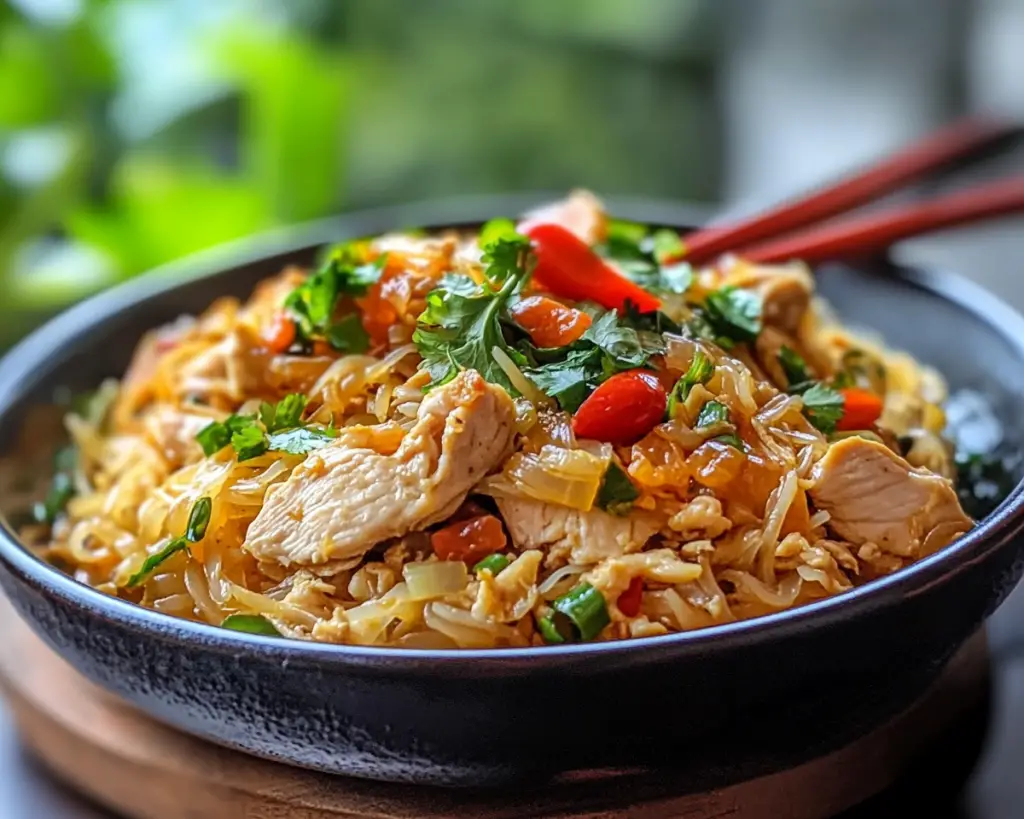
Kuay Tiew Kua Gai originates from Thailand and is a beloved street food dish. At its core, it features **stir-fried rice noodles**, which are made from rice flour, offering a unique, slightly chewy texture that contrasts nicely with the tender chicken and crisp vegetables. The beauty of this dish lies not just in its taste but also in the depth of flavor achieved through the balance of simple ingredients.
When you cook Kuay Tiew Kua Gai, you typically start with boneless chicken, usually either thigh or breast, which is marinated briefly to infuse flavor. The noodles are stir-fried in a hot wok, absorbing the rich, savory sauces used in the preparation. This dish’s enticing aroma waves through the kitchen, inviting everyone to gather around the dining table. Adding freshness to the dish, vegetables like bean sprouts, Chinese chives, and carrots are often included, providing crunch and color.
What’s fascinating about Kuay Tiew Kua Gai is its adaptability. You can easily modify it to suit your dietary preferences or simply use what’s available in your kitchen. The next section will inspire you to embrace this dish, showcasing why it’s worth your time and effort.
Why You’ll Love This
The advantages of making Kuay Tiew Kua Gai at home are endless. First, the **taste**—it’s a perfect combination of savory, sweet, and a touch of saltiness. Each bite is a journey through texture and flavor that will leave you wanting more. Secondly, **ease of preparation** is another highlight. With just a handful of ingredients and straightforward techniques, even beginner cooks can create a delicious meal.
Moreover, this dish can be quite economical. You can often find the ingredients at affordable prices, especially if you shop at local Asian markets or cooperate with your pantry staples. Another benefit is the **health factor**; by controlling the ingredients, you can ensure that your meal is packed with nutrients, making it a great choice for families.
Many people think that Asian stir-fry dishes are complicated or require special skills; however, that couldn’t be further from the truth! Once you understand the basics, it’s all about combining flavors and working quickly in the kitchen. The next section will guide you through the essential ingredients for your Kuay Tiew Kua Gai.
Ingredients You’ll Need
- Rice noodles: Look for flat rice noodles, which are the star of the show. They should be soaked in warm water for 20-30 minutes before cooking. If unavailable, you can use **egg noodles** as a substitute.
- Chicken: Chicken thighs work best due to their flavor and tenderness, but you can also use breast meat. Tofu is a fantastic substitute for a vegetarian option.
- Garlic: Freshly minced garlic adds a robust flavor. You can also use garlic powder in a pinch, but fresh will always yield better results.
- Soy sauce: This savory sauce is essential for flavor. Opt for low-sodium soy sauce for a healthier alternative. **Tamari** works well as a gluten-free substitute.
- Oyster sauce: Essential for that authentic umami flavor. If you’re avoiding seafood, consider using a mushroom-based sauce.
- Vegetables: Bean sprouts, Chinese chives, and carrots are traditional. Feel free to add bell peppers or broccoli for added color and nutrition.
- Eggs: They add richness and texture to the dish. If you’re vegan, feel free to skip this or use a plant-based egg replacement.
- Oil: Use a high-heat oil like vegetable or peanut oil for cooking. This ensures that your noodles and chicken get a nice sear.
- Black pepper: Freshly cracked black pepper can elevate the flavor, so don’t skip this step!
Understanding the importance of each ingredient can vastly improve your cooking experience. Having everything prepared and measured before you start cooking will make the process smoother, especially when you’re following along with the steps.
How to Make
1. **Soak the rice noodles**: Begin by soaking the flat rice noodles in warm water for about 20-30 minutes until they are soft but not mushy. Drain them and set them aside. This prepping step is crucial; properly soaked noodles will cook evenly when stir-fried.
2. **Marinate the chicken**: While the noodles soak, clean and cut your chicken into thin strips. In a bowl, combine the chicken with 1 tablespoon of soy sauce, 1 teaspoon of **oyster sauce**, and black pepper. Allow it to marinate for at least 10 minutes. This step infuses flavor into the chicken and keeps it tender during cooking.
3. **Prepare your vegetables**: Slice the carrots into thin julienne strips and chop the Chinese chives into 2-inch pieces. Rinse the bean sprouts and set all the veggies aside. This mise en place will make your cooking process much more efficient.
4. **Heat the oil**: In a large wok or skillet, heat 2 tablespoons of vegetable oil over medium-high heat. The oil should shimmer when it is hot enough. Ensuring your oil is hot before adding ingredients will help create that desirable stir-fry texture.
5. **Cook the chicken**: Add the marinated chicken to the hot oil, tossing continuously for about 4-5 minutes until it turns golden brown and is cooked through. Make sure to break apart any clumps of chicken to ensure even cooking.
6. **Add garlic**: Just before the chicken is fully cooked, toss in the minced garlic. Stir-fry it with the chicken for about 30 seconds until it becomes fragrant. Be careful not to let it burn; you want it to meld with the chicken, imparting that wonderful garlicky aroma.
7. **Incorporate noodles and sauces**: Now, add the soaked rice noodles to the wok along with 2-3 tablespoons of soy sauce and 1 tablespoon of oyster sauce. Stir gently to combine everything, ensuring the noodles absorb the sauces evenly. This step can feel magical as the noodles start to soak up all the flavors.
8. **Add vegetables and eggs**: Toss in the carrots, bean sprouts, and a lightly beaten egg. Mix everything together for another 3-4 minutes, allowing the egg to cook thoroughly and the veggies to retain their crunch.
9. **Final touches**: Once everything is well-mixed and heated through, taste the noodles and adjust seasoning if necessary. If you prefer a saltier flavor, consider adding a bit more soy sauce. You can also sprinkle a touch of fresh black pepper on top for extra zing.
10. **Serve hot**: Serve your delicious Kuay Tiew Kua Gai right away, garnished with additional bean sprouts and a sprinkle of fresh Chinese chives if desired. The aroma wafts through the air, drawing everyone to the table, eager to enjoy your culinary creation.
Mastering Kuay Tiew Kua Gai is not just about following a recipe; it’s about cultivating a connection with your ingredients and truly enjoying the cooking process. Take your time to savor each step, and you’ll find that cooking becomes a joyful adventure.
Variations & Substitutions
Vegetarian Version: For a delicious vegetarian adaptation, skip the chicken and replace it with tofu. Marinate the firm tofu in a bit of soy sauce and pan-fry until golden brown. This swap not only makes the dish accessible to vegetarians but also maintains that satisfying protein element.
Seafood Twist: If you’re a seafood lover, consider adding shrimp or scallops instead of chicken. Cook them for just a few minutes until they turn pink and opaque. This variation brings a new flavor profile to the dish and pairs beautifully with the rice noodles.
Gluten-Free Option: To make this dish gluten-free, substitute regular soy sauce with **tamari** and ensure that your oyster sauce is also gluten-free. Additionally, check if the rice noodles are made from gluten-free ingredients; notably, they usually are.
Spicy Kick: For those who enjoy a bit of heat, add sliced red chili or a tablespoon of chili paste to the marinade. You can adjust the spiciness according to your tolerance, making it personal to your palate.
Loaded Veggie Stir-Fry: Don’t hesitate to include more vegetables like bell peppers, baby corn, or broccoli. Not only does this increase your nutrient intake, but it also adds vibrant colors to the dish. Just be mindful of cooking times; add them earlier if they need longer to cook.
Exploring these variations can help you discover the different facets of Kuay Tiew Kua Gai, ensuring it remains a favorite in your household.
Common Mistakes to Avoid
One common pitfall is overcooking the noodles. Always monitor the soaking time; if you leave them too long in hot water, they can become mushy. This will negatively affect the texture of your dish. Under-soaked noodles, on the other hand, can lead to tough bites that are unappealing.
Another mistake is packing too many ingredients into your wok at once. If the ingredients are overcrowded, they’ll steam rather than stir-fry, which can lead to soggy noodles. Ensure you have enough room to stir and toss the ingredients properly. If you’re cooking for a larger group, consider cooking in batches instead.
Finally, don’t skip the marinating step for the chicken or tofu. This lets the protein absorb moisture and flavor, enhancing the overall dish. Taking the time to marinate ensures your Kuay Tiew Kua Gai will be wonderfully flavorful and enjoyable.
Storage, Freezing & Reheating Tips
For any leftovers, allow Kuay Tiew Kua Gai to cool completely before transferring it to an airtight container. In the refrigerator, it can be kept for up to 4 days. When you’re ready to enjoy it again, simply reheat it in a skillet with a splash of oil to bring back the original texture.
If you want to keep it for a longer period, you can freeze it. Ensure the dish is completely cooled, then portion it out into freezer-safe bags or containers. It can be frozen for up to 2 months. To reheat, thaw in the refrigerator overnight and then reheat in a pan with a little oil, stirring well to break up the noodles.
Always remember to check for any signs of spoilage before consuming leftovers, especially if they have been in the fridge or freezer for an extended period. Food safety is key to enjoying your dish without worry.
Frequently Asked Questions
Can I use other proteins besides chicken?
Absolutely! You can substitute chicken with shrimp, beef, or even tofu for a vegetarian option. Each protein will impart its own unique flavor and texture. Just remember to adjust cooking times accordingly.
Is it okay to use dried rice noodles instead of fresh?
Yes, you can use dried rice noodles; however, make sure to follow the package instructions for soaking and cooking times. Dried noodles often require longer soaking and cooking times compared to fresh ones.
What can I serve with Kuay Tiew Kua Gai?
This dish is often enjoyed on its own, but if you’d like to make it a well-rounded meal, consider serving a simple side salad or some steamed vegetables. A light, tangy dipping sauce can complement the flavors beautifully.
How spicy can I make this dish?
The spice level is entirely up to you. For a mild dish, keep it as is; for a nice kick, add sliced chilies or a spoonful of chili paste to the marinade. Always taste as you go to find your preferred level.
Can I meal prep Kuay Tiew Kua Gai?
Certainly! This dish is perfect for meal prep. You can divide it into individual portions and store them in the fridge. It reheats well, making it a great choice for quick lunches during a busy week.
Conclusion:
In summary, Kuay Tiew Kua Gai is a delightful dish that encapsulates the essence of Thai cooking with its savory flavors and satisfying textures. By mastering this recipe, you’re not just preparing a meal; you’re embracing a culinary adventure that brings joy to your table. Don’t hesitate to customize it according to your preferences or share it with loved ones. It offers a unique experience that can quickly become a family favorite in no time. So roll up your sleeves, gather your ingredients, and experience the warmth and flavors of Kuay Tiew Kua Gai!