Prep time: 15 minutes
Cook time: 20 minutes
Total time: 35 minutes
Servings: 4
It’s not every day that you come across a dish that brings the vibrant flavors of the Mediterranean right to your home kitchen, filled with an array of colorful vegetables and aromatic spices. Mediterranean Vegetable Couscous is the perfect appetizer, side dish, or even a light main course that will delight your taste buds while allowing you to explore the rich culinary traditions of the Mediterranean. Imagine soft, fluffy couscous complementing crisp vegetables, seasoned with just the right amount of herbs and spices. This dish is not only visually appealing but is also a nutritious addition to any meal. Throughout this recipe, you will discover how simple it is to prepare this delightful dish, and you will gain insight into tips and variations that can make it even more enjoyable.
What makes this recipe particularly special is its versatility. Whether you’re preparing a family dinner, hosting friends, or simply craving something delicious, the Mediterranean Vegetable Couscous shines on every occasion. By the end of the recipe, you’ll learn not only how to master the basic steps but also how to tailor it to meet your personal taste preferences. Let’s dive into the world of flavors and textures that await you with this delightful dish.
What Is Mediterranean Vegetable Couscous?
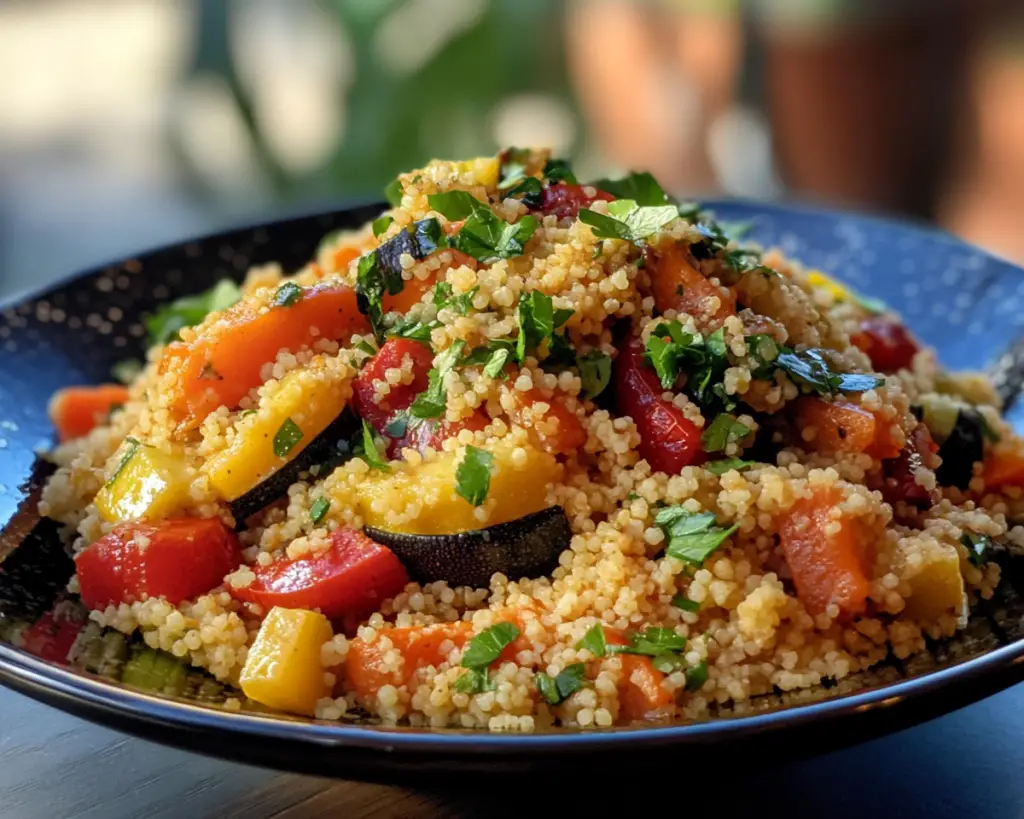
Mediterranean Vegetable Couscous is a dish deeply rooted in the culinary traditions of North Africa and the Mediterranean region. Couscous itself is made from semolina wheat, which gives it a light and fluffy texture that is perfect for soaking up flavorful sauces or juices from the vegetables. Typically, Mediterranean Vegetable Couscous includes an invigorating combination of vibrant vegetables such as bell peppers, zucchini, eggplant, and tomatoes, all cooked to tender perfection. The addition of fresh herbs like parsley and basil provides a burst of freshness, while spices like cumin or paprika can elevate the dish to new heights of flavor.
A well-prepared couscous dish has a delightful mix of flavors, textures, and colors. The fluffy couscous provides a warm and comforting base, while the sautéed vegetables introduce a satisfying crunch and a melody of earthy, sweet, and tangy notes. The balance of flavors creates a culinary experience that tantalizes all of your senses, making it suitable for a myriad of occasions. With its nutritional benefits and rich taste, Mediterranean Vegetable Couscous is more than just a meal; it’s an invitation to explore and appreciate the diverse tastes of the Mediterranean.
Why You’ll Love This
One of the main reasons you’ll fall in love with Mediterranean Vegetable Couscous is its incredible taste. The combination of fresh vegetables and aromatic herbs creates a dish that is rich in flavor without being overwhelming. Not only does it cater to various palates, but it also serves as a blank canvas for customization, allowing you to tailor it to suit your preferences.
In addition to its sublime taste, Mediterranean Vegetable Couscous is also easy to prepare. With just a few simple steps and an array of fresh ingredients, you can make a meal that’s ready in under 40 minutes. This makes it ideal for busy weeknights or as a quick lunch option when you need a nourishing meal. Furthermore, it’s budget-friendly, relying on seasonal vegetables that are often less expensive and widely available.
Another significant benefit is its versatility. Mediterranean Vegetable Couscous can serve as a side dish accompanying grilled meats or as a main dish enriched with added proteins like chickpeas or grilled chicken. It’s also an excellent choice for meal-prepping; just prepare a batch and enjoy it throughout the week for a quick, healthy boost to your meals.
Ingredients You’ll Need
- Couscous: This is the base of the dish, providing a light and fluffy texture. Whole wheat couscous is a healthy alternative that adds a nutty flavor.
- Olive oil: This adds richness and flavor while helping to sauté the vegetables. It’s also heart-healthy!
- Bell peppers (red, yellow, green): A vibrant addition that brings sweetness and color; you can use any variety you enjoy.
- Zucchini: Adds a mild sweetness and is an excellent source of vitamins. Sliced thinly, it cooks quickly.
- Eggplant: This offers a meaty texture and absorbs flavors well. Always remember to salt it and let it sit for a bit to reduce bitterness.
- Tomatoes: Fresh or canned, they provide acidity that brightens up the dish.
- Garlic: For an aromatic flavor boost; fresh garlic is best, but minced can be used as a quick alternative.
- Vegetable broth or water: This is used to cook the couscous; using broth adds extra flavor.
- Fresh herbs (parsley, basil, or mint): These add freshness and vibrant color. Use whichever you prefer; they all bring different flavor profiles.
- Spices (cumin, paprika, or oregano): These enhance the overall flavor of the dish; feel free to adjust according to your taste.
- Salt and pepper: Essential for seasoning each component to perfection.
Each ingredient plays a vital role in creating the delicious symphony of flavors found in Mediterranean Vegetable Couscous. By understanding the purpose of each, you can easily substitute ingredients based on your preferences or what you have on hand.
How to Make
- Prepare the couscous: In a medium saucepan, combine one cup of couscous with one and a half cups of vegetable broth or water. Bring it to a boil over medium heat. Once boiling, remove from heat, cover the pot, and let it sit for about five minutes to absorb the liquid. After five minutes, fluff it with a fork, and set aside.
- Prep your vegetables: While the couscous is cooking, wash and chop the bell peppers, zucchini, and eggplant into bite-sized pieces. Dice the tomatoes and mince the garlic. Having everything ready will streamline your cooking process and ensure even cooking.
- Saute the vegetables: In a large skillet, heat two tablespoons of olive oil over medium heat. Once hot, add the minced garlic and sauté for about 30 seconds until fragrant. Next, add the chopped eggplant and cook for about five minutes until it starts to soften. Following that, add the bell peppers and zucchini, stirring occasionally for another five minutes. This process enhances the vegetables’ natural sweetness.
- Add tomatoes and spices: Once the other vegetables are almost cooked through, stir in the diced tomatoes along with your chosen spices—this could be a teaspoon each of cumin and paprika along with salt and pepper to taste. Allow the mixture to simmer for an additional five minutes, letting the flavors meld together.
- Mix in the couscous: Gently fold the prepared couscous into the skillet with the sautéed vegetables, mixing well to ensure even distribution. If the mixture seems dry, you can add a splash more vegetable broth or water to moisten it.
- Add fresh herbs: After mixing, sprinkle in the chopped fresh herbs and stir until just combined. The warmth from the couscous will gently wilt the herbs, making their flavors pop.
- Serve and enjoy: Taste for seasoning, adjusting if needed. Serve it warm or at room temperature as a side dish or main course. Garnish with a drizzle of olive oil or a sprinkle of crumbled feta cheese for an added savory touch.
Making Mediterranean Vegetable Couscous is a delightful experience! The vibrant colors and inviting aromas that waft through your kitchen will make it hard for you to resist sampling along the way. One of the best tips for beginners is to always prepare your mise en place—having all your ingredients ready to go. It not only makes your cooking process smoother but also helps maintain the integrity of the dish.
Variations & Substitutions
Chickpea Addition: If you want to increase the protein content and add a bit more substance to your dish, incorporating canned or cooked chickpeas is a fantastic option. The robust flavor of chickpeas complements the other vegetables beautifully, and they are an excellent source of plant-based protein. Simply drain and rinse the chickpeas and add them in when you fold in the couscous. They will absorb some of the flavors while keeping their texture intact.
Grilled Vegetable Couscous: For a smoky twist, consider using grilled vegetables instead of sautéing them on the stovetop. This method enhances the depth of flavor and adds a pleasant char. Grill slices of zucchini, bell peppers, and eggplant on a grill pan or outdoor grill until tender and lightly charred, then chop them and mix them into the couscous. It’s perfect for summer barbecues and brings a unique flavor dimension to the dish.
Spicy Couscous: If you enjoy a little heat, incorporate chopped jalapeños or a sprinkle of crushed red pepper flakes into the vegetable mix. Start with a small amount, tasting as you go, to ensure you achieve your desired spice level. The heat cuts through the richness of the vegetables and adds an exciting kick to the dish. This spicy variation is perfect for those who like to experiment with robust flavors.
Herbed Couscous Variation: Different kinds of herbs can significantly change the flavor profile of your Mediterranean Vegetable Couscous. Instead of parsley and basil, try using cilantro or dill for a different twist. Cilantro pairs particularly well with spicy or zesty ingredients, making it perfect for the spicy version mentioned above. Dill, on the other hand, can impart a unique freshness that complements creamy elements if you choose to add feta cheese.
Common Mistakes to Avoid
One common mistake when preparing Mediterranean Vegetable Couscous is overcooking the couscous. Unlike pasta, couscous does not need to boil for long – a quick soak in hot liquid is sufficient. Overcooking can lead to a mushy texture that defeats the purpose of having light and fluffy couscous. Always follow the packaging instructions for optimal results.
Another frequent issue is under-seasoning the vegetables. Since vegetables can vary in flavor based on ripeness and variety, it’s crucial to taste and adjust the seasoning throughout the cooking process. Adding salt and spices in increments will help you achieve a well-balanced flavor.
Also, be mindful of the vegetable cooking times. Some vegetables, like zucchini and bell peppers, cook faster than denser ones like carrots or eggplants. By adding them to the skillet at different times, you ensure everything is perfectly tender without overcooking. This step is essential to maintain the distinct taste and texture of each vegetable.
Storage, Freezing & Reheating Tips
Mediterranean Vegetable Couscous is an excellent dish for meal prep or making ahead of time. To store leftovers, allow the dish to cool completely, then transfer it to airtight containers. It can last in the refrigerator for up to 3–4 days. When reheating, add a splash of water or vegetable broth to prevent it from drying out and warm it gently in the microwave or on the stovetop.
If you’re considering freezing the couscous, it’s best to do so without the fresh herbs and any additional toppings to maintain optimal flavor and quality. Freeze in portion-sized containers for up to three months. When ready to enjoy, allow it to thaw overnight in the refrigerator before reheating.
Always practice food safety best practices; never leave cooked food at room temperature for more than two hours, and make sure it’s consumed within the advised timeframes to ensure safety.
Frequently Asked Questions
Can I use whole wheat couscous instead of regular couscous?
Yes! Whole wheat couscous is a fantastic alternative. It has a nuttier flavor and is higher in fiber than regular couscous, making it a healthier option. The cooking method remains the same, but always check on the package instructions for any slight differences in cooking time.
What can I serve with Mediterranean Vegetable Couscous?
Mediterranean Vegetable Couscous pairs wonderfully with grilled meats, such as chicken or shrimp, for added protein. It’s also excellent alongside a fresh salad or served in a wrap. For a vegetarian option, consider adding extra chickpeas or a dollop of hummus on the side.
Is Mediterranean Vegetable Couscous gluten-free?
Traditional couscous is made from wheat and therefore is not gluten-free. However, you can easily substitute couscous with gluten-free grains like quinoa or millet for a similar texture. Just be sure to adjust the cooking times accordingly for these alternatives.
Can I make this dish ahead of time?
Absolutely! Mediterranean Vegetable Couscous is perfect for make-ahead meals. You can prepare it in advance and store it in the refrigerator for up to four days, allowing the flavors to meld. Just don’t add fresh herbs until you’re ready to serve for the best flavor.
How can I spice up the couscous dish further?
Consider adding ingredients like toasted nuts, such as pine nuts or almonds, for a crunchy texture or dried fruits like raisins or apricots for a burst of sweetness. You can also experiment with different herbs and spices based on your preferences.
Conclusion:
Mediterranean Vegetable Couscous is not just a dish; it’s an experience that brings joy and satisfaction on many levels. With its ease of preparation, beautiful presentation, and delightful taste, it’s a recipe you’ll want to have in your culinary arsenal. Its versatility allows for countless variations, ensuring that you can tailor it to suit your dietary needs and preferences. Don’t hesitate to try out this recipe, customize it to make it uniquely yours, and share your delicious creation with family and friends. Happy cooking!