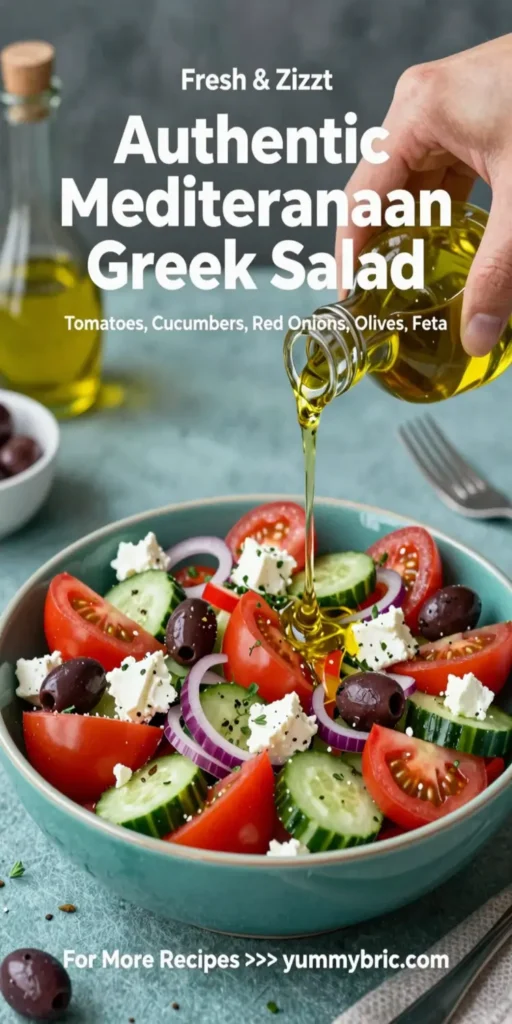
Prep time: 20 minutes
Cook time: 0 minutes
Total time: 20 minutes
Servings: 4
Authentic Mediterranean Greek Salad is not just food; it’s a fusion of fresh ingredients, vibrant flavors, and a true representation of Mediterranean cuisine. Especially perfect for busy parents or anyone looking to eat healthily without sacrificing taste, this salad bursts with nutrition and offers delightful textures. The simple combination of ingredients ensures that even kitchen beginners can whip up a dish that’s as pleasing to the eyes as it is to the palate.
What Is Authentic Mediterranean Greek Salad?
Greek salad, or “Choriatiki,” is a traditional dish that hails from Greece and is a staple in Mediterranean diets. This salad typically consists of ripe tomatoes, crisp cucumbers, red onions, hearty bell peppers, and creamy feta cheese, all drizzled with a generous amount of olive oil. Unlike many salads that may be overwhelmed by dressings and heavy textures, the beauty of Greek salad lies in its simplicity. The freshness of the vegetables speaks for itself, and when each ingredient is of high quality, the end result is a refreshing and satisfying meal or side dish.
Why You’ll Love This
You will love this Authentic Mediterranean Greek Salad for several reasons. Firstly, it is incredibly healthful, packed with essential vitamins and nutrients from fresh vegetables. The crunchiness of cucumbers and the juiciness of tomatoes create a delightful contrast that tantalizes the taste buds. Secondly, it’s versatile; you can enjoy it as a light lunch, a side for grilled meats, or even a starter before a more substantial meal. Additionally, it’s quick to prepare, making it a lifesaver for busy evenings or when you’re looking to meal prep for the week ahead. And let’s not forget how affordable it is, especially if you shop for seasonal produce!
Ingredients You’ll Need
- 3 cups of ripe tomatoes: Use heirloom or vine-ripened tomatoes for the best flavor.
- 1 large cucumber: Choose a firm cucumber for added crunch.
- 1 red onion: Thinly sliced for a mild, sweet flavor.
- 1 bell pepper: Any color is fine, but red or yellow adds a sweeter taste.
- 1 cup of feta cheese: Crumbled; opt for good quality for rich taste.
- ½ cup of kalamata olives: Pitted for a briny touch.
- ¼ cup of extra-virgin olive oil: Enhances flavor and adds healthy fats.
- 2 tablespoons of red wine vinegar: Adds tanginess to the salad.
- Salt and pepper: To taste; essential for enhancing the overall flavor.

How to Make
- Prepare the vegetables: Start by washing all your vegetables thoroughly. Chop the ripe tomatoes into bite-sized pieces, ensuring you include the juice for added flavor. Slice the cucumber into half-moons, and the red onion into thin rings. Slice the bell pepper into thin strips. This medley of textures serves as a splendid base for your Greek salad.
- Combine the ingredients: In a large bowl, gently toss together the tomatoes, cucumber, red onion, bell pepper, kalamata olives, and crumbled feta cheese. The colors should blend beautifully, creating a visually appealing dish. Be careful not to break the feta too much, as you want those creamy chunks to remain intact.
- Make the dressing: In a small bowl, whisk together the olive oil and red wine vinegar until it’s well combined. Season with salt and pepper to taste. This dressing perfectly complements the freshness of the salad without overpowering the natural flavors.
- Dress the salad: Pour the dressing over the salad just before serving. Mix gently to ensure every ingredient is coated evenly. Allowing it to rest a few minutes ensures the flavors meld together.
- Serve and enjoy: Transfer the salad to a serving platter or individual bowls. This salad is perfect alongside grilled meats, or simply enjoy it solo for a nourishing lunch.
Variations & Substitutions
Quinoa Greek Salad: For a heartier version, add cooked quinoa as a base. It adds protein and makes the salad more filling, perfect for a meal prep option. The nutty flavor of quinoa pairs nicely with the vegetables, and it also helps absorb the dressing.
Grilled Chicken Greek Salad: For a satisfying protein boost, top your salad with slices of grilled chicken breast. Marinate the chicken in olive oil, lemon juice, and oregano before grilling for enhanced flavor. This not only increases the meal’s nutrition value but also makes it a complete dish that is perfect for dinner.
Vegan Greek Salad: Replace feta with cubed avocados or a vegan cheese alternative for a delicious plant-based version. The creaminess of avocado adds richness while keeping it vegan-friendly. You could also toss in chickpeas for extra protein and texture.
Common Mistakes to Avoid
One common mistake is using low-quality ingredients. Always opt for the freshest, high-quality produce you can find; it makes a noticeable difference in taste. Use ripe tomatoes; their juiciness elevates the entire dish. Another mistake is overdressing the salad. Start with a small amount of dressing and add more as needed, to avoid a soggy salad. Lastly, cutting vegetables too early can lead to them becoming mushy. Prepare everything just before serving to maintain the crispness of the veggies.
Storage, Freezing & Reheating Tips
Greek salad is best enjoyed fresh but can last in the refrigerator for up to 2 days. To store, keep the salad in an airtight container to maintain its freshness. However, if you’ve dressed the salad already, consume it within a day, as the dressing can cause the vegetables to become wilted and soggy. If you plan on meal prepping, consider storing the chopped vegetables separately and only mixing them with the dressing just before serving. Freezing Greek salad is not recommended because the vegetables do not freeze well, often resulting in a mushy texture upon thawing.
Frequently Asked Questions
Can I make Greek salad ahead of time? Yes, you can prepare the ingredients and store them separately in the refrigerator. However, it’s best to dress the salad just before serving to keep the vegetables crisp. This approach is perfect for meal prep, allowing you to toss everything together quickly when you’re ready to eat.
What type of olives are best for Greek salad? Kalamata olives are traditional and provide that robust, tangy flavor that complements the freshness of the other ingredients. However, you can substitute with green olives or even omit them if you prefer a different taste. The feta cheese acts as a wonderful counterpart no matter what olives you choose.
Is Greek salad healthy? Yes! Greek salad is a nutrient-dense side dish packed with vitamins, minerals, and antioxidants. The combination of fresh vegetables, healthy fats from the olive oil, and protein from the feta cheese makes it a balanced option. Perfect for anyone trying to maintain a healthy lifestyle while enjoying delicious food.
What can I serve with Greek salad? Greek salad pairs beautifully with grilled meats, pita bread, or even served as a starter at a larger meal. It complements Mediterranean-inspired dishes perfectly and can elevate any casual dinner. Considering its light yet satisfying nature, you can enjoy it alongside hearty dishes without overwhelming the palate.
Can I customize my Greek salad? Absolutely! Greek salad is incredibly flexible. Feel free to add your favorite ingredients like zucchini, artichokes, or even a splash of lemon juice for extra zest. Tailoring the recipe to your taste is encouraged and can lead to delightful new variations.
Conclusion:
Authentic Mediterranean Greek Salad is a fantastic addition to your culinary repertoire. Its vibrant colors, fresh flavors, and health benefits make it an ideal dish for any occasion, from weekday meals to celebratory gatherings. With its ease of preparation and adaptability, this salad can quickly become a beloved staple in your home. Enjoy the simple pleasures that come with each bite of this wholesome, delightful dish!