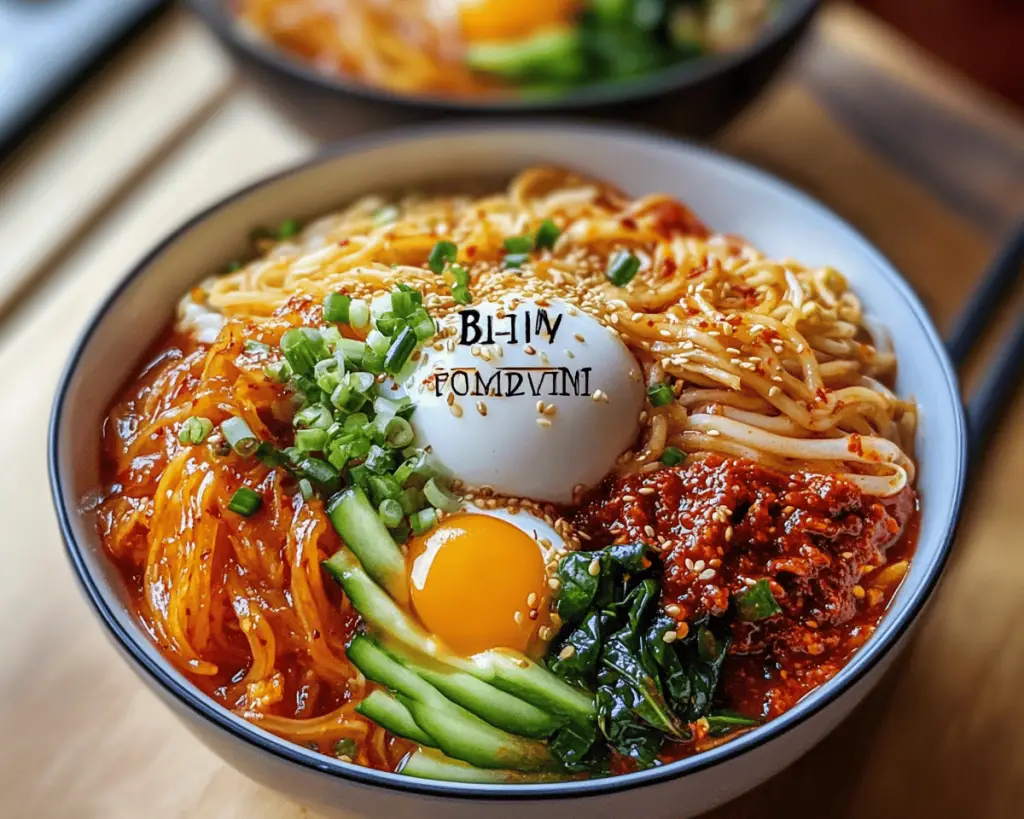
I can’t tell you how many times I’ve found myself reaching for a classic bowl of **Bibimmyeon**—the fiery, deliciously tangled Korean cold noodles that are a staple in my home, especially during those scorching summer days or just when I need a pick-me-up. Honestly, there’s something about those slippery noodles coated in that vibrant red chili sauce, mixed with fresh veggies that feels like a burst of sunshine right on my palate. It’s hard to pinpoint the exact moment I fell in love with Bibimmyeon; maybe it was when I first tasted it at a local Korean restaurant with my friends, or perhaps it was during one of those hot family barbecues where my grandma insisted we need something refreshing to balance out the grilled meats.
Here’s the thing: Bibimmyeon isn’t just food; it’s nostalgia rolled up in a bowl, a little reminder of summer as a kid, when my parents would make a big batch and we would slurp them quickly before they got soggy. I’d be lying if I told you I always nailed the recipe on the first try. There were many moments where I confused sweetness and spiciness, ended up adding too much soy sauce, or mixed it all up before even letting the noodles cool. Yet, those quirks and the occasional ‘oops’ only make the experience richer—like a good story, right? Because let’s be honest—those perfectly curated Instagram dishes? Sometimes, they miss the heart that comes from those slightly messy kitchen experiments.
Now that it’s almost a tried-and-true recipe in my life, I can’t wait to share it with you. I promise you; once you’ve made these a couple of times, you’ll find your rhythm, and then it’s all about customizing it to your cravings. Let’s talk about why these cold noodles deserve a spot at your table and how to make them just right.
What Goes Into Bibimmyeon?
What Goes Into Bibimmyeon?
The beauty of Bibimmyeon lies in its simplicity and the ability to adapt it with ingredients you love. Here’s a little breakdown of what you’ll need to create your own bowl of joy:
– **Noodles**: This is a no-brainer, right? I always use **wheat noodles**, but if you’re gluten-free, feel free to try **sweet potato noodles**. Both have that lovely chewy texture that makes Bibimmyeon oh-so-addictive. I usually go for standard sizes, but you could also opt for thinner noodles if that’s what you prefer.
– **Gochujang (Korean red chili paste)**: A tablespoon or two is your secret weapon here. It tends to get spicy quick, so start small. The depth of flavor is unrivaled—sweet, savory, and just enough heat to make your nose crinkle a bit.
– **Vinegar**: A splash of **apple cider vinegar** or even **rice vinegar** works wonders. It cuts through the richness of the sauce and makes everything taste balanced. Remember, a little goes a long way.
– **Sesame oil**: Oh, please don’t skip this! That nutty undertone is essential. It’s like wrapping your noodles in a warm hug on a chilly day.
– **Honey (or sugar)**: To balance the heat, I often add a teaspoon or so of honey. Pro-tip: if you can find **Korean corn syrup,** it’s even better! It gives the sauce a richer texture.
– **Vegetables**: Here’s where you can really let your creativity shine! I like using sliced **cucumbers** for that refreshing crunch, some **carrots** for sweetness, and a handful of **bean sprouts**—they always remind me of my childhood…and yes, that’s a story for another time. If you have radishes, throw them in too.
– **Boiled egg**: Pop an egg on top for some extra protein and richness. Half or a whole, it’s all good.
– **Sesame seeds**: Because everything’s a little better with a sprinkle of toasted sesame seeds, right? It adds that delightful crunch and visual appeal.
I remember one time I tried adding some grilled beef on top just to make it more robust, but the truth is, the dish shines perfectly on its own without feeling heavy. You know what I mean? It’s the summer meal that invites you to kick back and enjoy.
Is Bibimmyeon Actually Good for You?
Is Bibimmyeon Actually Good for You?
Now, let’s talk about health. Before I dive into it—yes, this dish is indulgent, but honestly, it’s a balanced kind of indulgence. Here’s why:
– **Noodles** are generally something we all love, but managing your portion is key. I mean, if you’re like me, it’s easy to lose all track and end up making way too much! But hey, it’s mostly carbs, and they fuel your day. And on the bright side, they are often low in fat and can give you energy to last through a hot summer day.
– **Gochujang** adds some heat and tons of flavor so you often don’t need much. I can’t help but think how beneficial that slight spice can be since it revs up your metabolism a bit. And, the antioxidants in gochujang are a little bonus if you desperately need an excuse!
– The **veggies**? Pure gold. Load them on. The more colors you add, the more nutrients you get. Freshness is everything, right? Plus, fiber galore! It brings a satisfying crunch that’s almost too good to be true.
– The **egg** brings protein, which helps you feel full longer. If you’re watching your cholesterol, I totally get it—don’t feel pressured to add it in.
– And that sprinkle of **sesame seeds**? Contains healthy fats and can help lower cholesterol levels!
Look, here’s the thing: this isn’t the meal you want to reach for every day if you’re counting calories, but it’s definitely better than takeout pizza on a random Tuesday night. And honestly, food should make us excited, right? A bowl of Bibimmyeon feels indulgent while still being colorful and packed with nutrients. It’s that perfect balance we crave sometimes.
Here’s What You’ll Need
Here’s What You’ll Need
– **200g** (7 oz) **wheat or sweet potato noodles**
– **2 tablespoons** **gochujang** (Korean red chili paste)
– **1 tablespoon** **apple cider vinegar** or **rice vinegar**
– **1 teaspoon** **sesame oil**
– **1 teaspoon** **honey** (or sugar)
– **1 medium-sized cucumber**, julienned
– **1 small carrot**, julienned
– **1 handful** **bean sprouts**
– **1 boiled egg**, halved
– **1 tablespoon** **toasted sesame seeds** for garnish
– Salt to taste
Now that we’ve covered the essential ingredients, let’s get to the fun part. Cooking!
How to Make Bibimmyeon Step-by-Step
How to Make Bibimmyeon Step-by-Step
1. **Boil the Noodles**: Start by boiling a large pot of salted water (you know, like the sea kind of saltiness) and toss in those noodles. I usually cook them according to the package instructions, usually around 4-5 minutes. Keep an eye on them—they can overcook faster than a romance movie makes me cry!
2. **Prepare the Sauce**: While the noodles are cooking, grab a bowl and mix up your **gochujang**, **vinegar**, **sesame oil**, and **honey**. Give it a good stir until it’s well-combined. Honestly, the smell is going to make your mouth water; you might want to sneak a taste.
3. **Drain and Rinse**: Once your noodles are cooked, drain them in a colander and rinse them under cold water to stop the cooking process. This part is crucial for that lovely chewy texture. You can even toss a few ice cubes in with your cold water for the ultimate chill factor.
4. **Toss in the Veggies**: In the same bowl that you mixed the sauce in, add your noodles and the julienned veggies. Go ahead—throw everything in there. It’s a bit of a luxury when you think about all that color and crunch! Give it a good toss to ensure everything’s coated nicely. Be gentle, or you’ll end up with a noodle mess!
5. **Plate It Up**: Serve it in bowls and place half a boiled egg on top of each portion. Sprinkle with toasted sesame seeds for that lovely crunch, and if you’re feeling adventurous, slide some extra cucumber or carrot blooms on top. Trust me, it just looks more inviting that way.
6. **Dig In**: This is where you grab a pair of chopsticks… or a fork, I won’t judge! Slurp those good noodles down! If you’re feeling a bit spicy, drizzle more gochujang over the top for that extra zing.
Oh man, writing this makes me want to whip up a bowl right now! But what’s really fun is when friends come over, and they see the spread. I love how everyone adapts their plates, some adding more carrots, others inundating them with gochujang. It’s an unspoken competition in a way, sharing how we make it our own.
Little Extras I’ve Learned Along the Way
Little Extras I’ve Learned Along the Way
Alright, so let’s chat about toppings and variations. I’ve had some fun experimenting over the years, and here are a few tips I’ve gathered along the way:
– **Experiment With Proteins**: While I stick with the boiled egg, you could also throw in some grilled chicken, shrimp, or even tofu if you want a vegan twist. My cousin once loaded her Bibimmyeon with leftover bulgogi, and wow. Now that was a meal!
– **Try Different Veggies**: If you’re not a fan of one kind of veggie or you have some kicking around in your fridge, feel free to swap them out. Spinach works great, and I’ve even stirred in some purple cabbage for that gorgeous pop of color.
– **Make It Spicier**: I usually top mine with a bit more gochujang, but if you like heat, try adding sliced jalapeños or sprinkle some red pepper flakes in your sauce!
– **Leftover Noodles**: If you find yourself with leftover noodles, you could repurpose them as a salad or even as a hearty side dish for your grilled favorites. A quick fry will give them a nice crispy texture!
– **Cooling Sauce**: I’ve taken to making an extra batch of sauce that I keep in the fridge. That way, when the craving hits at midnight, I just grab my leftover noodles, add a splash of sauce, and boom! Instant snack.
Sometimes, it’s the small rediscoveries and culinary experiments that make the biggest differences. Cooking can be casual, fun, and ultimately messy at times—but that’s the beauty of it. And you know what? It’s these little experiments that lead to recipes with stories, laughter, and maybe even a sprinkle of culinary magic.
So, here’s my heartfelt invitation: give this **Bibimmyeon** a go! It might seem simple, but the experience of making it—whether it goes perfectly or is a little chaotic—is something you’ll treasure. I’d love to hear how it turns out for you, what quirks or variations you tried, or any little accidents that turned into delicious discoveries. This one means a lot to me, and I hope it ends up becoming as special to you as it is to me. Happy cooking!