Prep time: 15 minutes
Cook time: 30 minutes
Total time: 45 minutes
Servings: 4
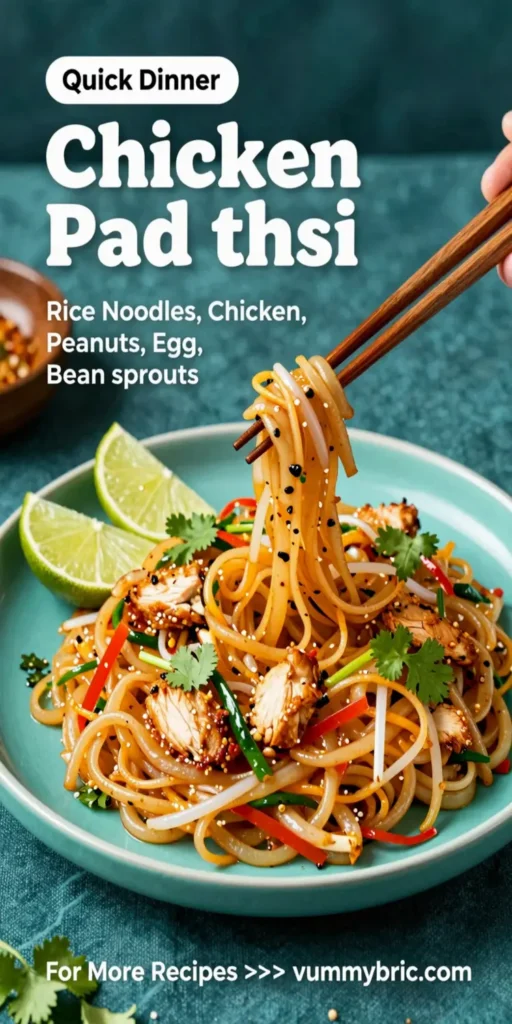
Chicken Pad Thai is a beloved dish that combines sweet, salty, and savory flavors in a delightful stir-fry. It is a perfect comfort food option and a staple of Thai cuisine. The combination of tender chicken, crunchy vegetables, and chewy rice noodles tossed in a flavorful sauce makes it a meal the whole family can enjoy. This dish is not only delicious but also customizable to suit your preferences, making it an ideal weeknight dinner option.
What Is Chicken Pad Thai?
Chicken Pad Thai is a stir-fried noodle dish originating from Thailand. The key components of this dish include rice noodles, a protein (in this case, chicken), vegetables, and a savory sauce made from ingredients such as tamarind, fish sauce, and sugar. It is typically garnished with crushed peanuts, lime wedges, and fresh herbs. The dish is both satisfying and versatile, allowing for many variations depending on available ingredients.
Why You’ll Love This
You’ll love this Chicken Pad Thai for several reasons. First, it’s quick to prepare, making it an excellent option for busy parents or individuals with hectic schedules. The vibrant colors of veggies and the star of the dish—the chicken—make your meal not only appetizing but visually appealing. The blend of flavors—tangy, sweet, and savory—will tantalize your taste buds. Plus, this dish can easily be modified to accommodate different dietary preferences, whether you are a meat lover or looking for vegetarian options.
Ingredients You’ll Need
- 8 oz rice noodles: These are the base of the dish; they serve as the foundation that absorbs the delicious sauce.
- 2 tablespoons vegetable oil: This oil is essential for frying the chicken and vegetables, providing a cooking medium that adds flavor.
- 1 pound chicken breast, thinly sliced: This is the main protein source, adding heartiness to your meal.
- 3 cloves garlic, minced: Fresh garlic enhances the overall flavor and adds a nice aroma.
- 2 eggs: Beaten eggs are added to create a creamier texture and boost protein content.
- 1 cup bean sprouts: These add crunchiness and a refreshing contrast to the tender noodles and chicken.
- 1/4 cup green onions, chopped: These provide a mild onion flavor and a bright, fresh element to the dish.
- 1/4 cup peanuts, chopped: Peanuts add a delightful crunch and a nutty flavor that complements the sauce.
- 2 tablespoons tamarind paste: This provides the tangy flavor that makes Pad Thai unique.
- 2 tablespoons fish sauce: Fish sauce adds depth and umami to the dish.
- 1 tablespoon sugar: Sugar balances the flavors, enhancing the sweet notes of the sauce.

How to Make
- Begin by soaking the rice noodles in warm water for about 20 minutes or until they are pliable and elastic. This step is essential as it allows the noodles to absorb some moisture and cook evenly later.
- While the noodles soak, heat the vegetable oil in a large skillet or wok over medium-high heat. Once the oil is shimmering, add the sliced chicken breast. Sauté until the chicken is browned and cooked through, which should take about 5-7 minutes. Remove the chicken from the skillet and set it aside.
- In the same skillet, add the minced garlic and sauté for about 30 seconds until it becomes fragrant. Be careful not to let it burn, as this will affect the flavor of your dish.
- Add the soaked noodles to the skillet along with the tamarind paste, fish sauce, and sugar. Toss everything together, ensuring the noodles are evenly coated in the sauce. Stir-fry for about 3-4 minutes until the noodles are heated through.
- Push the noodles to one side of the skillet. Crack the eggs into the empty side and scramble them gently until they are just set. This adds a lovely creaminess to the dish, enhancing the overall taste.
- Return the cooked chicken to the skillet along with bean sprouts and chopped green onions. Stir everything together for about another minute to combine. You want the bean sprouts to retain some crispness, providing a nice texture contrast in your dish.
Variations & Substitutions
Vegetarian Pad Thai: To make a vegetarian version, simply swap the chicken for tofu or your favorite vegetables. Use soy sauce in place of fish sauce for a delicious vegetarian alternative. The texture of tofu can absorb the flavors well, providing a satisfying bite.
Spicy Pad Thai: If you enjoy heat, add chili flakes or Sriracha to the sauce. You can adjust the spice level according to your preference. Consider including sliced jalapeños or other spicy peppers for an extra kick that complements the sweetness and tang.
Prawn Pad Thai: For seafood lovers, feel free to replace the chicken with prawns. The key is to sauté the prawns until they turn pink and are cooked through. The seafood will impart a delicate flavor that works beautifully with the sauce.
Noodle-less Pad Thai: For a low-carb option, substitute the rice noodles with spiralized zucchini or cabbage. This alteration maintains the essence of Pad Thai while significantly reducing carbs, perfect for those watching their intake.
Common Mistakes to Avoid
When preparing Chicken Pad Thai, it’s crucial to avoid certain pitfalls. One common mistake is overcooking the noodles. Be sure to monitor them while soaking; they should remain slightly firm as they will continue cooking when stir-fried. Another frequent error is using too much sauce, which can lead to a soggy dish. Start with the recommended amounts and adjust according to your taste. Lastly, neglecting to prep ingredients beforehand can cause stress during cooking. Have everything ready to go, so you can work efficiently and enjoy the process.
Storage, Freezing & Reheating Tips
To store leftover Chicken Pad Thai, place it in an airtight container and refrigerate for up to three days. For long-term storage, consider freezing it. Allow the dish to cool completely before transferring it to a freezer-safe container, where it can last for up to two months. When you’re ready to eat, thaw it overnight in the fridge before reheating. Use a skillet over medium heat and add a splash of water for moisture while heating. This will help revive the noodles and maintain a pleasant texture.
Frequently Asked Questions
Can I make Pad Thai without tamarind?
Yes, while tamarind is a traditional ingredient that brings a unique tangy flavor, you can substitute it with lime juice or a blend of vinegar and sugar for a similar effect. Keep in mind that this might alter the classic taste slightly, but it remains delicious.
How can I adjust the recipe for meal prep?
To make Pad Thai suitable for meal prep, cook the noodles and chicken in advance and store them separately. When ready to eat, combine with fresh ingredients like bean sprouts and herbs. This maintains freshness and prevents the dish from becoming soggy.
Is Chicken Pad Thai gluten-free?
Rice noodles are generally gluten-free, but it’s crucial to check the labels on sauces. Fish sauce is usually gluten-free, but some brands might have added gluten. Use gluten-free soy sauce if necessary to maintain that flavor without compromising dietary needs.
How spicy is Chicken Pad Thai?
The spiciness of Chicken Pad Thai can vary widely based on your preferences. Traditional recipes are not meant to be very spicy but should have a hint of warmth. If you desire more heat, adjust accordingly by adding chili flakes or hot sauce during cooking.
Conclusion: Chicken Pad Thai is not just a delightful meal; it’s a versatile dish that can be adapted to fit countless dietary needs while still providing that comforting essence we all love. Whether you’re looking for a quick weeknight dinner or a special dish to impress guests, giving this recipe a try is a fantastic choice. Enjoy the burst of flavors and the joy of cooking at home!