Prep time: 20 minutes
Cook time: 1 hour 30 minutes
Total time: 1 hour 50 minutes
Servings: 8
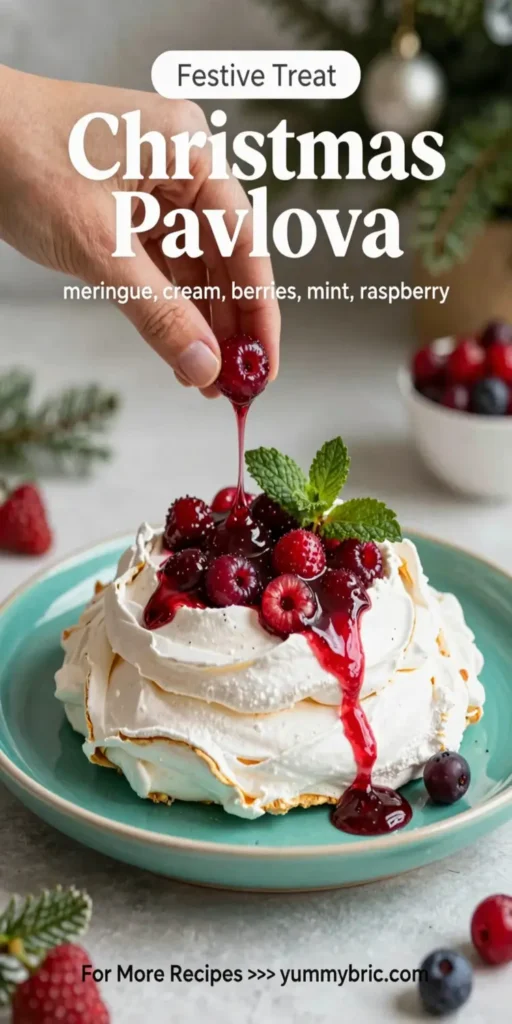
Christmas Pavlova is a delightful dessert that will surely become a centerpiece on your holiday table. With its crisp outer shell and soft, marshmallow-like interior, pavlova is not only delicious but also offers a pleasing aesthetic that makes it perfect for special occasions. Topped with fresh fruits and whipped cream, it provides a refreshing contrast to heavier holiday dishes. This dessert will elevate your festive meal and leave guests craving more.
What Is Christmas Pavlova?
Christmas Pavlova is a traditional meringue-based dessert that originated from either Australia or New Zealand, named after the famous Russian ballerina Anna Pavlova. It has become especially popular during the holiday season, due to its light and airy texture, which contrasts beautifully with rich holiday meals. A classic Pavlova consists of a meringue shell, which is crisp on the outside and soft within. It is typically baked slowly at a low temperature to achieve that perfect texture. Finally, it is adorned with toppings like whipped cream and seasonal fruits, making it a visually stunning dessert that captures the essence of Christmas.
Why You’ll Love This
You will adore Christmas Pavlova for several reasons. First, it offers a unique yet simple way to showcase seasonal fruits like berries and passionfruit, which not only taste amazing but also enhance the visual appeal of the dish. Second, it is a gluten-free option, making it suitable for guests with dietary restrictions. The pavlova’s airy texture complements a rich dinner well, providing a light and refreshing finish. Moreover, it can be prepared a day in advance, saving you time on the festive day while still impressing your guests. Lastly, the satisfaction of mastering this elegant dessert will have you basking in the glory of your culinary skills!
Ingredients You’ll Need
- 4 large egg whites: The base of the meringue, providing structure and volume.
- 1 cup granulated sugar: Creates sweetness and stability for the meringue.
- 1 tablespoon cornstarch: Helps to keep the meringue tender by absorbing moisture.
- 1 teaspoon white vinegar: Adds acidity, helping to create a stable meringue.
- 1 cup heavy whipping cream: For the rich topping that adds creaminess.
- Fresh mixed berries (strawberries, blueberries, raspberries): Bright fruits enhance both flavor and presentation.
- Passionfruit pulp: A flavorful addition that brings a hint of tartness.
How to Make
- Preheat your oven to 225°F (110°C). Prepare a baking sheet lined with parchment paper and draw a circle about 8-10 inches in diameter to guide your meringue shape.
- In a clean, dry bowl, beat the egg whites on medium speed until soft peaks form. This should take about 3-4 minutes. Ensure there is no grease in your bowl, as this can prevent the whites from whipping properly.
- Gradually add the granulated sugar, one tablespoon at a time, continuing to beat until the meringue becomes glossy and stiff peaks form. This step is crucial; the sugar must be fully dissolved into the whites for the best texture.
- Gently fold in the cornstarch and vinegar using a spatula. Be careful not to deflate the meringue too much, as you want to keep as much air trapped in as possible for that perfect, chewy interior.
- Spoon the meringue onto the prepared baking sheet, using the drawn circle as a guide. Create a slight indentation in the center for the toppings later, shaping the meringue into a high dome.
- Bake the pavlova for about 1 hour and 30 minutes, or until the outside is dry to the touch, and the meringue peels away easily from the parchment paper. Turn off the oven, crack the door slightly, and let the pavlova cool completely in the oven to prevent cracking.
- Once cool, whip the heavy cream until soft peaks form. Spread the whipped cream over the top of the cooled pavlova, filling the center.
- Top with fresh mixed berries and drizzle with passionfruit pulp. Serve immediately or refrigerate for a short time before serving.
Variations & Substitutions
Chocolate Pavlova: For a chocolate twist, try adding cocoa powder to the meringue. Replace 3 tablespoons of granulated sugar with 3 tablespoons of cocoa powder for a rich, chocolaty taste. Top it with chocolate ganache and berries for a decadent version.
Citrus Pavlova: Incorporate citrus flavors by mixing in lemon or orange zest into the whipped cream. A citrus curd can also serve as a topping, adding a refreshing tang that cuts through the sweetness beautifully.
Vegan Pavlova: For a vegan version, use aquafaba (the liquid from canned chickpeas) in place of egg whites. Whip it similarly until stiff peaks form. Substitute coconut cream for the whipped cream topping, and you can still enjoy this delightful dessert.
Nut-Almond Pavlova: For added texture, fold finely chopped nuts like almonds or hazelnuts into the meringue before baking. This will give your pavlova a crunchy element that contrasts beautifully with the creamy topping.
Common Mistakes to Avoid
One common mistake is not allowing your egg whites to reach room temperature before whipping. Always separate the egg whites carefully, and ensure no yolk enters the whites. This can inhibit the meringue from reaching its full volume.
Another issue is baking at too high a temperature. Always keep the oven temperature low for the slow drying process to avoid a chewy exterior. Further, never rush the cooling process. If the pavlova cools too quickly, it will crack.
Lastly, avoid adding toppings before serving. Putting the cream and fruits on too soon can lead to a soggy pavlova. Add these immediately before serving for the best texture.
Storage, Freezing & Reheating Tips
If you have leftovers, store the pavlova uncovered at room temperature. This helps maintain its crispiness. If covered, moisture can build up, causing the meringue to become chewy or soggy. You can prepare the meringue a day ahead, then assemble it on the day of serving.
For freezing, it’s best to freeze the pavlova shell alone. Wrap the cooled meringue tightly in plastic wrap and then in aluminum foil. To reheat, let it thaw at room temperature.
Do not freeze the whipped cream or any fruits, as they do not hold up well when thawed.
Frequently Asked Questions
Can I make pavlova ahead of time?
Yes, you can prepare the meringue a day in advance and store it at room temperature. Just hold off on adding toppings until you’re ready to serve.
Can I use different fruits for topping?
Absolutely! While berries are traditional, feel free to get creative. Kiwi, mango, or pomegranate can add unique flavors and vibrant colors.
Why did my pavlova crack?
Cracking can occur due to rapid temperature changes. Always cool the pavlova slowly in the oven once baking is complete. This reduces the chance of cracks forming.
Is pavlova gluten-free?
Yes, pavlova is naturally gluten-free since it is made primarily from egg whites and sugar, making it a great choice for those with gluten sensitivities.
What should I do if my meringue is too runny?
If your meringue is not forming peaks, this may be due to the presence of grease or protein from yolks. Start over with a clean bowl, ensuring utmost cleanliness of all utensils used.
Conclusion:
Christmas Pavlova is a stunning and delectable dessert that dazzles both the eyes and the palate. With various variations and easy-to-follow steps, you can master this recipe in no time, impressing your family and friends during the festive season. Don’t shy away from making it your own—play with flavors, colors, and textures. Enjoy each bite, as this pavlova brings joy and celebration to your holiday table.