Prep time: 20 minutes
Cook time: 25 minutes
Total time: 45 minutes
Servings: 24 macaroons
Easter Coconut Macaroons are pure bliss! If you’ve ever bitten into a perfectly baked macaroon, you’ll know that delicate crunch on the outside gives way to a sweet, chewy center infused with sensational coconut flavor. These delightful treats echo the spirit of Easter with their festive nature and glorious texture. For busy families or beginner bakers, this recipe is a lifesaver; it combines simplicity with impressive results.
In this article, you will learn how to craft these aromatic cookies from scratch, ensuring they remain a staple in your spring celebrations. You’ll discover the *vibrant flavors*, useful tips for success, and variations to accommodate different dietary needs.
What Is Easter Coconut Macaroons?
Easter Coconut Macaroons are luscious cookies that feature a base of sweetened shredded coconut, combined with egg whites and sugar, giving them a unique texture and flavor profile. The origin of these delightful treats can be traced back to Italy, where they were initially made with almond paste. Over time, the recipe evolved into the coconut-based version we know and love today.
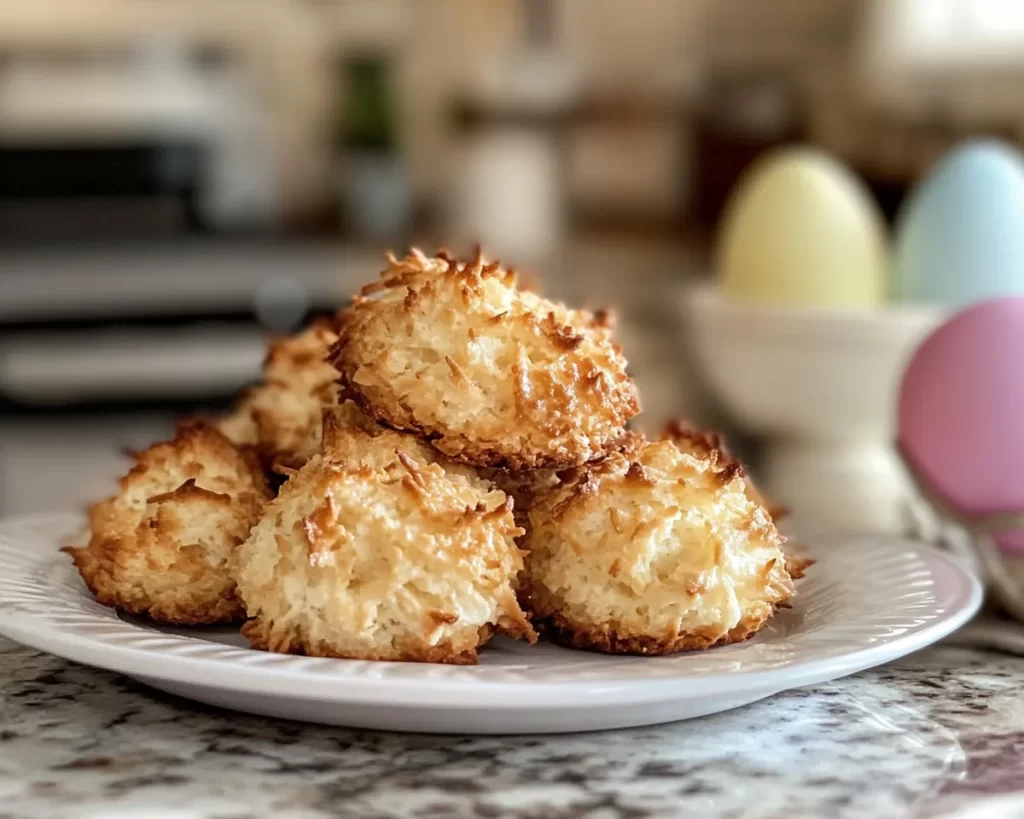
These macaroons are characterized by their delightful golden brown exterior and chewy sweetness within. They often carry a tropical scent due to the predominant coconut flavor, making them a favorite during festive seasons like Easter. When you bite into a macaroon, you will experience a delightful contrast between the crunchy outer layer and the soft, chewy center, making each bite a memorable experience.
One standout feature of the Easter Coconut Macaroon is how easily customizable it is, allowing for endless possibilities while maintaining its core identity. You can dip them in chocolate, sprinkle on nuts, or even incorporate flavors like lemon or vanilla. These fantastic cookies are truly a celebration on their own.
Why You’ll Love This
You will be amazed by how much flavor can result from a few simple ingredients. The beauty of Easter Coconut Macaroons lies not only in their delightful taste but also in their organization-friendly nature. With minimal preparation and cooking time, you will be able to whip together a batch that’s perfect for Easter gatherings or a cozy family treat.
These macaroons are relatively cost-effective; a bag of shredded coconut can go a long way, making them an excellent choice for budget-conscious bakers. Furthermore, they are gluten-free, which means they can be enjoyed by a wide array of guests, including those with dietary restrictions.
Common misconceptions about macaroons often include the notion that they are tricky to make. This recipe will dispel that myth, guiding you through each step smoothly, ensuring even those who feel inexperienced in the kitchen can create a batch that rivals store-bought versions.
Ingredients You’ll Need
- Sweetened shredded coconut: The star ingredient, which provides the distinct flavor and chewy texture.
- Egg whites: Essential for binding the mixture and providing structure; they create a light, airy texture.
- Granulated sugar: This sweetener enhances the coconut flavor while creating a lovely caramelization during baking.
- Vanilla extract: Offers depth and adds an aromatic quality to the macaroons.
- Almond extract: If desired, this can enhance the flavors, giving the macaroons a delightfully nutty undertone.
- Chocolate (optional): For dipping and creating a decadent finish, enhance the flavor and presentation.
Each ingredient plays a vital role in the execution of this delightful recipe. Sweetened shredded coconut contributes texture and richness, so don’t skimp on quality; opt for the best you can find. The egg whites are what give your macaroons that lovely, airy structure. It’s crucial not to let any yolk get into your whites, as that can hinder them from whipping properly.
Granulated sugar is the sweet backbone of this recipe, ensuring each macaroon tastes like a bite of heaven. Vanilla extract elevates the base flavors, while almond extract can be an exciting twist. Chocolate, should you choose to incorporate it, adds an extra layer of richness that can make these treats irresistible.
How to Make
- Preheat your oven: Start by preheating your oven to 325°F (160°C). This step ensures that your macaroons bake evenly and achieve that golden brown color.
- Prepare your baking sheet: Line a baking sheet with parchment paper. This prevents the macaroons from sticking and makes cleanup easier. Paper or silicone mats both work well!
- Combine the ingredients: In a large mixing bowl, combine 2 2/3 cups of sweetened shredded coconut, 1/4 cup of granulated sugar, 1/4 teaspoon of salt, 1 teaspoon of vanilla extract, and 1/4 teaspoon of almond extract (if using). Mix these ingredients thoroughly until the coconut is evenly coated with the sugar.
- Whip the egg whites: In another clean mixing bowl, use an electric mixer to beat 2 large egg whites until soft peaks form. This usually takes around 2-3 minutes. You want them to be frothy but not overly stiff; they need to maintain some airiness.
- Fold the egg whites into the coconut mixture: Gently fold the beaten egg whites into the coconut mixture using a spatula. Be careful not to deflate the air you just whipped into the egg whites. This step is crucial for achieving the light, airy texture you desire.
- Shape the macaroons: Using a cookie scoop or your hands, form small mounds (about 1.5 tablespoons each) and place them on the prepared baking sheet. Leave a little space between each macaroon, as they will expand slightly while baking.
- Bake: Place the baking sheet in the preheated oven and bake for about 20-25 minutes or until the tops are golden brown. Keep a close eye on them, as baking times can vary based on your oven.
- Cool: Once baked, remove the macaroons from the oven and allow them to cool on the baking sheet for about 5 minutes; then transfer them to a wire rack to cool completely.
- Dip in chocolate (optional): For an added luscious touch, melt 1 cup of chocolate chips in the microwave or using a double boiler. Dip the bottoms of the cooled macaroons into the melted chocolate and place them back on the parchment paper for the chocolate to set.
Pay attention to texture cues throughout the process; your macaroons should be light and fluffy before baking, and they should have a lovely golden color once done. A helpful beginner tip: If you’re unsure about doneness, it’s better to take them out slightly early, as they will continue to cook on the baking sheet after removal.
Variations & Substitutions
Chocolate-Dipped Macaroons: If you adore chocolate, this is a must-try! Simply melt chocolate and dip the bottoms of your baked macaroons in it. It not only adds a decadent layer but also enhances the flavor profile, ensuring a glorious contrast between sweet, chewy coconut and rich chocolate.
Lemon Zest Macaroons: For a refreshing twist, add a tablespoon of fresh lemon zest into the coconut mixture. This variation brightens the flavors remarkably and offers a delicious, citrusy kick that can be perfect for springtime gatherings. It’s especially suitable for those who enjoy a touch of zest in their treats.
Almond Joy Macaroons: Inspired by the candy bar, these macaroons can include chopped almonds added to the mixture before baking. After baking, you can add a drizzle of chocolate on top. This variation offers delightful nuttiness combined with coconut, satisfying those with a sweet tooth looking for a crispy texture.
Vegan Macaroons: To create a vegan version, simply replace egg whites with aquafaba (the liquid from canned chickpeas). You would need approximately 3 tablespoons of aquafaba to substitute for one egg white. Whip it until glossy and fold it into the coconut mixture in the same manner.
strong>Nut-Free Macaroons: For health-conscious guests, omit any nuts and ensure you’re using a nut-free chocolate if dipping these macaroons. They will still shine with their primary ingredients of coconut, sugar, and egg whites, but customization can indeed make a difference in presentation.
Common Mistakes to Avoid
A frequent mistake when making Easter Coconut Macaroons is over-whipping the egg whites. You want soft peaks that are frothy and airy, not stiff, which can make the macaroons dense once baked. If your egg whites are too stiff, they will not fold into the coconut mixture effectively, and you’ll lose that beautiful light texture.
Another common issue is the tendency to overbake the macaroons. Keep a close eye on them in the oven, as even a minute too long can lead to a dry texture. To avoid this, set a timer for the minimum suggested baking time and check their progress.
Additionally, many overlook the importance of using fresh ingredients. Ensure your shredded coconut is fresh and not past its expiry date for optimal flavor and texture in your macaroons. If you find your coconut too dry or clumpy, you can dampen it slightly with a little water, ensuring it binds together nicely.
Storage, Freezing & Reheating Tips
Once your delicious macaroons cool completely, you can store them in an airtight container at room temperature for up to a week. For longer storage, consider freezing them. Place cooled macaroons on a baking sheet in a single layer, and freeze until solid. Once frozen, transfer them to a freezer-safe bag or container, layering them between parchment paper to prevent sticking. Frozen macaroons are best enjoyed within 2-3 months.
When you’re ready to enjoy your frozen macaroons, simply let them thaw at room temperature for about 30 minutes. They can also be reheated in the microwave, but be cautious; reheating for too long will result in a tough texture. A few seconds will help bring them back to room temperature without sacrificing that coveted chewiness.
Always practice food safety when storing any baked goods. Ensure your containers are clean and dry to prevent any moisture accumulation that could lead to spoilage.
Frequently Asked Questions
Can I use unsweetened coconut instead of sweetened?
Yes, you can use unsweetened coconut, but ensure to increase the amount of sugar to among 1/2 cup for a comparable sweetness. Keep in mind that the texture may be slightly different, as sweetened coconut typically has a drier consistency.
How can I tell if my macaroons are done baking?
Look for a golden brown color on the tops of the macaroons, which indicates they are perfectly baked. You can also gently touch the top; it should feel firm to the touch, not soft or wet. If unsure, it’s best to check them at the 20-minute mark.
Can I make these macaroons ahead of time?
Absolutely! You can prepare the macaroons in advance and store them in an airtight container. They hold up well for several days, so you can make them a few days before your big Easter gathering without sacrificing freshness.
Why did my macaroons spread out instead of holding their shape?
If your macaroons spread too much while baking, it could be due to overmixing or not allowing the egg whites to reach peak volume. Make sure to mix gently and avoid incorporating too much air after adding them to the coconut mixture.
What can I do with leftover coconut or egg yolks?
Leftover coconut can be used in various recipes such as coconut cakes, toppings for desserts, or even in smoothies. As for the egg yolks, you could use them to make custard, lemon curd, or add them to a rich pasta dish for extra richness and taste.
Conclusion:
Easter Coconut Macaroons bring the celebration to your dessert table with their delightful taste and texture. Their versatility, ease of preparation, and festive appearance make them perfect for any occasion, especially Easter. I encourage you to try your hand at this recipe and customize it to reflect your tastes. The joy of making these treats will leave you inspired to explore further in the kitchen. Share your creations with family and friends, and relish in the warmth of homemade goodies. Happy baking!