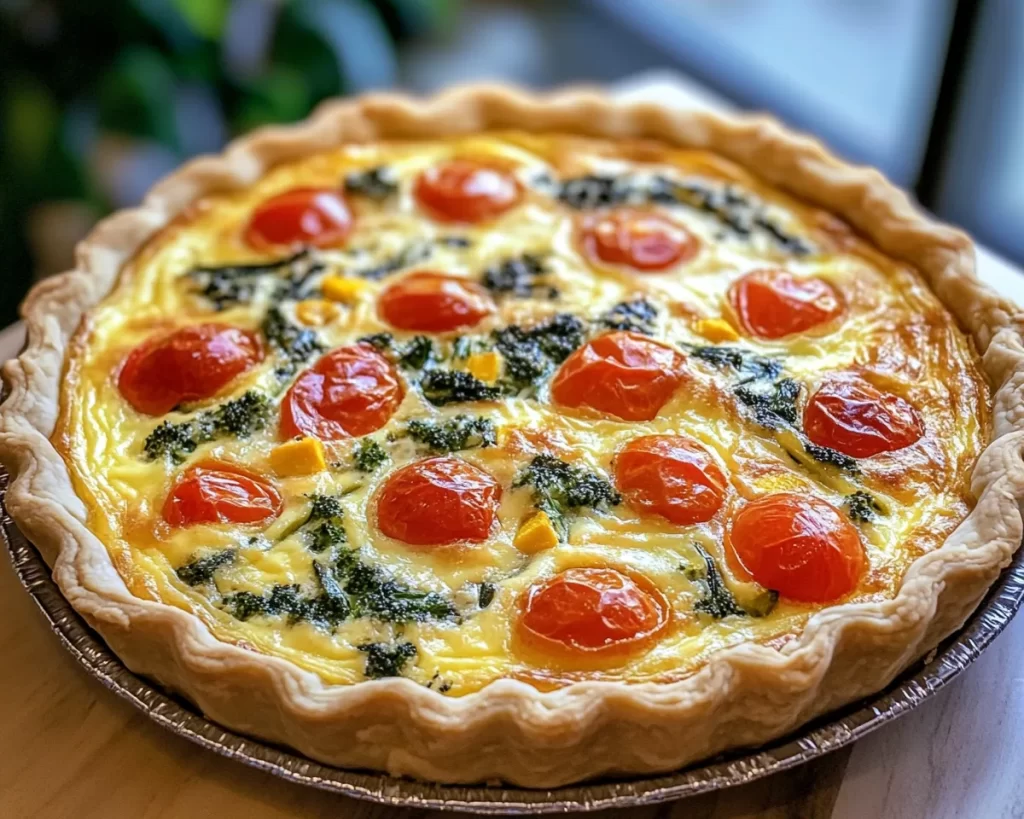
Prep time: 20 minutes
Cook time: 40 minutes
Total time: 1 hour
Servings: 8
When it comes to celebrating spring, few dishes can capture its essence as beautifully as a homemade quiche. The Easter Spring Vegetable Quiche is not just a meal; it’s a delightful ode to the vibrant produce that flourishes during this season. Imagine waking up to the delicate aroma of fresh herbs, roasted vegetables, and the golden warmth of a perfectly baked crust. This dish not only satisfies your taste buds but also invites you to enjoy the sunny rays of spring.
This quiche is special for many reasons—it combines simplicity and elegance, making it an ideal centerpiece for your Easter brunch or a cozy family dinner. With its rich filling of eggs and cream binding a garden of seasonal vegetables, every slice offers a delightful combination of flavors and textures. As you work through this recipe, you will learn not just how to make a delicious quiche but also gain insight into various tips, variations, and common mistakes to avoid, ensuring that your quiche is as fabulous as it sounds.
What Is Easter Spring Vegetable Quiche?
The Easter Spring Vegetable Quiche is a savory custard pie that has its origins in France, where similar dishes, such as quiche Lorraine, were crafted for centuries. This particular version takes full advantage of the bountiful spring vegetables available during this time, incorporating a variety of textures and flavors. You might find yourself savoring the sweet tenderness of asparagus, the earthy notes of spinach, and the fresh burst of peas—all baked within a buttery, flaky crust.
Quiches can be categorized as either sweet or savory, with savory being the most common for breakfast or brunch. The custard, made from eggs and cream, envelops the vegetables and acts as a glue that binds the flavors together. Not only is the texture custardy and smooth, but it also has enough sturdiness to maintain its shape when sliced. The key to a great quiche lies in achieving that perfect balance between the filling and the crust, which should maintain its crispiness even after filling is added.
The flavor of this dish can be tailored to your liking. Some may appreciate the richness of cheese, while others might prefer a dairy-free alternative. Regardless of your preferences, the Easter Spring Vegetable Quiche celebrates the flavors of spring and delivers a satisfying meal for a variety of occasions.
Why You’ll Love This
There are countless reasons to love the Easter Spring Vegetable Quiche. Firstly, this dish is all about freshness; the use of seasonal vegetables means you can enjoy top-quality produce straight from your local farmer’s market. Not only does this enhance the taste but it also ensures that you are consuming healthy, nutrient-dense ingredients.
In addition to its appealing flavor, this quiche is incredibly easy to prepare, making it suitable for busy parents or anyone new to the kitchen. The step-by-step process is straightforward, requiring basic techniques that even beginner cooks can master. Moreover, it’s versatile; you can easily swap out ingredients based on what you have on hand or your dietary preferences.
Cost-effectiveness is an added advantage. Seasonal vegetables are often more affordable, and using homemade or store-bought crust can help keep expenses down. Additionally, this quiche can be made ahead, saving precious time during busy mornings or holiday gatherings.
Some may believe that making a quiche is time-consuming or difficult, but that could not be further from the truth. This easy recipe allows you to create a beautiful dish without fuss.
Ingredients You’ll Need
- Pie crust: You can use a store-bought or homemade version. A flaky pie crust serves as a perfect base for the custard filling.
- Eggs: These are the foundation of the custard, providing both structure and creaminess.
- Heavy cream: This adds richness to the quiche. For a lighter version, consider using half-and-half or whole milk.
- Asparagus: A key spring vegetable, known for its tender texture and mild flavor. Fresh asparagus elevates the dish.
- Spinach: This leafy green contributes vibrant color and essential nutrients.
- Peas: Fresh or frozen peas add a natural sweetness and pop of color.
- Cheese: Options include feta, goat cheese, or cheddar. Cheese enhances the flavor profile and adds creaminess.
- Herbs: Fresh herbs like thyme or dill can elevate the flavor. Dried herbs can also work if fresh are not available.
- Salt and pepper: Essential for seasoning the quiche. Adjust to your taste preference.
Each ingredient plays a vital role in the overall success of this dish. It is essential to choose high-quality produce for ultimate flavor, so consider visiting a local farmers’ market if you can.
How to Make
1. **Preheat the Oven**: Start off by preheating your oven to 375°F (190°C). A hot oven is essential for a beautifully cooked crust that is both crisp and flaky.
2. **Prepare the Pie Crust**: If you’re using a store-bought pie crust, simply place it in a 9-inch pie pan, pressing it gently against the bottom and sides. Use a fork to prick the bottom lightly. If you’re making a homemade crust, roll it out to fit and transfer it to the pie pan.
3. **Par-Bake the Crust**: Bake the crust for about 10 minutes, or until it just starts to set but not turn golden. This step is crucial in preventing a soggy bottom when you add the filling.
4. **Prepare the Vegetables**: While the crust is baking, wash and chop the asparagus, spinach, and peas. Heat a small amount of olive oil in a skillet over medium heat. Add the asparagus and sauté for about 3-4 minutes until they’re tender-crisp. Then add the spinach just until wilted. Remove the vegetables from heat and set aside.
5. **Mix the Custard**: In a large mixing bowl, whisk together the eggs and heavy cream until well blended. Add salt, pepper, and any chosen herbs for flavor. This combination is what creates the quiche’s custardy texture.
6. **Combine Ingredients**: Once the vegetables have cooled, gently fold them into the egg mixture. If you are adding cheese, fold it in at this stage. Ensure that the vegetables are evenly distributed throughout the mixture.
7. **Pour into the Crust**: After ensuring the pie crust is ready, pour the vegetable and egg mixture evenly into the crust. Ensure an even distribution to achieve a balanced bite in every slice.
8. **Bake the Quiche**: Place the pie in the preheated oven and bake for 30-35 minutes. Look for the edges to be set while the center is slightly jiggly. It will continue to cook as it cools, so be cautious not to overbake.
9. **Cool and Serve**: Allow the quiche to cool for about 10 minutes before slicing. This cooling period allows the custard to firm up slightly, making for cleaner slices.
10. **Garnish and Enjoy**: You can garnish your quiche with additional herbs or a sprinkle of cheese before serving. Enjoy the flavorful bites with your favorite sides like salad or roasted potatoes.
Variations & Substitutions
Vegetarian Delight: For those who prefer a meat-free option, consider introducing additional vegetables like bell peppers or zucchini. This not only enhances flavor but also increases your vegetable intake. Make sure to sauté any extra veggies to prevent excess moisture in the quiche.
Cheese Lovers’ Quiche: If you’re a fan of cheese, feel free to get creative! Incorporate a blend of cheddar and Gruyère for a more robust flavor. The melting qualities of these cheeses will add a creamy texture along with rich taste. You could even try adding cream cheese for a unique twist.
Dairy-Free Option: For a dairy-free variation, substitute the heavy cream and cheese with cashew cream or coconut milk. Not only does it change the flavor, offering a slight sweetness, but it also makes the quiche friendly for lactose intolerant guests. Just ensure that the foundation of the dish remains robust by using sufficient seasoning.
Gluten-Free Crust: If gluten is an issue, consider using a premade gluten-free crust or make your own from almond flour and coconut flour. This allows you to maintain that flaky texture without any wheat. Just ensure your crust gets baked until golden for the best results.
Common Mistakes to Avoid
The first common mistake to avoid is **underbaking the quiche**. While many may be tempted to pull it out as soon as they see a slight jiggle in the center, it’s essential to remember that it will continue cooking awhile off the heat. Always aim for the edges to be set and just slightly wobbly at the center.
Another frequent error is using **excess moisture from the vegetables**. Soggy vegetables can lead to a watery quiche, so always sauté them first to remove moisture before adding them to your egg custard. Drain any excess liquid after cooking the vegetables.
Additionally, **not seasoning adequately** can leave your quiche bland. Salt and pepper are necessary, but herbs also play a crucial role in enhancing flavor. Don’t skip on these, and consider tasting the mixture before pouring it into the crust to ensure you have the right balance.
Lastly, **leaving the quiche in the oven too long** can create an overcooked texture. Focus on the visual cues of the edge being firm while the center should have a gentle jiggle. A bit of undercooking will result in a softer, creamier bite which many quiche lovers appreciate.
Storage, Freezing & Reheating Tips
When it comes to saving leftovers, the Easter Spring Vegetable Quiche can be stored in an airtight container in the refrigerator for up to 3-4 days. For optimal freshness, cover the top with foil or plastic wrap to retain moisture.
If you want to keep it for longer, freezing is an excellent option. Wrap individual slices with plastic wrap and then place them in a freezer-safe bag. You can freeze the quiche for up to 2-3 months. When you’re ready to enjoy it again, thaw overnight in the refrigerator and then reheat in the oven at 350°F (175°C) until warmed through.
For reheating, the best method is to place the quiche slices in a preheated oven or toaster oven. This ensures that the crust remains crispy. Aim for around 15-20 minutes for slices or 30-40 minutes for a whole quiche to heat thoroughly.
When planning meals, remember the importance of food safety practices. Ensure that food is cooled down before refrigerating or freezing and check the internal temperature when reheating to ensure it’s safely hot throughout.
Frequently Asked Questions
Can I make the quiche ahead of time?
Yes, you can prepare the quiche a day in advance. Simply follow all the steps, bake it, and once cooled, cover and refrigerate. When ready to serve, heat it in the oven as described above for a fresh taste.
What other vegetables can I use in the quiche?
You can use a wide variety of vegetables in your quiche, such as bell peppers, mushrooms, or even tomatoes. Just make sure to sauté them beforehand to reduce moisture, ensuring they don’t make your quiche soggy.
Can I use a different type of cheese?
Absolutely! Feel free to experiment with various cheeses like provolone, mozzarella, or even a crumbly blue cheese to give it a different flavor profile. The type of cheese you choose will definitely change the overall taste, so pick one that you enjoy.
Is it necessary to sauté the vegetables before adding them?
While you could use raw vegetables, they release moisture during cooking and can lead to a watery quiche. Sautéing helps to reduce this moisture and enhances the flavor, making it a worthwhile step to achieve a perfect texture.
How can I tell when my quiche is done baking?
A well-baked quiche will have firm edges and a slightly jiggly center. Over time as it cools, it will set up further. Keeping an eye on the visual aspects is more reliable than timing alone.
Conclusion:
Easter Spring Vegetable Quiche is not only a feast for the eyes but also for the palate. It encapsulates the vibrant flavors of spring while being versatile enough to cater to various dietary needs. Whether you choose to indulge in the classic version or decide to try out those exciting variations, this quiche will surely stand out at your table. Don’t hesitate to customize it to your liking and share this delightful recipe with friends and family. The joy of cooking comes from sharing delicious experiences, so gather around the table and enjoy this seasonal delight together!