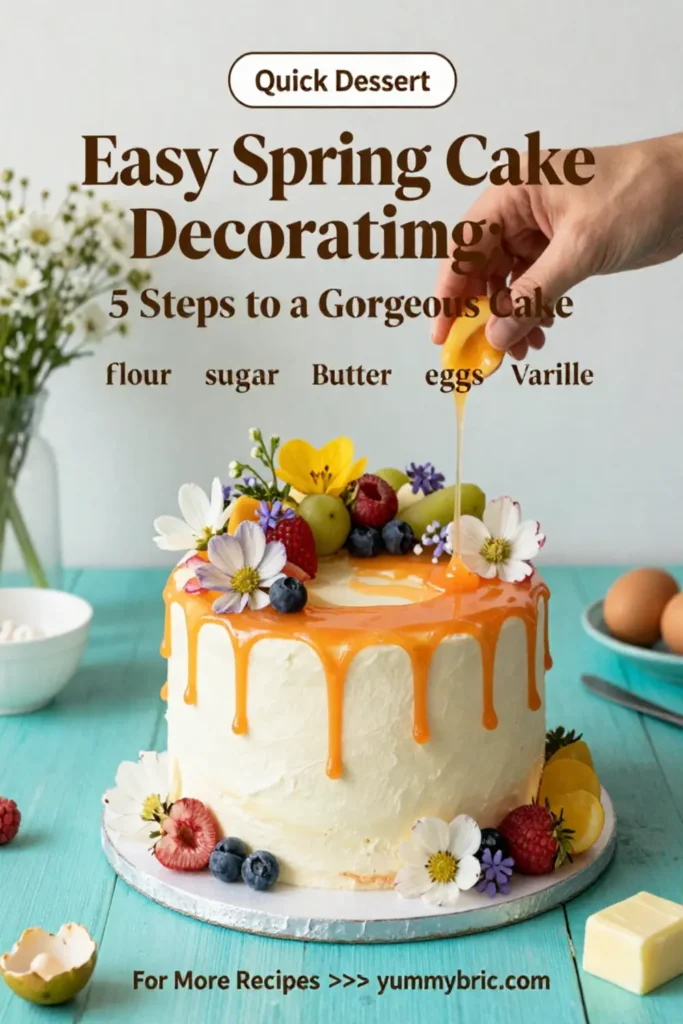
Prep time: 30 minutes
Cook time: 25 minutes
Total time: 55 minutes
Servings: 8
Creating a beautiful cake during the vibrant spring season is a delightful activity. Cake decorating can transform a simple dessert into a stunning centerpiece for any gathering or celebration. Whether you’re a seasoned baker looking to add a little flair to your cake, or a beginner eager to impress your friends and family, this recipe is perfect for you. Throughout the process, you will discover how easy it can be to elevate your baked goods with simple yet effective decorating techniques. Here’s how you can make your cake breathtakingly beautiful in just five steps.
What Is Easy Spring Cake Decorating: 5 Steps to a Gorgeous Cake?
Easy Spring Cake Decorating embraces the essence of the season, celebrating freshness, color, and vibrancy in your baking. With the arrival of spring, delicate floral designs, bright colors, and an abundance of fresh fruits become ideal for cake decorating. This five-step guide will help you create a gorgeous cake that captures the essence of spring. You will be introduced to simple techniques for frosting, layering, and embellishing your cake with edible flowers and fruit.
Why You’ll Love This
There are countless reasons to love this cake decorating method. Firstly, it makes baking accessible to everyone regardless of skill level. You’ll be able to create impressive cakes with minimal tools and experience. This method allows room for creativity, giving you the freedom to incorporate personal touches. The overall effect is stunning while remaining uncomplicated, making it an ideal choice for busy parents looking for quick yet captivating dessert options. Finally, the flavors and textures you’ll incorporate will tantalize taste buds, making each slice a delightful experience.
Ingredients You’ll Need
To create a breathtaking spring cake, you will need the following ingredients:
- 2 cups of all-purpose flour: This serves as the foundation of your cake, providing structure and stability.
- 1 ½ cups of granulated sugar: Adds sweetness and moisture, enhancing the flavor of the cake.
- 1 cup of unsalted butter, softened: Contributes to a rich, creamy texture and flavor.
- 4 large eggs: Essential for binding and providing moisture, ensuring a soft texture.
- 1 cup of milk: Helps in achieving a tender crumb and adds moisture.
- 2 teaspoons of baking powder: Acts as a leavening agent, helping the cake to rise perfectly.
- 1 teaspoon of vanilla extract: Enhances flavors, imparting a warm, sweet essence.
- For decoration: Fresh flowers (like daisies or violets), edible glitter, or seasonal fruits like strawberries and raspberries.
How to Make
- Preheat your oven to 350°F (175°C). Begin by greasing and flouring two 9-inch round cake pans. This will ensure your cake does not stick and comes out smoothly.
- In a mixing bowl, cream the butter and sugar together. Use an electric mixer on medium speed for about 5 minutes until the mixture is light and fluffy. This step is crucial for aerating your batter.
- Add the eggs one at a time, mixing well after each addition. Then incorporate the milk and vanilla extract. Ensure everything is well blended, as this contributes to a moist cake.
- In another bowl, whisk together the flour, baking powder, and a pinch of salt. Gradually add the dry ingredients to the wet mixture, mixing just until combined. Be careful not to overmix, as that can result in a dense cake.
- Divide the batter evenly between the prepared pans. Use a spatula to smooth the tops of the batter. Bake in the preheated oven for 25 to 30 minutes or until a toothpick inserted into the center comes out clean.
- Once baked, remove the cakes from the oven and let them cool. Allow them to cool for about 10 minutes in the pans before transferring to a wire rack to cool completely. This step is essential for easy handling when decorating.
- After the cakes cool, it’s time to decorate! Spread a layer of frosting between the two layers. You can use a simple buttercream or cream cheese frosting. Once stacked, cover the entire cake with more frosting.
- Now for the fun part: decorating! Use fresh flowers, fruits, or edible glitter. Be creative and ensure your decorations reflect the beauty of spring!
Variations & Substitutions
Chocolate Spring Cake: For chocolate lovers, substitute one cup of all-purpose flour with unsweetened cocoa powder. This will give your cake a rich chocolate flavor while maintaining that light, airy texture.
Fruit-Infused Cake: Incorporate pureed strawberries or lemon zest into the batter for an extra burst of flavor. This addition pairs wonderfully with the fresh floral decorations and provides a lovely taste of fruitiness with each bite.
Healthier Option: To make a healthier version of this cake, substitute half of the all-purpose flour with almond flour and reduce the sugar by one-third. This will provide a nutty flavor profile and a healthier option without compromising the taste.
Gluten-Free Cake: Use a gluten-free flour blend instead of all-purpose flour, ensuring it contains a leavening agent. Your cake will still be light and fluffy, catering to gluten sensitivities without sacrificing flavor or texture.
Common Mistakes to Avoid
A common mistake is overmixing the batter, which can result in a dense cake instead of a fluffy one. Mix just until the ingredients are combined to ensure a tender crumb.
Another frequent issue arises from insufficiently measuring the ingredients. Always use a kitchen scale or measuring cups to ensure accuracy. This is crucial for the overall success of your cake.
Finally, not allowing the cake to cool completely before decorating can lead to melty frosting and a messy presentation. Always let your cakes cool thoroughly before adding any toppings or decorations.
Storage, Freezing & Reheating Tips
To store your decorated cake, place it in an airtight container at room temperature for up to 2 days. If your cake has a lot of perishable decorations like whipped cream or fresh fruit, refrigerate it instead.
If you have leftover cake, it can be frozen for up to 3 months. Wrap it tightly in plastic wrap, and then foil to prevent freezer burn. When ready to use, let it thaw in the refrigerator overnight and bring it to room temperature before serving.
Reheating is not typically necessary for a cake; instead, allow it to rest at room temperature. However, if you have frozen slices, you can microwave them for about 10-15 seconds on low power for a warm treat.
Frequently Asked Questions
Can I use a different cake flavor? Absolutely! You can create a vanilla, lemon, or even spice cake instead of the base recipe. It’s all about what flavors you enjoy!
What type of frosting is best for decorating? A buttercream frosting is a popular choice because it holds its shape well and is easy to work with. For a smoother finish, you might want to try a fondant or whipped frosting.
How do I make my cake moist? Ensuring your cake does not bake for too long is critical, as overbaking dries it out. Also, incorporating yogurt or sour cream in place of some butter can add moisture.
Can I decorate the cake in advance? Yes, you can bake and frost your cake a day ahead. Just store it in the refrigerator to keep it fresh. However, if using fresh flowers, add them just before serving to maintain their freshness.
How do I prevent my cake from sticking to the pan? Properly greasing and flouring your cake pans is vital. You can also line them with parchment paper for added protection against sticking.
Conclusion: With this Easy Spring Cake Decorating guide, you can create stunning cakes that reflect the beauty of the season while impressing your loved ones. Follow the steps, add your personal flair, and enjoy the delightful experience of baking and decorating your cake! Happy baking!