Prep time: 15 minutes
Cook time: 25 minutes
Total time: 40 minutes
Servings: 4
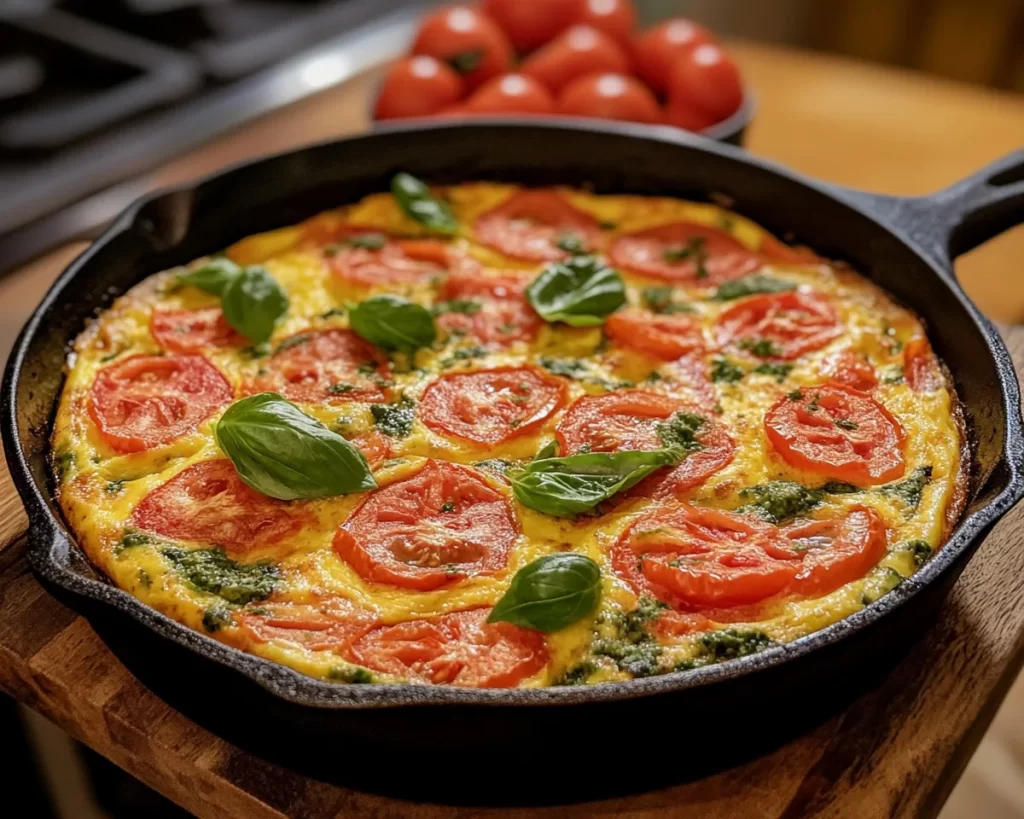
There’s something incredibly comforting and satisfying about a warm, flaky frittata. The aroma wafts through the kitchen as it bakes, tantalizing your senses and calling everyone to the table. Imagine a cozy weekend breakfast gathering with family, where the center of attraction is this delightful Frittata Recipe with Tomatoes and Basil. The vibrant colors of the fresh tomatoes combined with the aromatic punch of basil make this dish not just nutritious but also a visual feast. It’s a dish I often prepare during busy weekdays when I need something quick yet satisfying, or on weekends when I want something special without too much fuss.
This recipe is especially special because it reflects the essence of simple, fresh ingredients coming together to create something beautifully delicious. You will discover that a frittata is incredibly versatile, and this specific version uses fresh tomatoes and basil, elevating its taste to an elegant level that rivals dishes found in fine dining. As you embark on this culinary adventure, you will learn how to create a fluffy, delicious frittata that’s perfect for breakfast, brunch, or even as a light dinner.
What Is Frittata Recipe with Tomatoes + Basil (Fresh Flavor)?
A frittata is a traditional Italian egg dish that resembles an omelet but is uniquely different. Originating in central Italy, this dish captures the essence of rustic Italian cooking, where simplicity reigns supreme. The primary ingredients—eggs, fresh vegetables, and sometimes meats or cheeses—are combined, then cooked slowly, resulting in a fluffy, custard-like texture. Unlike an omelet, which is typically folded, a frittata is cooked flat and often finished in the oven to achieve a golden top.
When you incorporate tomatoes and basil into your frittata, you’re not just adding flavor; you’re merging the vibrant colors and aromas that define summer on your plate. The ripe, juicy tomatoes burst with sweetness as they cook, while fresh basil lends a fragrant herbaceous note, enhancing the dish’s overall profile. The end result is a frittata that’s not only visually appealing but also packed with flavors that dance on your palate with each bite. It’s a dish that embodies comfort while being versatile enough to adapt to whatever items you have on hand.
Why You’ll Love This
There are countless reasons to fall in love with this Frittata Recipe with Tomatoes and Basil. Firstly, the taste is absolutely unbeatable. The combination of fresh, sun-ripened tomatoes and aromatic basil creates a symphony of flavors that complements the eggs beautifully. Whether you enjoy it warm or at room temperature, it remains delicious, making it a perfect option for meal prep or brunch gatherings.
Another noteworthy benefit is its simplicity. With only a handful of ingredients, this recipe is straightforward yet allows room for creativity. If you’re a busy parent or someone looking to get dinner on the table with minimal effort, a frittata can be a lifesaver. It’s also an economical choice. Eggs are generally inexpensive, and using seasonal produce can keep costs low while packing your meals with nutrition.
Moreover, this frittata is incredibly versatile. It may be played with by swapping out the tomatoes and basil for whatever vegetables are in season or leftovers in your fridge. This ability to customize means you can always create something unique without breaking the bank. Don’t have fresh basil? Dried herbs or a sprinkle of cheese can do the trick! The crucial point is to experiment and enjoy the process of cooking, creating a dish that’s uniquely yours.
Ingredients You’ll Need
- 6 large eggs: The base of the frittata, providing protein and richness. Look for grass-fed or free-range eggs for enhanced flavor and nutrition.
- 1 cup cherry tomatoes: These are sweet and juicy, adding bursts of flavor and color. You can substitute with regular tomatoes; just chop them finely.
- 1/2 cup fresh basil: Offers a fragrant herbal note, making this frittata bright and fresh. If you don’t have fresh basil, consider using a mix of dried herbs.
- 1/2 cup onion: Sautéed with the tomatoes, it adds sweetness and depth. Shallots or leeks make excellent substitutes.
- 1/4 cup feta cheese: Brings a creamy and tangy element. Feel free to swap in goat cheese, grated Parmesan, or leave it out for a dairy-free option.
- Salt and pepper, to taste: Essential for bringing out the flavors of the dish. Adjust according to dietary needs.
- 2 tablespoons olive oil: Used for cooking the vegetables and adding flavor. Other oils like avocado oil can be used if preferred.
Each ingredient serves a specific purpose in the dish, working together to build layers of flavor. The eggs provide the main structure, while the tomatoes and herbs add the vibrancy. It’s this interplay that takes your frittata from simple to extraordinary.
How to Make
1. **Preheat your oven:** Start by preheating your oven to 375 degrees Fahrenheit (190 degrees Celsius). This step is essential for finishing the cooking process and achieving that golden finish on your frittata.
2. **Sauté the vegetables:** In an oven-safe skillet, heat 2 tablespoons of olive oil over medium heat. Once the oil shimmers, add the chopped onion. Sauté for about 3-4 minutes until the onions become translucent. Then, add the halved cherry tomatoes, and continue to cook for another 5-6 minutes. You want the tomatoes to soften but not completely break down—this will help retain some of their texture in the final dish.
3. **Whisk the eggs:** In a separate bowl, crack the 6 large eggs. Whisk them vigorously until fully combined, ensuring there are no streaks of egg white remaining. Season the mixture with salt and pepper according to your taste. Whisking incorporates air into the eggs, which contributes to a fluffier texture in the dish.
4. **Combine everything:** Once the tomatoes and onions are done, remove the skillet from the heat. Gently pour the egg mixture over the sautéed vegetables, making sure to distribute it evenly. Add in the chopped fresh basil and crumbled feta cheese, gently stirring to combine. The heat from the skillet will begin to set the bottom of the frittata.
5. **Bake in the oven:** Transfer the skillet to the preheated oven and bake for approximately 20 minutes. You’ll know it’s done when the frittata is puffed up and slightly golden on top, and a knife inserted in the center comes out clean. Keep an eye on it, as oven temperatures can vary.
6. **Cool and serve:** Once out of the oven, let the frittata cool for a few minutes before slicing it into wedges. This wait helps the frittata set further, making it easier to cut and serve. Enjoy it warm, at room temperature, or even cold the next day!
Making a frittata is all about enjoying the process and experimenting with flavors. Remember, cooking should be fun, and your kitchen should feel like a place of creativity.
Variations & Substitutions
Veggie-Packed Frittata: For a veggie-packed frittata that’s bursting with nutrients, consider adding spinach, bell peppers, or zucchini. The key is to sauté any vegetables that require longer cooking times first, just like you would with the onions and tomatoes. This ensures they are tender and flavorful when mixed into the egg base. A veggie-packed frittata is perfect for those looking for a low-carb breakfast or brunch option, providing a delicious way to sneak in more vegetables into your diet.
Meat Lover’s Frittata: If you prefer something heartier, try adding cooked bacon, ham, or sausage. You can sauté the meat before adding the vegetables, letting the flavors meld together. This variation offers a satisfying protein boost, making it great for those who need to feel fuller for longer. Moreover, it’s an excellent way to use up leftover meats you might have on hand, making dinner prep even easier.
Dairy-Free Frittata: For those who are dairy intolerant or vegan, you can create a dairy-free version by omitting the cheese and adding nutritional yeast for a cheesy flavor boost. You can also use the “chia egg” or “flaxseed egg” method—mix 1 tablespoon of chia seeds or ground flaxseed with 3 tablespoons of water per egg. Allow it to sit for 5-10 minutes until it becomes gelatinous, then whisk it into your egg mixture for a nutritious boost.
Spicy Frittata: Add some excitement by infusing your frittata with spice! Incorporate diced jalapeños or red pepper flakes into the vegetable mixture for a kick. Consider pairing your tomatoes with smoky chipotle peppers for a deeper, more complex flavor. This variation caters to those who love adventurous flavors and craves a bit of heat in their meals.
Each variation emphasizes that the frittata is not just an egg dish, but a canvas for culinary expression. You can customize it according to your taste preferences, making it endlessly adaptable.
Common Mistakes to Avoid
One common mistake when making a frittata is **overcooking** it. Overcooking can lead to a dry texture that is far from the fluffy consistency you desire. The key is to remove the frittata from the oven once it’s set but still has a slight jiggle in the center. Remember that the frittata continues to cook after it’s taken out of the oven due to residual heat.
Another pitfall is not seasoning adequately. **Lack of seasoning** can result in bland flavors. Don’t be afraid to taste and adjust your seasoning as you go. You may also consider adding herbs and spices to the egg mixture for an additional layer of flavor.
Inconsistent cooking temperatures can also lead to unevenly cooked frittatas. Make sure your oven is properly preheated and always use an oven-safe skillet to ensure even cooking throughout.
Storage, Freezing & Reheating Tips
One of the best aspects of a frittata is its storage capability. You can prepare it ahead of time, making it an excellent option for meal prep. If you have leftovers, allow the frittata to cool completely before placing it in an airtight container in the refrigerator. It will keep nicely for up to 4 days, making it easy to grab for a quick breakfast or lunch.
If you want to extend the life of your frittata, it can be frozen as well. Slice it into individual portions and wrap each piece tightly in plastic wrap or aluminum foil, then transfer it to a freezer-safe bag. It will stay fresh for up to 3 months in the freezer. When you’re ready to eat, simply thaw it overnight in the fridge and reheat slices in the microwave for a quick meal.
When reheating, a quick spin in the microwave works, but for best results, reheat in the oven. Set your oven to 350 degrees Fahrenheit (175 degrees Celsius), and place the frittata on a baking sheet, covering it with aluminum foil. Heat for about 10-15 minutes, or until warmed through, ensuring it retains its delightful texture.
Frequently Asked Questions
Can I make a frittata ahead of time? Yes! Frittatas can be prepared in advance and stored in the refrigerator for up to 4 days. In fact, the flavors often improve as it sits, making it an excellent make-ahead option for busy weeks.
What’s the best way to serve a frittata? Frittatas can be served warm, at room temperature, or even cold. They pair wonderfully with a simple side salad or some fresh fruit. Feel free to slice it into wedges for easy serving!
Can I use egg substitutes in this recipe? Absolutely! If you’re looking for an egg substitute, you may use a chia or flaxseed mixture, as mentioned earlier. Alternatively, products such as egg replacer can be used for a similar egg-like texture.
How do I know when my frittata is done? Your frittata is done when it is puffed and golden brown on the top and a knife inserted in the center comes out clean. It should have a slight jiggle that signifies it’s still moist yet fully cooked.
Can I customize the ingredients? Definitely! Frittatas are incredibly versatile. You can use almost any vegetable, meat, or cheese that you like or have on hand. Just be mindful of the moisture content of the various ingredients—draining excess liquids will help maintain a great texture.
Conclusion:
The Frittata Recipe with Tomatoes and Basil embodies everything fantastic about egg dishes. It’s incredibly easy to make, loaded with fresh flavors, and highly customizable, allowing you to adapt it according to your preferences or what you have in your pantry. By integrating vibrant and wholesome ingredients, this frittata becomes a showstopper that everyone will love. I encourage you to try it out, experiment with different variations, and see how this simple dish can bring joy to your table. Don’t forget to share your creations with friends and family; after all, cooking is all about spreading love through food. Happy cooking!