Prep time: 30 minutes
Cook time: 1 hour
Total time: 1 hour 30 minutes
Servings: 10
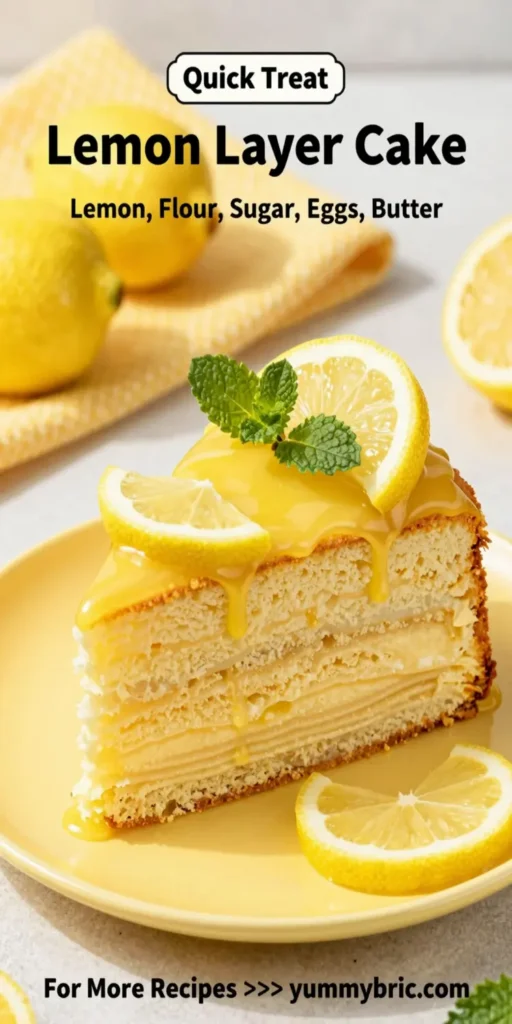
Lemon layer cake is a delightful treat that combines the bright, fresh flavor of lemons with soft, fluffy layers of cake and luscious frosting. This cake is perfect for celebrations or even a cozy afternoon snack, bringing sunshine to any occasion. Whether you’re experienced in the kitchen or just starting out, this recipe will guide you through each step to craft a stunning dessert that everyone will love.
What Is Lemon Layer Cake?
Lemon layer cake is a classic dessert composed of several layers of lemon-flavored cake, often filled and frosted with a creamy lemon icing. The cake is moist and fluffy, showcasing the zesty taste of lemons, which melds beautifully with the sweetness of sugar. Traditionally, this cake includes three or more layers, giving it a beautiful height and making it visually striking. The combination of sweet and tart flavors makes lemon layer cake a favorite among many, providing a refreshing change from richer, heavier desserts.
Why You’ll Love This
This lemon layer cake stands out for several reasons. First and foremost, its flavor is utterly irresistible. The zing of fresh lemons cuts through the sweetness, making each bite a perfect balance. Additionally, the cake’s beautiful layers create an impressive presentation that is sure to wow your guests—even if you’re just serving it at home for family. Its versatility also shines; this cake can be adapted for various occasions, providing a wonderful option for birthdays, picnics, or simply an afternoon tea for yourself. Finally, it’s a wonderful way to use up any extra lemons you have on hand, reducing waste while treating your taste buds.
Ingredients You’ll Need
- 2 1/2 cups all-purpose flour – This is the foundation of the cake, providing structure and texture.
- 2 1/2 tsp baking powder – This ingredient helps the cake rise, making it light and fluffy.
- 1/2 tsp baking soda – It enhances the leavening process and balances acidity.
- 1 tsp salt – Balances sweetness and enhances overall flavor.
- 1 cup unsalted butter, softened – Adds richness and moisture to the cake.
- 2 cups granulated sugar – Sweetens the cake while contributing to the cake’s tender crumb.
- 4 large eggs – Essential for binding and adding structure.
- 1/4 cup fresh lemon juice – Essential for that tangy lemon flavor.
- 1 tbsp lemon zest – Intensifies the lemon flavor, adding a fresh aroma.
- 1 tsp vanilla extract – Provides depth to the flavor profile.
- 1 cup whole milk – Contributes moisture, tenderizing the cake.
How to Make
- Preheat your oven to 350°F (175°C). Grease and flour three 9-inch round cake pans to ensure the layers release easily.
- In a large mixing bowl, whisk together the all-purpose flour, baking powder, baking soda, and salt. This step ensures that your leavening agents are evenly distributed within the flour.
- In another large bowl, beat together the softened butter and granulated sugar until light and fluffy. This process incorporates air into the mixture, creating a lighter texture in the cake.
- Add the eggs to the butter and sugar mixture one at a time, making sure each egg is completely incorporated before adding the next. Then mix in the lemon juice, lemon zest, and vanilla extract.
- Gradually add the dry ingredients and milk to the wet mixture, alternating between the two. Start and end with the flour mixture. Mix until just combined; overmixing can lead to a denser cake.
- Divide the batter evenly among the prepared cake pans. Smooth the tops with a spatula. Bake in the preheated oven for 25-30 minutes or until a toothpick inserted in the center comes out clean.
- Once baked, let the cakes cool in the pans for about 10 minutes before transferring them to a wire rack to cool completely.
Variations & Substitutions
Lemon Cream Cheese Frosting: For a change from traditional buttercream, consider using a cream cheese frosting. The tang of the cream cheese complements the lemon perfectly and adds a lovely creaminess. To make it, simply beat together 8 oz of softened cream cheese, 1/2 cup of softened butter, 4 cups of powdered sugar, and 1/4 cup of lemon juice until smooth and fluffy.
Gluten-Free Option: If you’re looking for a gluten-free version of this lemon cake, you can substitute all-purpose flour with a 1:1 gluten-free baking blend. Make sure that the blend includes xanthan gum, which acts as a binding agent for texture.
Berry Layer Addition: To add a touch of freshness, you can incorporate layers of fresh berries such as strawberries or raspberries between the cake layers. Not only do they look beautiful, but they also add a burst of flavor that pairs wonderfully with the lemon.
Common Mistakes to Avoid
Overmixing the Batter: One common mistake is overmixing the batter, which can lead to a dense texture. Mix just until the ingredients are combined to keep the cake light and fluffy.
Not Measuring Accurately: Baking is a science, and accuracy is key. Use measuring cups and spoons to ensure you have the correct quantities of each ingredient. Too much flour can result in a dry cake, while too little sugar can cause it to fall flat.
Baking at Incorrect Temperature: If your oven isn’t calibrated correctly, your cake may not bake properly. Always preheat your oven and use an oven thermometer to check its accuracy. A cake baked at too low a temperature may remain wet and undercooked, while one baked at too high a temperature may burn or dry out.
Storage, Freezing & Reheating Tips
To store your lemon layer cake, cover it loosely with plastic wrap and keep it in the refrigerator for up to 3-4 days. If you want to preserve it longer, you can freeze the un-frosted layers. Wrap each layer in plastic wrap and foil to avoid freezer burn, and they can be stored for up to three months. To thaw, simply place in the fridge overnight before frosting and serving. If you have leftover frosted cake, it should also be refrigerated and can be enjoyed within a week.
Frequently Asked Questions
Can I use bottled lemon juice instead of fresh lemon juice? While bottled lemon juice is an option, it won’t have the same fresh flavor as squeezing your own lemons. Freshly squeezed lemon juice enhances the cake’s taste, providing that bright and tart flavor that defines a great lemon layer cake.
How can I prevent my cake from sticking to the pan? To prevent sticking, make sure to properly grease and flour your cake pans. Additionally, using parchment paper to line the bottoms can further ensure easy release. Once the cake is out of the oven, let it cool for the appropriate time before attempting to remove it from the pans.
What can I do if my cake is too dry? If you find that your cake is dry, it may have been overbaked or too much flour was added. You can remedy this by adding a simple syrup (made of equal parts sugar and water) brushed on top of the layers before frosting. This will add moisture back into the cake.
Can I make this cake in advance? Yes, you can bake the cake layers ahead of time and store them in the refrigerator for a few days before frosting them. It’s also a great idea to make and freeze the layers ahead of time, thawing them when you’re ready to assemble.
Why did my cake sink in the middle? A sunken cake can be caused by a few factors, such as overmixing the batter, underbaking the cake, or opening the oven door too early during baking. It’s essential to follow the baking times and keep the oven door closed until the cake is done to retain the heat.
Conclusion: Lemon layer cake is more than just a dessert; it’s a celebration of flavor and texture that everyone can enjoy. By following this detailed recipe, you’ll create not only a beautifully layered cake but also a delightful experience for you and your loved ones. Enjoy indulgences in moderation while savoring the fresh taste of lemons wrapped in a delicious cake. Whether for a special occasion or just to brighten your day, this cake is sure to put a smile on your face. Enjoy baking and sharing this delightful treat!