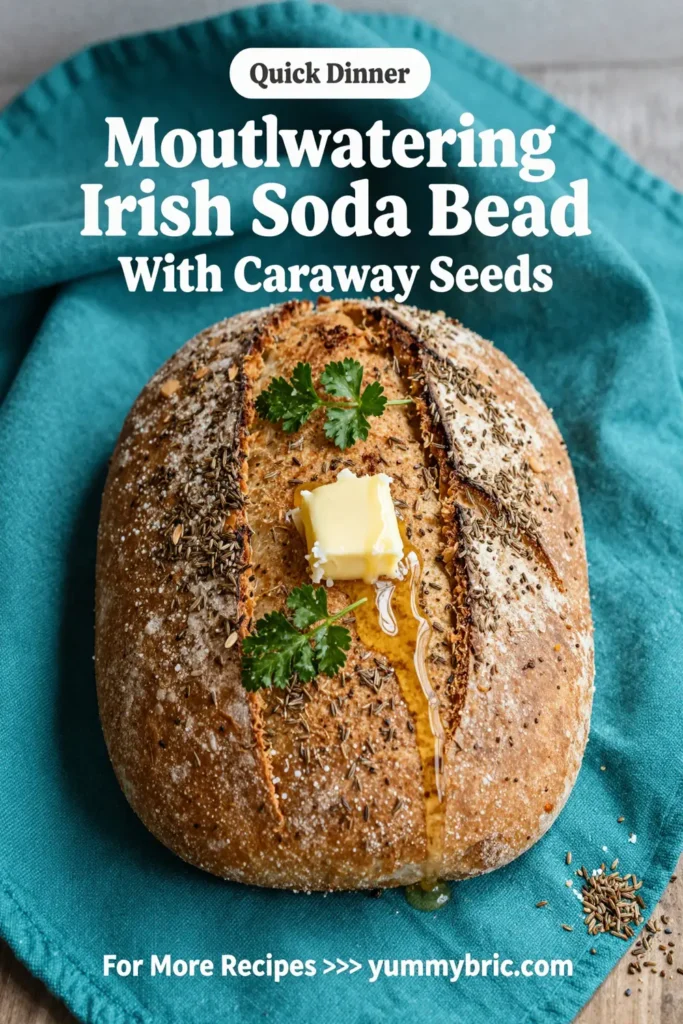
Prep time: 15 minutes
Cook time: 45 minutes
Total time: 1 hour
Servings: 8
There’s something wonderfully comforting about homemade bread, and when you make that bread using traditional methods, it truly transforms your kitchen. Today, we’re diving into the creation of Mouthwatering Irish Soda Bread With Caraway Seeds. Not only is this bread simple to make, but it’s also bursting with flavor that can transport you to the rolling hills of Ireland, making it a perfect addition to any family meal or casual gathering.
What Is Mouthwatering Irish Soda Bread With Caraway Seeds?
Irish Soda Bread is a beloved Irish staple that harks back to a time when baking powder was a luxury. This loaf is characterized by its unique flavor and slightly dense texture, which comes from the use of baking soda instead of yeast. The addition of caraway seeds adds an anise-like flavor, which perfectly complements the buttery richness of the bread. This recipe captures the essence of traditional Irish cooking while fitting seamlessly in a busy modern kitchen.
Why You’ll Love This
There are many reasons to love this bread! It’s incredibly quick to prepare; in just an hour from start to finish, you can have a warm loaf ready to serve. It requires minimal ingredients and equipment, appealing to busy parents and kitchen beginners alike. As an added bonus, this Irish Soda Bread is versatile — enjoy it with butter and jam, as a side to soups or stews, or even toasted for breakfast.
Ingredients You’ll Need
To make this delightful bread, you will need the following ingredients:
- 4 cups all-purpose flour: Provides structure and texture.
- 1 teaspoon baking soda: The leavening agent giving the bread its rise.
- 1 teaspoon salt: Adds flavor and enhances the other ingredients.
- 1 tablespoon caraway seeds: Offers a distinctive flavor that pairs perfectly with the bread.
- 1 ¾ cups buttermilk: Gives moisture and a tender crumb to the bread.

How to Make
- Preheat your oven to 425°F (220°C) and line a baking sheet with parchment paper. This step helps prevent sticking and allows for easy cleanup later.
- In a large mixing bowl, whisk together the flour, baking soda, salt, and caraway seeds. Ensure these dry ingredients are well combined; this will ensure that your loaf rises evenly.
- Create a well in the center of the dry ingredients and pour in the buttermilk. With a wooden spoon, gently mix the ingredients until a sticky dough forms. Avoid overmixing, as this can result in a dense loaf.
- Turn the dough out onto a lightly floured surface and gently knead it just until it comes together. Aim for about a minute of kneading; the dough will be a bit tacky but should hold its shape.
- Shape the dough into a round loaf, about 1.5 inches thick. Place it on the prepared baking sheet. Use a sharp knife to make a deep cross on top of the loaf; this allows steam to escape while baking.
- Bake in the preheated oven for 30 to 45 minutes, or until the top is golden brown and a toothpick inserted in the center comes out clean. The bread should have a hollow sound when tapped on the bottom.
Variations & Substitutions
Cheese and Chive Soda Bread: For a savory twist, consider adding shredded cheddar cheese and finely chopped chives to your dough. The cheese adds richness, while the chives bring a fresh flavor, making it a delightful accompaniment to soups or salads.
Raisin and Cinnamon Soda Bread: If you’re in the mood for something sweeter, add a handful of raisins and a teaspoon of ground cinnamon to the dry ingredients. This variation is perfect for breakfast, served warm with butter and perhaps a drizzle of honey.
Gluten-Free Soda Bread: To make this bread gluten-free, substitute the all-purpose flour with a gluten-free flour blend. Ensure your baking soda and other ingredients are certified gluten-free to avoid cross-contamination.
Common Mistakes to Avoid
One common mistake is over-kneading the dough. Over-kneading can lead to a tough bread. Remember, you want just enough mixing to bring the ingredients together. Also, be cautious about the consistency of your dough. If it’s too dry, add more buttermilk gradually. Conversely, if it’s too wet, sprinkle in a little more flour.
Another common issue is not allowing the oven to preheat fully before baking. Insufficient heating can prevent the soda bread from rising properly and achieving that coveted crust. Always check that your oven reaches the right temperature before placing the bread inside.
Storage, Freezing & Reheating Tips
To store your Irish soda bread, allow it to cool completely before wrapping it in plastic wrap or placing it in an airtight container. This helps to maintain freshness. It’s best consumed within 2 to 3 days, but if you’d like to keep it longer, consider freezing it. To freeze, wrap the loaf tightly in plastic wrap and then in aluminum foil to prevent freezer burn. It can be frozen for up to three months.
To reheat, simply preheat your oven to 350°F (175°C) and wrap the bread in aluminum foil to keep it moist. Heat for about 10 to 15 minutes or until warmed through.
Frequently Asked Questions
Can I use regular milk instead of buttermilk?
Yes, you can substitute regular milk with the addition of 1 tablespoon of vinegar or lemon juice to create a buttermilk effect. Allow it to sit for a few minutes before adding it to your dry ingredients. This acidity will still react with the baking soda for the necessary rise.
Why does soda bread need a cross on top?
The cross on top of the loaf serves a practical purpose. Not only does it allow steam to escape while baking, preventing the bread from developing a soggy bottom, but it is also traditional. It symbolizes the four quarters of the world, protecting the family.
Can I use whole wheat flour instead?
Absolutely! You can substitute whole wheat flour for all or part of the all-purpose flour. However, adding a little more liquid may be necessary, as whole wheat flour can absorb more moisture.
How do I know when the soda bread is done baking?
To check if your bread is finished baking, look for a golden-brown crust. Additionally, tapping the bottom of the loaf should produce a hollow sound. If it doesn’t sound hollow, give it a few more minutes in the oven.
Can I add herbs or spices to this recipe?
Certainly! Feel free to experiment by adding herbs such as rosemary or thyme, or spices like nutmeg or allspice, for extra flavor. Just remember not to overwhelm the bread’s traditional taste.
Conclusion:
With its delightful flavor, straightforward process, and room for customization, Mouthwatering Irish Soda Bread With Caraway Seeds is sure to become a regular part of your baking repertoire. Whether you enjoy it fresh out of the oven or toasted later, each slice brings warmth and comfort. So gather your ingredients, roll up your sleeves, and savor the experience of baking this authentic Irish treat!