**Prep time**: 10 minutes
**Cook time**: 15 minutes
**Total time**: 25 minutes
**Servings**: 2
There’s something undeniably luxurious about a perfectly cooked steak, and when paired with a creamy cognac peppercorn sauce, the experience is taken to a whole new level. This dish is perfect for impressing guests or for a special weeknight dinner. Using a cast iron skillet not only gives the steak a gorgeous sear but also enhances the flavors, making every bite a delicious symphony.
Picture this: It’s a busy weeknight, and you want to treat yourself, or perhaps you’re preparing a romantic dinner. The aroma of sizzling steak fills the kitchen, the sound of meat searing resonates in the background, and before you know it, a glorious meal is served. This guide will take you through every step of making a perfect cast iron steak accompanied by a rich, creamy cognac peppercorn sauce. You’ll learn essential tips, variations, and what to avoid so that your steak night turns into a culinary triumph.
What Is Perfect Cast Iron Steak with Creamy Cognac Peppercorn Sauce?
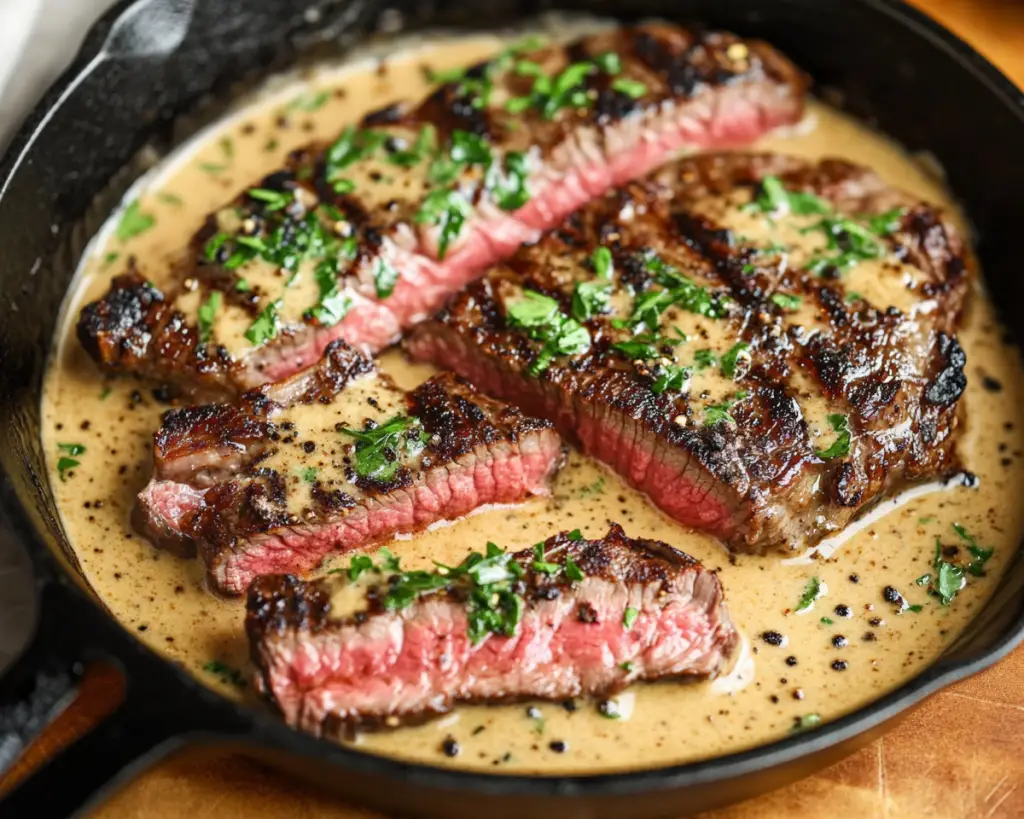
This dish features a beautifully cooked steak prepared in a cast iron skillet, a cooking method renowned for its effectiveness. The steak, often ribeye or filet mignon, takes on a wonderful crust courtesy of the high heat of the cast iron pan. The real star of the show, however, is the vibrant **creamy cognac peppercorn sauce** made from the fond left in the skillet after cooking the steak.
The cognac adds depth and a subtle sweetness, while **cracked peppercorns** contribute a piquant kick that cuts through the richness of the sauce. This dish has its roots in classic French cuisine and brings an air of sophistication to dinner tables everywhere. The texture of the steak ranges from crisp on the outside to juicy and tender on the inside, resulting in a textural delight that is truly worthy of a restaurant-style meal.
When made correctly, this steak with cognac sauce offers a complex but balanced flavor profile that marries savory, spicy, and creamy elements, ensuring that each bite is more satisfying than the last.
Why You’ll Love This Perfect Cast Iron Steak with Creamy Cognac Peppercorn Sauce
1. **Irresistible Flavors**: The combination of succulent steak and the creamy, zesty cognac sauce creates an indulgent experience that pleases both your taste buds and your senses.
2. **Ease & Convenience**: Cooking steak in a cast iron skillet is straightforward, making it an ideal meal for both beginners and seasoned cooks. You’ll be surprised at how easy it is to achieve a beautiful crust and perfect doneness.
3. **Budget-Friendly yet Impressive**: While steak can seem like a splurge, you can often find quality cuts at reasonable prices, especially if you shop sales. This recipe ensures you feel fancy without breaking the bank.
4. **Versatility**: You can easily customize the dish by changing the cut of meat, adjusting the level of spice in the sauce, and serving it alongside a variety of sides, such as vegetables or potatoes.
5. **Perfect for Special Occasions**: Whether it’s an anniversary dinner, Valentine’s day, or simply to pamper yourself, this dish adds a touch of elegance that makes any meal feel exceptional.
Despite its seemingly complex flavors and techniques, many common misconceptions can make cooking steak seem daunting. One frequent mistake is overcooking the meat. With a proper understanding of your steak’s thickness and using a meat thermometer, you’ll easily achieve the perfect doneness. Another pitfall is not letting the steak rest after cooking, which is crucial for keeping it juicy.
Ingredients You’ll Need
To create the perfect cast iron steak with creamy cognac peppercorn sauce, you will need the following ingredients:
– **2 ribeye or filet mignon steaks (about 1 inch thick)**: These cuts are ideal for their marbling, which offers tenderness and flavor. If you want, you can substitute with sirloin, but it may lack the richness found in ribeye.
– **Salt**: Adds flavor and helps create a savory crust. Go for kosher salt or sea salt for the best results.
– **Freshly cracked black peppercorns (about 1 tablespoon)**: The key to flavor in the sauce and also a great seasoning for the steak itself. Use whole peppercorns and crack them for optimal flavor.
– **2 tablespoons olive oil**: Helps to achieve a good sear on the steak. You can use grapeseed oil or vegetable oil as alternatives due to their high smoke point.
– **2 tablespoons unsalted butter**: Adds richness to the steak and enhances the flavor of the sauce.
– **1 small shallot (finely diced)**: Offers mild onion flavor that enriches the sauce without overwhelming it.
– **1/4 cup cognac (or brandy)**: The star of the sauce that carries an aromatic flavor profile. If you’re in a pinch, bourbon can serve as a substitute.
– **1/2 cup heavy cream**: This is what makes the sauce creamy and luscious. You could use half-and-half for a lighter version, but it will not be as rich.
– **Fresh thyme (optional)**: Adds a herby aroma; it’s great for garnish or mixing into the sauce for additional flavor.
How to Make Perfect Cast Iron Steak with Creamy Cognac Peppercorn Sauce
Follow these detailed steps to create your own perfect cast iron steak with creamy cognac peppercorn sauce.
1. **Prepare the Steak**: Remove the steaks from the refrigerator 30 minutes prior to cooking. This allows them to come to room temperature, ensuring even cooking. Pat them dry with paper towels to remove excess moisture, which helps form a beautiful crust. Generously season both sides of the steak with salt and freshly cracked black pepper.
2. **Preheat the Cast Iron Skillet**: Place your cast iron skillet on the stove over medium-high heat. Allow it to preheat for about 5 minutes, or until it’s hot and almost smoking. You want to achieve a temperature between 400°F to 450°F to sear the steak properly.
3. **Sear the Steak**: Add the olive oil to the skillet and swirl to coat the bottom. Carefully place the steaks in the pan away from you to avoid splatter. Sear without moving the steak for about 4-5 minutes, until a deep brown crust forms. You can use a meat thermometer to check the internal temperature; you’re aiming for 130°F (medium-rare) or 140°F (medium).
4. **Flip and Add Butter**: Once the first side is nicely seared, flip the steaks over using tongs. Add the butter to the skillet, allowing it to melt. As it melts, use a spoon to baste the steaks with the butter. This technique enhances flavor and helps cook the steak evenly. Continue cooking for another 4-5 minutes, basting occasionally.
5. **Check Doneness**: Use a meat thermometer to check the internal temperature of the steak. For medium-rare, look for 130°F; for medium, aim for 140°F. For well-done, it should reach 160°F. Keep in mind that the steak will continue to cook slightly after you take it off the heat.
6. **Rest the Steaks**: Once done, transfer the steaks to a plate and cover them with foil. Let them rest for at least 5 minutes. Resting allows juices to redistribute, ensuring the steak is tender and juicy.
7. **Make the Sauce**: In the same skillet, reduce the heat to medium and add the diced shallot. Cook until softened, about 1-2 minutes. Stir often to prevent burning, scraping up any browned bits left in the pan.
8. **Deglaze with Cognac**: Carefully pour in the cognac (or brandy) and let it simmer for about 2 minutes, allowing the alcohol to cook off while the sauce reduces slightly. The savory notes from the shallots mix beautifully into the sauce at this stage.
9. **Incorporate Heavy Cream**: Pour the heavy cream into the skillet, stirring well. Allow it to simmer for another 2-3 minutes to thicken. If the sauce is too thick, you can add a splash of water or broth to loosen it up. Don’t forget to season the sauce with salt and additional cracked peppercorns to taste.
10. **Serve**: Slice the steaks against the grain and plate them. Drizzle the creamy cognac peppercorn sauce over the top and garnish with fresh thyme if desired. Serve alongside your choice of sides such as roasted vegetables, mashed potatoes, or a fresh green salad for a complete meal.
5 Variations & Substitutions
1. **Steak Alternatives**: If you prefer leaner cuts, opt for a top sirloin or flank steak. These cuts can also work well with a cognac sauce, but be mindful of cooking time; leaner meats can dry out faster, so utilize a meat thermometer to avoid overcooking.
2. **Different Sauces**: If cognac isn’t to your taste, consider making a **red wine sauce** instead. Swap the cognac with about 1/2 cup of red wine and follow the same steps for deglazing the pan. A red wine enhances a steak’s natural flavor while adding a fruity depth.
3. **Vegan Version**: For a vegan adaptation, replace the steak with **portobello mushrooms**. Season and sauté them in the cast iron skillet just as you would the steak. Use coconut cream or cashew cream in place of heavy cream for the sauce and add a hint of soy sauce or tamari for extra umami.
4. **Spicy Peppercorn Sauce**: To dial up the heat, add **crushed red pepper flakes** into the sauce while it simmers. The spiciness will contrast beautifully with the creaminess of the cognac sauce, providing an exciting twist.
5. **Additional Flavor Boosters**: Incorporate **mushrooms** into the sauce for added umami. Simply add sliced mushrooms after you add the shallots and sauté until they release their juices and become tender before adding the cognac.
Common Mistakes to Avoid
One of the most common mistakes in steak cooking is neglecting to **season adequately**. A well-seasoned steak enhances flavor significantly. Be generous with salt and pepper right before cooking. Remember, for best flavor penetration, seasoning should ideally take place about an hour before cooking, allowing the seasoning to draw moisture and flavor into the meat.
Another frequent error is not letting the steak **rest properly** after cooking. Cutting into it too soon causes the flavorful juices to run out, leaving you with a dry steak. Be patient; allow it to rest covered for at least 5 minutes.
Finally, be cautious about how you cook the steak. Cooking at too low a heat won’t achieve the desired Maillard reaction, leading to a pale, uneven crust. Conversely, very high heat can lead to burnt exteriors while the inside remains undercooked. The key is to find that sweet spot on the stovetop—hot enough to sear beautifully, yet not so hot that you risk burning the outside.
Storage, Freezing & Reheating Tips
If you have leftover steak, storing it properly is crucial for maintaining flavors and textures. Allow the steak to cool completely before wrapping it tightly in plastic wrap or placing it in an airtight container. It can be stored in the refrigerator for up to 3 days.
For longer storage, you can freeze the steak. Slice it into portions, wrap each tightly in plastic wrap, and then place in a freezer-safe bag, removing as much air as possible. Frozen steak can last up to 3 months without a significant loss of quality.
When it’s time to reheat, avoid using the microwave, as it can overcook the steak, leading to toughness. Instead, place your leftover steak in a skillet over low heat with a splash of broth or water to gently reheat, cover it, and monitor it closely until warm. For sauces, leftover peppercorn sauce can be stored in a sealed container in the refrigerator for up to a week, and reheated gently over low heat.
Frequently Asked Questions
**Q1: Can I use a different type of alcohol instead of cognac?**
Absolutely! While cognac adds a unique flavor, you can substitute it with brandy, bourbon, or even red wine for a different taste experience. Each option will impart its character to the sauce.
**Q2: What side dishes pair well with steak and cognac sauce?**
Classic pairings include mashed potatoes, roasted vegetables (like asparagus or carrots), or a simple green salad. Garlic mashed potatoes or sautéed spinach are particularly delightful, offsetting the richness of the steak and sauce.
**Q3: How do I know when my steak is perfectly cooked?**
Using an instant-read thermometer is the best way to check the doneness of your steak. Aim for 130°F for medium-rare, 140°F for medium, and 160°F for well-done. Don’t forget to remember that the steak will continue to cook slightly after removing it from the heat.
**Q4: Is it necessary to use a cast iron skillet?**
While a cast iron skillet is excellent for achieving that perfect crust, you can use any heavy-bottom skillet. The key is to ensure it can withstand high heat without warping, so a stainless steel or non-stick pan can also work, though the crust may not be as impressive.
**Q5: What if I’m not a fan of peppercorn sauce?**
If creamy cognac peppercorn sauce isn’t to your liking, consider making a **mushroom sauce** by sautéing fresh mushrooms and mixing them with cream and a splash of broth instead. It will provide a rich, umami-packed alternative.
In conclusion, the perfect cast iron steak with a creamy cognac peppercorn sauce is not just a meal; it’s a culinary experience that can elevate any dining occasion. This dish seamlessly blends richness and flavor and is surprisingly easy to prepare, making it perfect for novice cooks and food enthusiasts alike. So gather your ingredients, follow the steps, and soon you will be savoring a delightful steak dinner that would make any steakhouse proud. Don’t forget to share your triumph with friends and family; they’ll surely want to be part of this flavorful journey. What are you waiting for? Let’s get cooking!