When I was first introduced to the art of bread making, it was by my grandmother. She was a woman who believed in simplicity and the power of ingredients. Every Saturday, she would don her faded apron—it was an old one, soft and worn from years of kneading, rolling, and folding. The flour dust would rise like clouds from her countertop as she prepared a magnificent bread. It was a ritual, a way of connecting the family, telling stories, and sharing love through food. As a child, I didn’t appreciate the wonder that fresh bread could bring. I was more interested in the immediate joy of butter melting into warm, pillowy rolls.
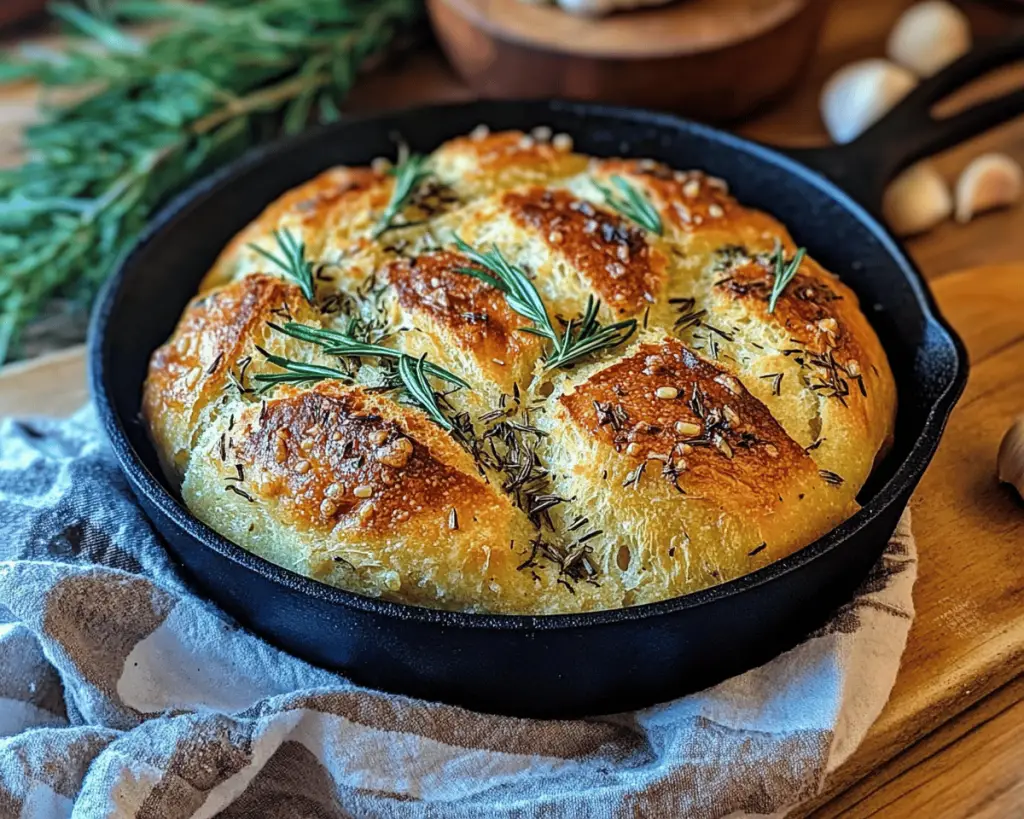
Years later, I stumbled upon a recipe for **Rustic Garlic Rosemary Skillet Bread** that resonated deeply with me. It reminded me of those afternoons spent in my grandmother’s kitchen, where the air was suffused with the warm scents of herbs and yeast. There was something effortlessly profound about a bread meant to be cooked in a skillet, and it opened a world of possibilities in my kitchen. This bread has become a staple in my home—a perfect accompaniment to everything from hearty stews to elegant salads, and even an indulgent slice slathered with olive oil and balsamic vinegar for a simple yet divine appetizer.
This recipe for **Rustic Garlic Rosemary Skillet Bread** keeps the rustic charm alive, celebrating the aromas of garlic and rosemary while removing the constraints of needing an oven. Made on the stovetop in a skillet, it strikes a balance between traditional artisan techniques and the practicality of modern cooking.
Inside the Ingredients of Rustic Garlic Rosemary Skillet Bread
Let’s talk about the ingredients that make this skillet bread not just a dish, but a sensory experience.
All-purpose flour is the backbone of the bread. It’s versatile and forgiving, which is perfect for a home baker. I often prefer King Arthur Flour or Bob’s Red Mill, as their quality yields the best results. If you want to mix it up, consider using bread flour for a chewier texture or even whole wheat flour for a more robust flavor. Just keep in mind that the hydration level might need adjustment if you’re experimenting with different flours.
Yeast is the magic that gives life to the dough. I use active dry yeast for this recipe, as it’s readily available and reliable. You can also explore fresh yeast or instant yeast if you come across them. No matter what yeast you choose, always remember to check for freshness; expired yeast can lead to that disheartening collapse of hope when your bread fails to rise.
Water is essential, not just for hydration but also for helping the other ingredients bind together. I typically use warm water—around 110°F (43°C)—to ensure the yeast is activated properly. If you’re looking to jazz it up, consider substituting part of the water with a flavorful broth or even buttermilk—the acidity can add a delightful tang to your bread.
Garlic in this recipe is ideal for those who appreciate its robust, earthy flavor. I recommend using fresh cloves, finely chopped or minced, to pack a punch. Garlic powder can be a substitute in a pinch, but fresh garlic truly elevates the dish, giving it a vibrant touch.
Fresh rosemary is the herb that brings an aromatic quality to the bread. Its fragrant piney notes complement the garlic beautifully. I often find it in my garden, which makes cooking this dish even more special. If fresh rosemary is out of reach, dried rosemary will suffice, though I suggest reducing the quantity slightly—it’s more potent than fresh!
Salt is the unsung hero of flavor, enhancing and balancing all the other ingredients. I prefer using fine sea salt, as it blends seamlessly into the dough. Kosher salt is another excellent choice; just remember to adjust measurements if you switch types.
Olive oil not only enriches the flavor but also adds moisture to the dough, ensuring that the bread stays soft. A good extra virgin olive oil can make a significant difference. I always keep a bottle of high-quality olive oil on hand for drizzling, dipping, and, of course, baking.
Hearing about these ingredients reminds me of standing beside my grandmother, as she would tell me stories about each component’s origin—the humble wheat fields, the fragrant herb gardens—grounding me in the beauty and history of cooking.
How Rustic Garlic Rosemary Skillet Bread Fits Into a Balanced Life
In the modern world, where healthy eating habits often clash with the joys of culinary indulgence, I find it essential to embrace balance. **Rustic Garlic Rosemary Skillet Bread** embodies that principle. It can seamlessly fit into a well-rounded diet, and when made with heart, it’s nourishing in both flavor and spirit.
The primary ingredient here, **all-purpose flour**, is often criticized for being refined. However, it can provide energy through carbohydrates and is easily digestible for most people. If you go for whole wheat flour, you’ll gain added fiber, which is essential for digestive health.
The **olive oil** included in the recipe is a source of healthy fat, particularly monounsaturated fat, which is known to support heart health. Don’t skimp on the quality—opt for high-quality extra virgin olive oil, rich in antioxidants and anti-inflammatory compounds. It can be a guilt-free enrichment, especially when paired with the benefits of the **garlic** as well. Garlic boasts numerous health benefits, from boosting immunity to lowering cholesterol levels, making this dish not just delicious but somewhat nutritious too.
Of course, there’s a debate over carb consumption; it’s crucial to find a balance that works for your lifestyle. For me, enjoying this bread means appreciating the time it takes to create it—the art of kneading and the anticipation of watching it rise. It’s not just food; it’s a mindful practice. Making this bread becomes a part of my self-care routine, a moment set aside to connect with myself, the ingredients, and possibly even friends or family.
Over the years, I’ve learned that enjoying what we eat is just as critical as its nutritional content. Bread can be comforting and satisfying, providing warmth and nostalgia. The key is moderation and complemented choices. A slice of this bread alongside a vibrant salad or a hearty soup can create a balanced meal that nourishes both body and soul.
What You’ll Need
To make **Rustic Garlic Rosemary Skillet Bread**, gather the following ingredients:
– 3 cups all-purpose flour
– 1 packet (2 ¼ teaspoons) active dry yeast
– 1 ½ cups warm water (about 110°F or 43°C)
– 2 tablespoons finely chopped fresh garlic
– 2 tablespoons finely chopped fresh rosemary
– 1 ½ teaspoons salt
– 2 tablespoons extra virgin olive oil, plus more for drizzling
This recipe yields about one hearty skillet bread, perfect for sharing with family or simply enjoying over a few leisurely meals.
Preparing Rustic Garlic Rosemary Skillet Bread Step by Step
Now that you have your ingredients ready, let’s dive into the process of making this delicious bread. It’s a simple yet gratifying method, so let’s embark on this culinary journey together.
1. **Activate the Yeast:** In a small bowl, combine the **warm water** and **active dry yeast**. Gently stir to combine and allow it to sit for about 5-10 minutes. You’ll know it’s ready when it becomes frothy—a sign that your yeast is alive and well!
2. **Mix the Dough:** In a large mixing bowl, whisk together the **flour**, **salt**, **chopped garlic**, and **chopped rosemary**. Make a well in the center of the flour mixture, and pour in the activated yeast mixture along with the **olive oil**. Stir with a wooden spoon until the dough begins to come together.
3. **Knead the Dough:** Turn the dough onto a lightly floured surface and knead gently for about 5 minutes, until it becomes smooth and elastic. If the dough is very sticky, add a little more flour, a tablespoon at a time, until the right consistency is reached. This step always brings me joy, as kneading can be a meditative process. I enjoy feeling the texture change, and I often hear the sound of the dough making contact with the counter—therapeutic, indeed!
4. **First Rise:** Form the dough into a ball and place it in a greased bowl, ensuring it’s coated with a little olive oil to prevent sticking. Cover it with a clean kitchen towel or plastic wrap and set it in a warm, draft-free spot to rise for about 1 to 1.5 hours, or until it has doubled in size. This is where the magic happens; I love peeking under the towel, marveling at how much it has grown!
5. **Shape the Dough:** Once your dough has risen beautifully, gently punch it down to release the air—and don’t hesitate to let out your own little sound of satisfaction in the process! Turn it onto a lightly floured surface again, and shape it into a round loaf.
6. **Prepare the Skillet:** Preheat your cast-iron skillet over medium heat for about 5 minutes (or until it’s hot). Lightly grease the skillet with more olive oil to prevent sticking.
7. **Second Rise:** Place the shaped dough into the skillet, then cover it again and let it rise for another 30 minutes. While waiting, take this precious time to clean up a little, or maybe even sip on a cup of tea and think about how wonderful the aroma of fresh bread will soon fill your kitchen.
8. **Cooking the Bread:** After the second rise, uncover the skillet and turn the heat to low. Cover the skillet with a lid (or a piece of aluminum foil) to trap steam and create a nice crust. Cook for about 25-30 minutes, or until the bottom is golden brown and the bread sounds hollow when tapped. The aroma of garlic and rosemary will envelop you, making it one of the most delightful experiences in the kitchen.
9. **Final Touch:** Once done, carefully remove the skillet from the heat. If you like a crispier top, you can transfer the skillet to a preheated oven at 375°F (190°C) for about 5-10 minutes. I often skip this step when I’m short on time, as I love the rustic charm of the stovetop bake.
10. **Cool and Serve:** Let the bread cool in the skillet for about 10 minutes before transferring it to a wire rack to cool completely. If you can wait that long! It’s tempting to dive right in, while it’s still warm. Serve warm with olive oil for dipping, or use it to mop up the remnants of your favorite soups or stews.
Lessons from My Kitchen
As with any recipe, my journey with **Rustic Garlic Rosemary Skillet Bread** has taught me plenty about patience, intuition, and the significance of understanding every step.
One lesson learned was the importance of the yeast—I’ve had my shares of triumphs and woes, often resulting from old or inactive yeast. So now, I always stock up on smaller quantities to ensure freshness and check it before I bake. There was one particularly memorable baking session when I excitedly dove in, only to realize that my yeast had expired. I ended up with a dense, sad lump of dough, which later became a rather amusing kitchen story!
I’ve also discovered that turning this bread into a delightful variation is quite simple. Adding things like shredded cheese, chopped sundried tomatoes, or olives—not to mention a handful of grated Parmesan during the kneading step—has given the bread new depth and character. If you’re feeling adventurous, swap out rosemary for thyme or basil, although the iconic garlic flavor remains an indispensable constant.
Seasons affect this bread immensely too. A summer version might include fresh garden herbs, while in the fall, I often add a touch of warm spices, like a pinch of nutmeg or dried sage, creating enticing variations that suit the moods of the changing seasons.
Most importantly, I’ve learned that cooking—like life—is an organic process. There are times when the dough doesn’t rise quite like it should, or maybe it puffs too much in one corner. Knowing how to adapt is crucial. Just like in life, we can roll with the punches, savor the unexpected moments, and enjoy what we create, no matter the outcome.
Sharing this bread at the table quickly transforms into creating treasured moments with friends and family. The simplicity of breaking bread together strengthens connections—even a simple meal feels special when accompanied by warm, fragrant bread. It reminds me of deep conversations and laughter echoing in the kitchen while the aroma of garlic lingers in the air.
Cooking has become a language I speak fluently, a way to express love and care. So, I invite you to weave this **Rustic Garlic Rosemary Skillet Bread** into your own kitchen narrative. Let it accompany countless meals, serve as a backdrop for cherished moments, and perhaps inspire you to create your own enduring traditions.
The heart of food lies not only in its flavor but in the stories we tell around it, the memories we create through it, and the ingredients that connect us to our roots. Here’s to more bread, more stories, and the joy we find in cooking. As you embark on this journey, I hope you find your own special moments and little lessons that make your cooking—like life—so very rich and meaningful.