Prep time: 30 minutes
Cook time: 25 minutes
Total time: 55 minutes
Servings: 12
Indulging in a slice of cake can bring back a flood of memories, can’t it? Perhaps it was a special birthday celebration or an unexpected afternoon treat shared with friends. Among the myriad of cake options, the Simple Floral Buttercream Cake stands out as a vibrant confection that delights both the eyes and the palate. This cake is not just about aesthetics; it’s a canvas for flavor and creativity. As you embark on this culinary journey, you’ll discover the beauty and simplicity of floral buttercream, complemented by a fluffy cake that invites even the novice baker to whip up something stunning.
This recipe promises to be a feast for the senses, not only in appearance but in taste as well. You can expect subtle sweetness balanced perfectly with the lush, creamy texture of buttercream—that light, airy layer that coats each slice. Getting it just right may seem daunting, but fear not! I will share tips and tricks to ensure that you achieve an impressive results. Let’s dive into what makes this cake so special and all that you’ll learn as you create it.
What Is Simple Floral Buttercream Cake?
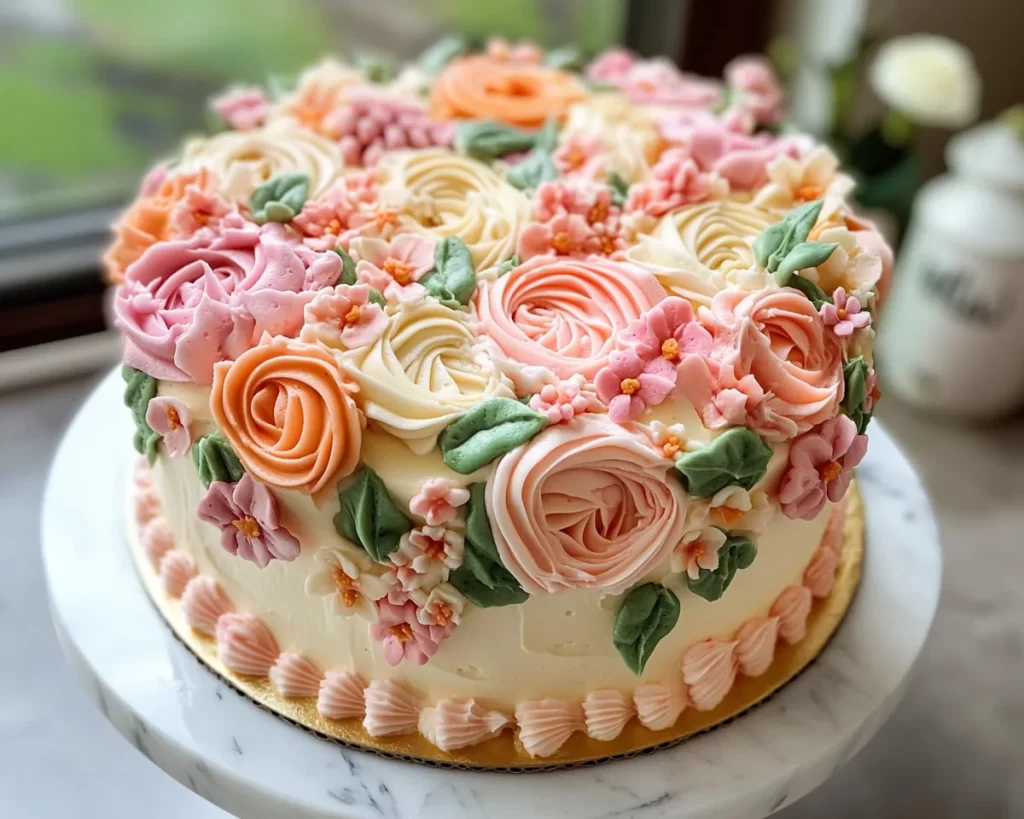
The Simple Floral Buttercream Cake is a classic dessert that showcases the beauty of simplicity. Originating from traditional European baking, this cake has been refined over the years to meet contemporary tastes. The base is typically a fluffy vanilla sponge or an almond cake, allowing for versatility. The real star, however, is the floral buttercream, which is made from unsalted butter and powdered sugar, mixed to creamy perfection. The addition of natural flavors like vanilla or almond extract enhances the overall taste, while the intricate floral designs made from the buttercream not only add an artistic flair but also invite you to savor every bite.
The texture of the Simple Floral Buttercream Cake is truly something to behold. Imagine slicing through tender layers, the moist cake giving way to the plush, rich buttercream. A well-made buttercream adds a sumptuous finish, turning each forkful into a delight. Moreover, this cake can readily be elevated for celebrations or kept simple for an everyday treat. Whether you’re designing delicate roses or playful daisies, the charm of this cake lies in the personal touch you can add, making it perfect for any occasion.
Why You’ll Love This
First and foremost, the flavor profile of the Simple Floral Buttercream Cake brings together a harmonious blend of sweetness and richness that you and your loved ones are sure to savor. Its versatility means you can easily adapt it for various tastes and occasions—from birthdays to anniversaries or simply as a delightful dessert to enjoy with afternoon tea. The recipe is straightforward, allowing busy parents or beginners in the kitchen to whip it up without a hitch. You can bake it ahead of time and store it, making it an ideal option for meal prep or gatherings.
Common misconceptions around cake baking often involve the thought that achieving a beautiful cake is only for professional bakers. This recipe proves otherwise! Even with basic skills, you can create a cake that looks like a million bucks without spending hours in the kitchen. The addition of floral embellishments not only makes it visually appealing but also gives you a chance to inject your personality and creativity into the baking process.
Having a reliable and scrumptious cake recipe on hand is essential in your baking repertoire, and the Simple Floral Buttercream Cake is just that. It’s budget-friendly and offers an impressive return on investment, leaving your guests raving about your baking prowess.
Ingredients You’ll Need
To bake the Simple Floral Buttercream Cake, gather the following ingredients:
- 2 cups all-purpose flour: This forms the base of your cake structure. You can substitute with gluten-free flour if needed.
- 1 ½ cups granulated sugar: Adds sweetness and creates that tender crumb texture.
- ½ cup unsalted butter (softened): Essential for richness and moisture, plus it aids in the cake’s rise.
- 1 cup whole milk: Provides moisture; you may use plant-based alternatives for a dairy-free version.
- 3 ½ teaspoons baking powder: The leavening agent that helps the cake rise effectively.
- 1 teaspoon vanilla extract: Enhances the flavor profile; feel free to substitute it with almond extract for a unique twist.
- ½ teaspoon salt: Balances sweetness and enhances overall flavor.
- 4 cups powdered sugar: Key for the luscious buttercream frosting, creating that silky texture.
- 2-3 tablespoons heavy cream: Adjust for the desired consistency of the buttercream; options for lighter substitutions are available.
- Food coloring (optional): Use for achieving vibrant floral shades.
Each ingredient serves a specific role, helping you achieve a flawless cake. While substitutions are sometimes necessary, aim to use quality components for the best results.
How to Make
Creating the Simple Floral Buttercream Cake is a gratifying experience that begins with carefully measuring your ingredients. Follow these steps for a seamless baking process:
- Preheat your oven to 350°F (175°C). This ensures an even bake from the moment you place your cake in the oven. While it’s heating, prep your cake pans by greasing them thoroughly and lining the bottoms with parchment paper to ensure the cake releases smoothly.
- Combine the dry ingredients. In a large mixing bowl, whisk together the all-purpose flour, baking powder, and salt. This step guarantees that your leavening agent is evenly distributed throughout the mixture, resulting in a light, fluffy cake.
- Mix the wet ingredients. In another bowl, cream together the softened butter and granulated sugar until light and fluffy—this usually takes about 3-5 minutes. Then, beat in the milk, and vanilla extract until combined. The texture should be smooth and creamy.
- Combine wet and dry ingredients. Gradually add the dry flour mixture into the wet ingredients, mixing just until no dry streaks remain visible. It’s important not to overmix, as this could lead to a denser cake. Your batter should be thick yet pourable.
- Pour the batter into prepared pans. Evenly distribute the batter between the prepared cake pans, smoothing the tops with a spatula. Gently tap the pans on the counter to remove air bubbles, which could affect the final texture of your cake.
- Bake the cakes. Place the pans in the preheated oven and bake for 25-30 minutes. Use a toothpick inserted in the center to check for doneness: it should come out clean or with a few crumbs attached.
- Let the cakes cool. After baking, remove the pans from the oven and allow the cakes to cool in the pans for about 10 minutes. Then, carefully transfer them to a wire rack to cool completely; this ensures that the cake won’t steam, which can negatively affect texture.
- Prepare the buttercream. In a mixing bowl, beat the softened butter until creamy. Gradually add the powdered sugar, mixing slowly to prevent a sugar cloud, and then add the heavy cream and any food coloring. Blend until you reach the desired consistency and color.
- Frost the cooled cakes. Place one cake layer on a serving plate or pedestal. Spread a layer of buttercream on top. Place the second layer over this and frost the top and sides of the cake. Use a spatula or a cake scraper to create a smooth finish, but feel free to have fun with the design!
- Decorate with florals. Use a piping bag and a fine tip to create floral designs if you’re feeling adventurous. Alternatively, you can simply spread some extra buttercream on top and add edible flowers for a lovely touch.
Baking is partly science and partly art, so feel empowered to make each step your own! Pay attention to texture cues as you mix and frost, making sure to keep everything neat and appealing.
Variations & Substitutions
Chocolate Floral Buttercream Cake: For a rich twist, swap out half of the flour for unsweetened cocoa powder, creating a deep chocolate base. The floral buttercream can be enhanced with chocolate ganache drizzled on top for an indulgent finish. This variation is perfect for chocolate lovers and those seeking an elegant yet decadent dessert.
Fruit-Flavored Options: You can infuse your cake with fruit purees or zest. For instance, incorporate lemon or orange zest into the batter for a bright citrus twist. Pair this with a fruity buttercream icing—like strawberry or raspberry—which you create by folding in fresh fruit puree. This variation adds a refreshing aspect and is perfect during warmer months.
Gluten-Free Floral Buttercream Cake: If you’re avoiding gluten, use a 1:1 gluten-free flour blend. Be mindful that each blend behaves differently; you may want to add an egg or egg substitute for moisture. The floral buttercream remains the same, ensuring that your cake still looks as beautiful as it tastes while accommodating specific dietary needs.
Vegan Floral Buttercream Cake: Replace eggs with flax eggs or applesauce, and use plant-based butter and almond milk for the cake and frosting. This variation is perfect for those following a vegan lifestyle but still wanting a classic cake experience.
Seasonal Decor Variations: Depending on the season, you can change your decoration style to match the occasion—think autumn leaves in orange and gold, snowflakes for winter gatherings, or pastel flowers for spring celebrations. The key is using seasonal colors to keep your cake relevant and stunning throughout the year.
Each variation presents its own unique taste and aesthetic appeal, allowing you to cater to different preferences and occasions.
Common Mistakes to Avoid
One common mistake is rushing the cooling stage. If you try to frost the cake while it’s still warm, the buttercream can melt, resulting in a gooey mess. Always allow your cake layers to cool completely on a wire rack – patience here pays off in beautifully layered cakes.
Another issue is overmixing the batter. When you add your dry ingredients to the wet, mix just until the ingredients are combined. Overmixing can make your cake dense and tough instead of soft and fluffy. Use gentle, folding motions and stop once you see no more dry flour streaks.
Lastly, not giving your buttercream enough time to whip can lead to a dense consistency. Beat the buttercream on high until it is light and airy. If it feels too thick, add a splash more cream or milk until the desired consistency is achieved.
Storage, Freezing & Reheating Tips
For optimal freshness, store your Simple Floral Buttercream Cake in an airtight container at room temperature. If your kitchen is particularly warm, it’s best to keep it in the refrigerator, but allow it to come to room temperature before serving.
If you have leftovers, you can also freeze your cake. Slice it into individual portions and wrap each slice in plastic wrap before placing them in a freezer bag. This method allows you to enjoy a piece whenever the craving strikes without eating the whole cake at once. To thaw, simply move it from the freezer to the fridge overnight or let it sit at room temperature for a couple of hours.
When it comes to food safety, always use clean utensils to avoid introducing bacteria into your cake. If your cake contains dairy-based buttercream, it’s best enjoyed within a week for the freshest taste and optimal texture.
Frequently Asked Questions
Can I make the cake ahead of time? Yes! You can bake the cake layers a day or two ahead. Just ensure they are completely cooled before wrapping them tightly in plastic wrap and storing them at room temperature or in the refrigerator.
How do I achieve smooth buttercream frosting? To get a silky buttercream, ensure your butter is at room temperature before beating it. Whip it well after adding powdered sugar to create an airy texture. Remember to scrape down the sides of the bowl often to ensure even consistency.
What flavor can I pair with floral buttercream? Floral buttercream pairs wonderfully with various flavors like citrus, vanilla, almond, or even chocolate. The key is to balance the sweetness of the buttercream with a flavor that complements it.
Can I use different colors for the buttercream? Absolutely! Using gel food coloring can help you achieve brighter shades without altering the buttercream’s consistency. Just start with a small amount and gradually increase until you reach your desired hue.
What types of flowers can I use for decoration? Edible flowers like pansies, nasturtiums, and violets work beautifully to decorate cakes. Always ensure to use organically grown flowers without pesticides, and double-check that they are indeed edible before using them!
Conclusion:
The Simple Floral Buttercream Cake is more than just a dessert; it’s an opportunity for creativity, a way to celebrate life’s special moments, and a delightful treat that will earn you praise from fellow cake enthusiasts. As you prepare to bake this cake, remember that it’s about experimentation and personalization. Feel free to add your unique twist or swap out ingredients as necessary.
Whether you choose to decorate with intricate floral designs or keep it understated, the heart of this recipe remains the same: a deliciously moist cake topped with creamy, dreamy buttercream. So roll up your sleeves and get baking! You’ve got this, and I assure you that the rewards will be well worth the effort. Don’t forget to share your cake creations; I’d love to see how you’ve customized it or hear about your baking adventures. Happy baking!