Prep time: 30 minutes
Cook time: 30 minutes
Total time: 1 hour
Servings: 12
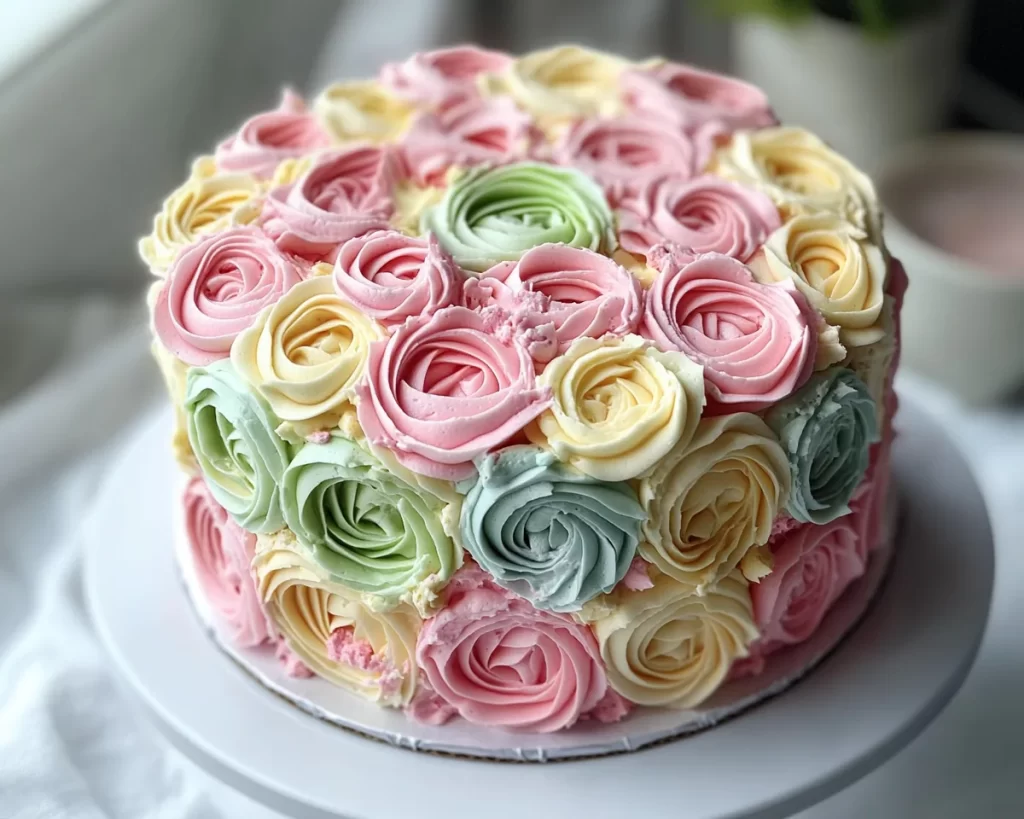
The allure of a beautifully decorated cake can instantly evoke a craving, whether it’s a special occasion or simply a treat for yourself. Imagine opening a neatly wrapped box to reveal a stunning cake adorned with delicate pastel buttercream rosettes. It’s an edible work of art that manages to bring a smile to anyone’s face. The **Spring Cake Designs: Pastel Buttercream Rosettes Cake** combines delightful flavors, vibrant colors, and a creamy texture that is perfect for celebrations, spring gatherings, or simply cheering up a rainy day.
What makes this cake special is not just its beauty; it’s the lush, buttery cake beneath those charming decorations. You will learn how to bake a soft cake that pairs beautifully with light and fluffy buttercream frosting. We’ll cover every step, from ingredient selection to expert decorating tips, ensuring that your cake turns out not just good but absolutely stunning.
What Is Spring Cake Designs: Pastel Buttercream Rosettes Cake?
The **Spring Cake Designs: Pastel Buttercream Rosettes Cake** is a striking dessert that embodies the spirit of spring. The concept dates back to classic cake decoration techniques, where the simplicity of buttercream petals transforms an ordinary cake into a spectacular centerpiece. Often made from layers of vanilla-flavored cake filled with smooth buttercream, the cake features a light and airy texture that melts in your mouth.
The cake typically begins with a moist sponge or butter cake base, which has a hint of **vanilla** or **almond extract** to elevate the flavor. The key component of this cake is, of course, the **buttercream frosting** decorated to resemble beautiful rosettes. The use of **pastel colors** adds a seasonal touch, making this cake perfect for springtime events like weddings, birthday parties, or baby showers.
Beyond its visual appeal, this cake manages to strike the right balance between sweetness and richness, making every bite a special experience. The charm of decorating with buttercream allows for creativity, letting every baker showcase their personality through their cake design.
Why You’ll Love This
There are so many reasons to love this cake! First and foremost, it’s delicious. The combination of tender cake and creamy frosting creates a flavor harmony that is both satisfying and refreshing. Often, cakes are admired for their appearance but disappointed in taste; this cake breaks that mold by delivering equally on both fronts.
Besides great flavor, the **Spring Cake Designs: Pastel Buttercream Rosettes Cake** is surprisingly easy to make. Even if you’re a beginner in the kitchen, you’ll find this recipe approachable. With just a few basic ingredients and straightforward steps, you’ll be able to whip up a stunning cake that will impress friends and family.
An added benefit is that it’s also cost-effective. You can create a visually impressive cake without spending a fortune. Store-bought cakes often come with a hefty price tag but making your own gives you not only better flavor but also the chance to personalize it for any event.
Finally, this cake is versatile. You can swap out different flavors or colors to suit any occasion. Whether you prefer chocolate cake, lemon, or something else entirely, you’ll easily find combinations that work for you.
Ingredients You’ll Need
To create this lovely cake, you’ll need the following ingredients:
- All-purpose flour: 2 ½ cups
- Sugar: 2 cups
- Baking powder: 1 tablespoon
- Salt: ½ teaspoon
- Unsalted butter: 1 cup, softened
- Eggs: 4 large
- Milk: 1 cup
- Vanilla extract: 1 tablespoon
- Buttercream frosting: 4 cups (prepared)
- Food coloring: in pastel shades (pink, blue, yellow, green)
Each ingredient plays a crucial role in creating your cake. The **all-purpose flour** provides the structure, while **sugar** adds sweetness and aids in browning. **Baking powder** acts as the leavening agent, giving your cake that perfect rise. Don’t forget the **unsalted butter**, which not only flavors the cake but also provides moisture and richness.
When it comes to the frosting, you can either prepare your own or use a store-bought option. However, homemade buttercream allows for flexibility in texture and flavor, making it a favored choice among bakers. To create those beautiful pastel rosettes, use food coloring to tint your buttercream. Be sure to use gel-based food coloring when possible, as it gives richer shades without altering the consistency of the frosting.
How to Make
Creating the **Spring Cake Designs: Pastel Buttercream Rosettes Cake** is simpler than you might think. Follow these step-by-step instructions:
- Preheat your oven: Start by preheating your oven to 350°F (175°C). This ensures that your cake will bake evenly. Prepare three 9-inch round cake pans by greasing them with butter or lining them with parchment paper. Parchment helps prevent the cake from sticking and makes for an easier release.
- Mix the dry ingredients: In a medium bowl, whisk together 2 ½ cups of all-purpose flour, 1 tablespoon of baking powder, and ½ teaspoon of salt until well combined. This dry mixture is essential for ensuring an even texture and rise in your cake.
- Cream the butter and sugar: In a large mixing bowl, using an electric mixer, beat 1 cup of softened unsalted butter with 2 cups of sugar on medium-high speed until the mixture is light and fluffy. This may take about 4-5 minutes. Properly creaming the butter and sugar is essential for aerating the batter.
- Add eggs and vanilla: Once your butter and sugar are well-creamed, add 4 large eggs, one at a time, mixing well after each addition. Then, pour in 1 tablespoon of vanilla extract and mix until fully incorporated.
- Combine wet and dry ingredients: Gradually add your dry mixture to the butter mixture, alternating with 1 cup of milk. Start with flour, then milk, and continue the cycle until both are fully integrated. The batter will be somewhat thick but smooth. Be cautious not to overmix, as this can result in a denser cake.
- Pour the batter into pans: Divide the batter evenly among your prepared pans. Using a spatula, gently smooth out the tops to ensure an even bake. Tap the pans lightly on the counter to release any air bubbles.
- Bake the cakes: Place the pans in the preheated oven and bake for about 25-30 minutes, or until a toothpick inserted into the center comes out clean. Keep an eye on the cakes towards the end of the baking time, as ovens can vary!
- Cool the cakes: Once done, remove the pans from the oven and allow the cakes to cool in their pans for about 10 minutes. Then, carefully transfer the cakes to a wire rack to cool completely. This step is important; cooling prevents the frosting from melting when applied later.
- Prepare the buttercream frosting: While your cakes are cooling, prepare your buttercream frosting. If you haven’t already, make a batch of simple buttercream using softened butter, powdered sugar, milk, and vanilla extract. Beat until light and fluffy. Divide the frosting into separate bowls and color each with your desired pastel shades.
- Frost and decorate: Once the cakes are completely cool, place one layer on a serving plate or turntable. Spread a layer of buttercream over the top, smoothing it out with a spatula. Repeat with the second layer. For the top layer, cover the entire cake with a crumb coat (a thin layer of frosting) to seal in any crumbs. Chill for about 30 minutes before applying the final layer of frosting.
- Create rosettes: Using a piping bag fitted with a star tip, pipe swirling rosettes around the top and sides of your cake. You can alternate colors for a more colorful design. Take your time with this step; even if you’re a beginner, the beauty is in the intention!
And there you have it—a stunning cake ready to impress. Remember, practice makes perfect, so don’t hesitate to get creative with the decorations.
Variations & Substitutions
Chocolate Cake Variation: If you prefer a richer flavor, consider swapping out some of the all-purpose flour for cocoa powder. Use about ¾ cup of cocoa in place of ¾ cup of flour. This will create a delicious chocolate base that pairs wonderfully with the pastel buttercream. Not only will this satisfy chocolate lovers, but it also allows you to work with complementary colors for your rosettes.
Lemon Flavor Twist: For a refreshing twist, add zest from one lemon and replace half of the milk with lemon juice. This fragrant adjustment will infuse the cake with a light and zesty flavor, making it perfect for spring. This variation is ideal for those who enjoy incorporating a fruity element into their desserts.
Gluten-Free Option: For gluten-free enthusiasts, you can substitute the all-purpose flour with a gluten-free blend specifically designed for baking. Ensure that the blend you select contains xanthan gum to achieve similar results in texture. Your cakes will be equally moist and delicious but will cater to those who require gluten-free options.
Buttercream Variants: While classic buttercream is delicious, consider experimenting with flavored extracts, such as almond or peppermint, to elevate your frosting. You can even fold in crushed fruit like raspberries or strawberries for a fruity buttercream that pairs perfectly with the floral aesthetics of your cake.
Vegan Version: Replace the eggs with flaxseed meal or chia seeds (1 tablespoon of flaxseed or chia mixed with 3 tablespoons of water for each egg). Use plant-based milk and a vegan butter alternative for the buttercream. This delicious alternative allows everyone to enjoy a piece, regardless of dietary preferences.
Common Mistakes to Avoid
Even the most experienced bakers can make small mistakes that lead to undesirable results. One common pitfall is overmixing the batter. Overmixing can cause the cake to become dense instead of fluffy. Always mix until just combined, allowing the dry ingredients to incorporate without excessive stirring.
Another mistake is not measuring ingredients accurately, especially with flour. Too much flour can lead to a dry cake, while too little may result in a collapsed structure. Always spoon the flour into your measuring cup and level it off rather than scooping straight from the bag.
Additionally, don’t forget to cool the cakes completely before frosting. Applying buttercream to warm cakes can lead to a melted mess, ruining your hard work.
Improper storage can also lead to dry cake or soggy frosting. Ensure your cake is stored in an airtight container at room temperature or refrigerated, especially if decorated with fresh fruit.
Finally, do not rush the decorating process. Take your time with piping the rosettes. If you’re intimidated, practice on a piece of parchment paper first before applying it to your cake.
Storage, Freezing & Reheating Tips
To ensure your **Pastel Buttercream Rosettes Cake** maintains its flavor and texture, proper storage is key. Ideally, store the cake in an airtight container at room temperature if it will be consumed within a couple of days. If it’s going to be a bit longer before enjoyed, the refrigerator may be your best option, although be aware that refrigeration can harden the buttercream.
If you want to freeze the cake, it’s best to freeze the layers separately. Wrap each cooled layer tightly in plastic wrap, then in aluminum foil to prevent freezer burn. This cake can be frozen for up to 2 months. When you’re ready to enjoy it, thaw the layers in the fridge overnight before decorating with buttercream.
When it comes to reheating, there should be no need for this cake. Just let it come to room temperature if refrigerated so that the flavors are pronounced.
Always practice food safety best practices, particularly if your cake has perishable elements such as fresh fruit or whipped cream. In such cases, refrigeration is a must.
Frequently Asked Questions
Can I use a different frosting for this cake? Absolutely! While buttercream offers a classic touch, feel free to experiment with other types of frosting such as cream cheese frosting or whipped cream for a different flavor. The choice of frosting can add a unique twist to your cake and help to accentuate the flavors of your cake base.
How can I make the buttercream frosting more colorful? Use gel food coloring for vibrant hues without altering the texture of the frosting. Begin with a small amount and gradually add more until you achieve your desired shade. You can create rich colors like lavender or mint green by mixing colors, allowing your aesthetic creativity to shine through.
What should I do if my cake sinks in the middle? If your cake sinks, it could be due to several reasons, such as underbaking or overmixing. Making sure to properly measure ingredients and monitoring baking times closely will help avoid this. In the future, consider using the toothpick test to ensure doneness.
Can I use this recipe for cupcakes? Yes! This cake recipe is adaptable for cupcakes. The baking time will change; generally, cupcakes take about 18-22 minutes at the same oven temperature. Just monitor them closely and use the toothpick test to ensure they are baked through. Decorate them with the same delightful pastel buttercream rosettes for a mini version of this stunning dessert!
How do I know when my cakes are done baking? Aside from the toothpick test, you can check for doneness by gently pressing on the center of the cake. If it springs back, your cake is ready. Additionally, the edges should pull away slightly from the pan, indicating they are done.
Conclusion:
The **Spring Cake Designs: Pastel Buttercream Rosettes Cake** is more than just a dessert; it’s an expression of love and creativity. By following this detailed recipe, you’ll create not only a beautiful cake but also lasting memories with friends and family gathered around to enjoy it. Don’t hesitate to customize it to suit your tastes or the preferences of your guests. Whether you decide to make it a chocolate delight or keep it traditional with vanilla, this cake encourages you to explore and have fun in the kitchen. Share your masterpiece and inspire others to try their hand at baking. Each decoration, each taste, tells a story—let yours be one of joy and celebration!