Prep time: 20 minutes
Cook time: 0 minutes
Total time: 20 minutes
Servings: 6 servings
Spring is the perfect time to create a beautiful charcuterie board that bursts with vibrant colors and fresh flavors. The combination of fresh veggies, creamy cheeses, and assorted meats offers a delightful experience that caters to all your guests’ tastes. What makes this Spring Charcuterie Board special is its simplicity and the ability to customize it according to your preferences. Whether you’re hosting a gathering, enjoying a picnic, or simply looking for a fun snack, this charcuterie board is a fantastic option that invites creativity and fun.
What Is Spring Charcuterie Board Ideas with Fresh Veggies in 5 Steps?
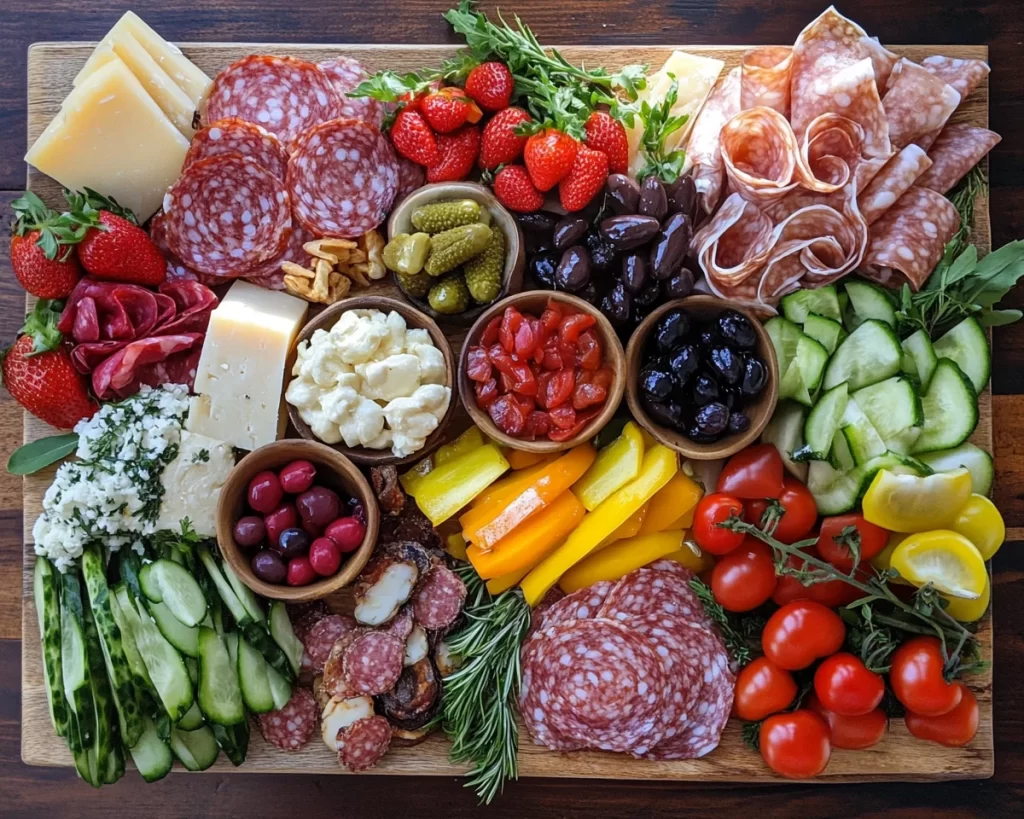
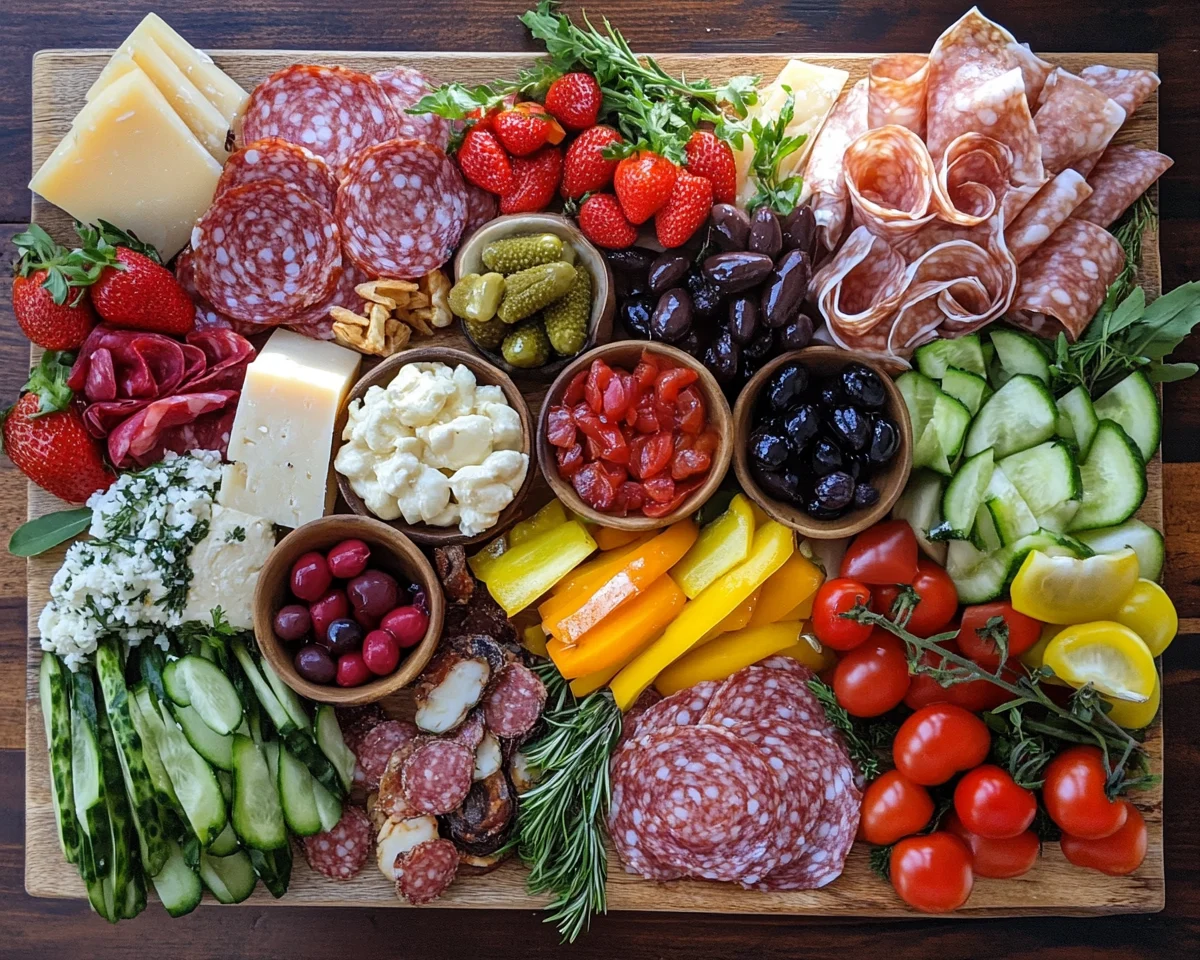
A Spring Charcuterie Board is a creative arrangement of meats, cheeses, fresh vegetables, fruits, and dips. The emphasis in this recipe is on using fresh, seasonal ingredients that symbolize the joy of spring. This can include vibrant bell peppers, artichokes, cherry tomatoes, carrots, and cucumbers, all meant to be enjoyed as finger foods. You can pair these delightful veggies with an assortment of cheeses ranging from creamy brie to sharp cheddar, along with salty cured meats like prosciutto or salami.
The beauty of this charcuterie board lies in its flexibility. You can shift ingredients according to what’s in season or your own preferences. The presentation is as much a part of the experience as the flavors themselves. Layers of colorful ingredients will create a feast for the eyes as well as the palate.
Why You’ll Love This
There are countless reasons to adore this Spring Charcuterie Board. Firstly, it celebrates freshness—there’s something undeniably satisfying about using seasonal ingredients. A board like this encourages a social atmosphere, making it ideal for gatherings. Here are a few aspects that make it a winner:
- Versatility: You can adapt it for various dietary preferences, including vegetarian or gluten-free.
- Quick to assemble: With just a few minutes of preparation, you can impress your guests without spending hours in the kitchen.
- Interactive experience: Guests can pick and choose their favorites, making it a fun, personalized experience.
- Aesthetic appeal: A colorful spread is visually enticing, which is essential for any gathering!
Ingredients You’ll Need
For a delightful Spring Charcuterie Board, you’ll need the following ingredients:
- Fresh Veggies: A variety of fresh vegetables, such as cherry tomatoes, cucumber slices, carrot sticks, radishes, and bell pepper strips will provide a crunchy contrast to the other components.
- Cheeses: Offer a mix of textures by including a creamy brie, a sharp cheddar, and a tangy goat cheese.
- Cured Meats: Include options like prosciutto, salami, or chorizo which will add a savory depth to the board.
- Dips: Consider hummus, tzatziki, or a creamy cheese spread to elevate the freshness of your veggies.
- Garnishes: Fresh herbs such as parsley or basil, and olives or pickles for additional flavor elements.
How to Make
Creating your Spring Charcuterie Board is a simple, enjoyable process. Here’s how to do it in five easy steps:
- **Start with a Base:** Choose a large wooden board or platter as your base. Lay down small bowls for dips at strategic points on your board. This not only organizes ingredients but also enhances the visual appeal.
- **Add Your Veggies:** Begin by distributing your cut vegetables across the board. Position them in clusters for a bountiful look. Mix colors and textures to catch the eye. For example, arrange bright red cherry tomatoes next to crisp green cucumber slices.
- **Introduce Cheeses:** Next, add your cheese selections. Cut some into wedges or cubes to make them easy to grab. Leave soft cheese like brie whole, as it can be cut by guests as they serve themselves.
- **Incorporate Cured Meats:** Fold or layer your cured meats in an aesthetically pleasing manner. For instance, you can roll slices of prosciutto or create small stacks of salami. Place these meat arrangements near the cheese for intuitive pairings.
- **Finish with Dips and Garnishes:** Finally, fill in the gaps with your chosen dips and scatter fresh herbs or garnishes around. This will not only flavor the dish but also enhance the overall aesthetic.
Variations & Substitutions
Vegetarian Option: Replace cured meats with roasted chickpeas or marinated artichokes. Adding a higher variety of cheeses can ensure the board still feels hearty and satisfying.
Gluten-Free Option: Use crackers or bread that are specifically labeled gluten-free, or consider incorporating gluten-free snacks like rice cakes or vegetable chips.
Kid-Friendly Option: Opt for milder cheeses such as mozzarella sticks and colorful, bite-sized vegetable shapes. Pair with fruit like apple slices or grapes to appeal to younger palates.
International Twist: Create a global-inspired board by using ingredients from around the world. For instance, add feta cheese and olives for a Mediterranean touch or spicy chorizo and manchego for a Spanish flair.
Seasonal Adjustments: As the seasons change, you can modify your vegetable selections. In the summer, add snap peas or sweet corn, while autumn can introduce roasted butternut squash or local apples.
Common Mistakes to Avoid
1. **Overcrowding the Board:** It’s tempting to load your charcuterie board with everything, but less is often more. Leave enough space between ingredients so they can shine individually.
2. **Lack of Color Variety:** A board devoid of color won’t be as appealing. Aim for a mix of colors in your vegetables and garnishes to create visual excitement. This encourages guests to try different items.
3. **Forgetting to Include a Variety of Textures:** Balance crunchy, soft, and creamy components to make every bite interesting. Just as you’d balance flavors, make sure to think about different textures too.
4. **Neglecting to Offer Pairings:** Consider how flavors complement each other. For example, a sharp cheddar pairs beautifully with sweet fruit jams, while creamy dips can balance salty meats.
5. **Making It Too Complicated:** While it’s great to have variety, don’t overcomplicate your board. Stick to a few key elements that can shine together. This keeps preparation simple and ensures a cohesive flavor profile.
Storage, Freezing & Reheating Tips
To maintain the freshness of your Spring Charcuterie Board, it’s best to prepare it shortly before serving. However, if you do have leftovers, here are some useful tips:
1. **Storage:** Store leftover components in airtight containers. Vegetables can be sealed in plastic bags with a paper towel to absorb moisture and prevent sogginess.
2. **Cheese Preservation:** Wrap harder cheeses in parchment paper followed by foil to keep from drying out. Soft cheeses should be kept in their original packaging or in an airtight container.
3. **Meat Management:** Keep leftover meats refrigerated in a sealed container and consume within a couple of days to retain safety and flavor.
4. **Freezing:** Most cheeses and cured meats do not freeze well, but if necessary, use proper techniques to avoid freezer burn or loss of texture.
5. **Reheating Tips:** While this dish is generally served cold, leftover dips can be gently reheated in a microwave or on the stove to repurpose as delightful sauces for other meals.
Frequently Asked Questions
Can I customize the ingredients on my Spring Charcuterie Board?
Absolutely! The beauty of a charcuterie board lies in its flexibility. Feel free to mix and match based on seasonal ingredients or personal preferences. For a unique flair, explore international cheeses or specialty cured meats.
How do I keep the veggies fresh?
To maintain the crispness of vegetables, store them in the refrigerator in sealed containers or bags. A paper towel can help absorb moisture, which is crucial for preventing wilting.
What are the best cheeses for a charcuterie board?
You can include a variety of cheeses like creamy brie, sharp cheddar, tangy goat cheese, and blue cheese. Each adds a unique flavor profile and texture to the board. Consider your guests’ preferences to find the perfect balance.
How long can a charcuterie board last?
An assembled charcuterie board is best enjoyed fresh. However, if stored properly, components like vegetables and cheeses can last 1-3 days in the fridge, depending on the ingredient.
What can I serve with my charcuterie board?
Think about including complements like crusty bread, crackers, or a selection of fruits. This adds to the variety and creates an even more satisfying experience for your guests.
Conclusion:
Creating a Spring Charcuterie Board is not only a delightful culinary experience but also a wonderful way to bring friends and family together in a seasonal celebration of freshness. Enjoy the vibrant colors and flavors that spring has to offer, while making this board a centerpiece for your next gathering or casual get-together. Don’t forget to experiment with ingredients and make it your own!