Prep time: 15 minutes
Cook time: 30 minutes
Total time: 45 minutes
Servings: 4
There’s something truly magical about preparing a meal that feels both elegant and comforting, especially when it centers around a flavorful dish like roasted salmon. The aroma of the salmon roasting in the oven, enriched by fresh vegetables and herbs, can bring anyone to the table with eager anticipation. This Spring Dinner Party Roasted Salmon Tray Bake is not just a meal; it’s an experience that beckons you to savor every bite while enjoying the company of your loved ones. This recipe is particularly special because it harmonizes fresh ingredients and straightforward cooking techniques, making it the perfect dish for both novice cooks and seasoned home chefs alike.
As you dive into this recipe, you’ll discover a delightful blend of flavors that perfectly encapsulates the essence of spring. You’ll learn how to assemble this tray bake with minimal fuss, making it an ideal choice for busy parents and those who appreciate flavor without excessive preparation. The balance of crisp vegetables and tender salmon creates a symphony of taste and texture, offering not only satisfaction but also a sense of accomplishment. Your guests will be impressed, and you’ll feel proud, all while making dinner stress-free.
What Is Spring Dinner Party Roasted Salmon Tray Bake?
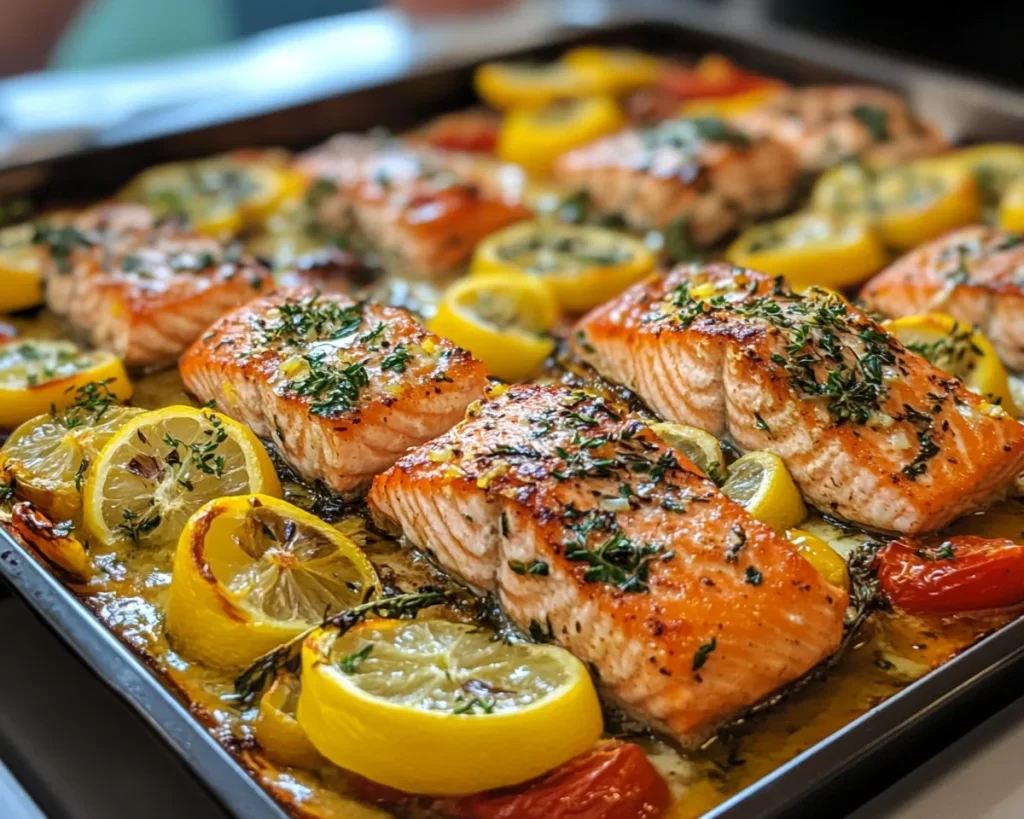
The Spring Dinner Party Roasted Salmon Tray Bake is a delightful one-pan meal that integrates the luxurious flavor of salmon with seasonal vegetables. This dish draws inspiration from traditional methods of roasting, where ingredients are tossed onto a tray and allowed to meld together in the oven. The salmon, often considered a key ingredient in many diets due to its rich flavor and health benefits, holds a central role in this recipe. The combination of roasting exposes the fish to high heat, creating a crispy exterior while maintaining a moist, tender interior.
Accompanying the salmon are vibrant spring vegetables like asparagus, bell peppers, and cherry tomatoes, all of which contribute to the dish’s visual appeal and overall taste. Each vegetable adds its unique flavor, ranging from the sweetness of the tomatoes to the slight bitterness of asparagus, creating a well-rounded and delicious experience. The use of fresh herbs, citrus, and seasoning elevates the flavors, making this dish not just wholesome but also restaurant-worthy for your dinner parties or family meals.
Why You’ll Love This
There are countless reasons to fall in love with this Spring Dinner Party Roasted Salmon Tray Bake. First and foremost is the **taste**. With the combination of salmon and seasonal vegetables covered in fresh herbs, the earthy and vibrant flavors come together in a truly satisfying dish. You’ll appreciate its **versatility** as you can easily swap vegetables based on what’s in season or what you have in your kitchen, making it an adaptable favorite.
Additionally, the **ease** of preparation is a standout feature. With just one tray to manage, you eliminate the stress of multitasking in the kitchen. The roasting process allows the vegetables to caramelize beautifully, providing an added depth of flavor without requiring constant attention. Contrary to common perceptions that seafood meals can be complicated or expensive, this recipe is **budget-friendly** and can be prepared in less than an hour—with minimal cleanup. An added bonus? The health aspect! Salmon is packed with omega-3 fatty acids, making this dish as nutritious as it is delicious. You can enjoy a wholesome meal without sacrificing flavor, making it all the more appealing.
Ingredients You’ll Need
- Salmon fillets: About 4 pieces, preferably skin-on for added flavor and moisture. Substitute with other fish like trout or cod if desired.
- Asparagus: Fresh, preferably medium-sized for an appealing texture. You can use green beans as an alternative.
- Cherry tomatoes: Add sweetness and color to the dish. Grape tomatoes work as an excellent substitute if needed.
- Bell peppers: Any color can be used, adding a crunchy bite. For lower carb options, zucchini or mushrooms can replace them.
- Olive oil: For drizzling over the dish. Avocado oil works as a healthy alternative.
- Fresh herbs: Such as dill or parsley for garnishing; dried herbs can be substituted but fresh gives a vibrant flavor.
- Lemon: Sliced for citrus flavor enhancement; limes can also add a different twist.
- Salt and pepper: Essential for enhancing the overall taste—that classic seasoning duo.
The balance of these ingredients creates a nourishing meal infused with the bright and lively flavors of spring, setting the stage for a wonderful dinner experience.
How to Make
- Preheat your oven to 400°F (200°C). This temperature is perfect for roasting as it helps to achieve a crispy exterior on the salmon while keeping it moist inside. Make sure your oven is at the right temperature before putting in the tray to avoid uneven cooking.
- Prepare your vegetables by washing them thoroughly. Cut the asparagus into manageable lengths, halving the bell peppers, and halving the cherry tomatoes. Uniform sizes ensure that all the vegetables cook evenly. You want them to be vibrant and tender but not mushy.
- Line a large baking tray with parchment paper or aluminum foil for easy cleanup. This step helps to minimize the sticking of the salmon and vegetables and makes cleaning up afterwards much simpler. Lay out all the vegetables first, spreading them as evenly as possible to avoid overcrowding.
- Drizzle olive oil generously over the vegetables, followed by a sprinkle of salt and pepper. This not only adds flavor but helps in caramelization while roasting. Toss everything together with your hands to make sure the veggies are evenly coated. Feel free to add any extra herbs or spices you like at this stage.
- Place the salmon fillets on top of the vegetables, skin-side down. This helps the skin crisp up beautifully and renders some delicious fat that flavors the dish. Squeeze fresh lemon juice over the salmon for a refreshing zest. If you prefer a stronger flavor, consider mixing herbs into the olive oil before drizzling it over the fish.
- Tuck a few lemon slices right next to the salmon for an added aromatherapy experience while roasting. The lemon will infuse the dish with a lovely citrus scent that pairs well with the richness of the salmon. It’s a simple addition that elevates the entire meal.
- Put the baking tray in the preheated oven and roast for about 25-30 minutes, or until the salmon is cooked through and flakes easily with a fork. While cooking, the vegetables should become tender and slightly caramelized, creating beautiful char marks. Make sure to check the salmon around the 20-minute mark to ensure you don’t overcook it.
- Once the salmon is cooked, remove the tray from the oven and let it sit for about 5 minutes. This resting time allows the juices to redistribute within the fish, making it even more delicious. Garnish with fresh herbs and serve hot for a mouthwatering meal.
Each step is designed not only to build flavor but also to ensure that even a beginner can successfully make this dish with ease. This method also allows you to enjoy the wonderful aromas enveloping your kitchen, setting the tone for a delightful meal.
Variations & Substitutions
Vegetable Variation: If you’re looking to switch up the vegetables, you could try using root vegetables like carrots and parsnips in place of bell peppers. Their earthy flavors offer a stark contrast to the rich fish, adding depth to the dish. Another option is to include leafy greens like spinach or kale towards the end of cooking, so they wilt slightly but retain some texture.
Herb Variation: For a different flavor profile, consider substituting dill with fresh basil or cilantro. These herbs impart distinct tastes that can completely transform the dish. Basil adds a sweet, robust flavor while cilantro introduces a fresh, zesty note, making it feel like a new dish.
Spice Variation: Want a little heat? Add red pepper flakes or a dash of cayenne pepper to your olive oil drizzle. This will give your roasted salmon and vegetables a pleasant kick that complements the richness of the fish beautifully.
Dietary Variation: For those who are on a gluten-free or dairy-free diet, this dish naturally fits both criteria. However, you can amp up the protein by incorporating chickpeas or lentils among the vegetables for a heartier option that also provides wonderful texture and flavor without compromising dietary needs.
Cooking Method Variation: Have a grill ready? You can easily grill the salmon and vegetables instead of roasting them in the oven. Just make sure to use a grill mat or skewers for the vegetables to prevent them from falling through. Grilling infuses the dish with a smoky flavor that’s hard to beat and adds an extra layer of complexity.
These variations give you the flexibility to customize your meal and fit different dietary preferences. Each change refreshes the dish while maintaining the spirit of the original recipe.
Common Mistakes to Avoid
One of the most common mistakes when roasting salmon is overcooking it. **Overcooked salmon** turns dry and unappetizing, which can ruin the meal. The key is to keep an eye on the fish and check for doneness at the 20-minute mark. Remember, salmon continues to cook even after being removed from the oven, known as residual cooking.
Another common pitfall is overcrowding the tray with vegetables. If they’re piled too high, they will steam rather than roast, preventing them from achieving that beautiful caramelization. **Even spacing** allows for proper airflow, which is crucial for that roasted flavor.
Don’t forget about seasoning! Lack of herbs, citrus, or basic salt and pepper will lead to a dull taste. Ensuring that you season every layer—veggies and salmon—is essential for a flavor-packed meal. Always taste-test and adjust as you go along to ensure each bite is a pleasure.
Lastly, while using frozen salmon may seem convenient, having it thawed beforehand will provide better results. **Frozen fish** can harbor excess water, leading to a soggy texture. Plan ahead to defrost your fish in the refrigerator overnight for best results.
By acknowledging these pitfalls, you can elevate this recipe and achieve that restaurant-quality experience right at home.
Storage, Freezing & Reheating Tips
The great part about this Spring Dinner Party Roasted Salmon Tray Bake is that it stores well, making it perfect for meal prep. If you have leftovers, allow the dish to cool down to room temperature before transferring it to an airtight container. Store it in the refrigerator for up to three days.
If you wish to freeze it, consider separating the components: store the salmon and vegetables in their own containers to preserve texture. This way, you can reheat them separately without compromising the quality. When properly stored, it can last up to three months in the freezer.
When it comes to reheating, opt for the oven rather than a microwave to avoid drying out the salmon. Preheat the oven to 350°F (175°C) and place the salmon and vegetables in an oven-safe dish, covered with foil to keep moisture in. Heat for about 10-15 minutes or until warmed through.
Also, when storing, keep in mind food safety best practices. Always refrigerate or freeze leftovers within two hours of cooking, ensuring you minimize any risk of foodborne illness.
Frequently Asked Questions
Can I use frozen salmon for this recipe?
Absolutely! However, it’s essential to thaw it properly in the refrigerator overnight for the best results. Cooking frozen salmon directly can result in uneven cooking and a texture that isn’t as desirable.
What vegetables work best in this tray bake?
You can use a variety of seasonal vegetables; asparagus, cherry tomatoes, and bell peppers are traditionally used, but feel free to experiment with zucchini, broccoli, or even root vegetables like carrots or parsnips. The key is to choose vegetables that roast well together.
How do I know when the salmon is fully cooked?
A perfectly cooked salmon will flake easily with a fork and should reach an internal temperature of 145°F (63°C). It can quickly go from perfect to overcooked, so start checking for doneness after 20 minutes.
Can I make this dish ahead of time?
Yes! You can prep all the ingredients a day in advance and then assemble and roast them on the day you plan to serve. The flavors will still be vibrant and delicious, making it a fantastic option for meal prepping.
What can I serve with this dish?
This roasted salmon tray bake pairs wonderfully with a fresh green salad, quinoa, or couscous. For a heartier option, consider serving it with roasted potatoes or a crusty bread to soak up the juices.
Conclusion:
The Spring Dinner Party Roasted Salmon Tray Bake stands out as a simple yet elegant dish that’s perfect for any occasion. With its delightful fusion of flavors, ease of preparation, and the ability to cater to various dietary needs, this recipe is an absolute treasure. Whether you’re hosting a dinner party or simply looking to enjoy a wholesome meal with your family, this baked salmon is sure to impress.
Don’t hesitate to customize it to your taste preferences! Embrace the journey of cooking and share this dish with your loved ones. After all, the kitchen is the heart of the home; invite others in to enjoy the warmth and joy that great food can bring. You might just find that this becomes a go-to recipe for every spring dinner party you host!