Prep time: 15 minutes
Cook time: 0 minutes
Total time: 15 minutes
Servings: 4
Spring is here and it’s the perfect time to celebrate the colorful and vibrant produce that comes into season. There’s something refreshing about crafting salads that not only burst with flavor but also showcase the best of what spring has to offer. Whether you’re a busy parent looking to whip up something nutritious in no time, a kitchen beginner seeking simple yet delicious ideas, or just someone wanting to eat healthier, these five flavorful salad ideas are here to inspire you this season.
What Is Spring Produce in Season: 5 Flavorful Salad Ideas?
This collection includes five distinct salad recipes that highlight spring produce. Each recipe is designed to be easy to prepare while maximizing taste and nutrition. Not only do these salads make use of abundant seasonal vegetables, but they also provide versatility, allowing you to make alterations according to your taste preferences. By incorporating fresh spring ingredients such as asparagus, peas, and various greens, each salad can serve as a delightful side or a satisfying main dish.
Why You’ll Love This
These salads are not just visually appealing; they are also packed with nutrients. The use of seasonal ingredients means you’re getting the freshest produce available, enhancing the flavors and textures of your meals. Each recipe is designed to cater to various dietary needs, whether you’re looking for something vegan, gluten-free, or simply delicious. Additionally, salads can easily be meal-prepped, saving busy individuals time in the kitchen while ensuring they have healthy options ready to go.
Ingredients You’ll Need
- Asparagus: 1 bunch, trimmed and cut into 2-inch pieces. A great source of vitamins A, C, and K, asparagus adds a delightful crunch.
- Cherry tomatoes: 1 cup, halved. Sweet and juicy, they provide a burst of flavor.
- Peas: 1 cup, fresh or frozen. They bring sweetness and a lovely pop of color.
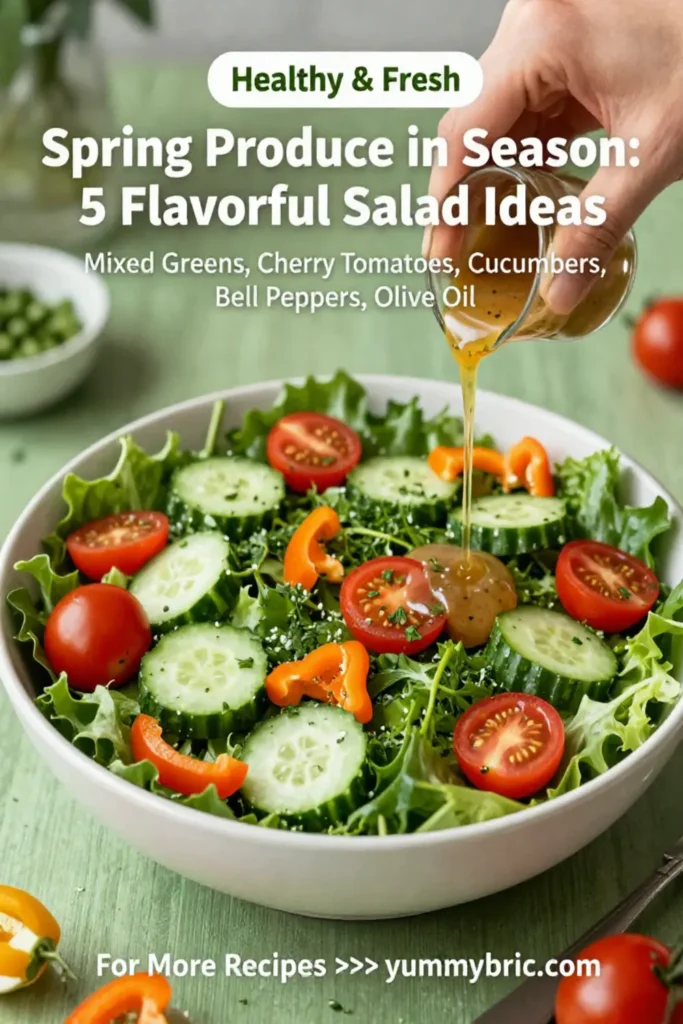
- Mixed greens: 4 cups, washed and dried. A blend of greens offers diverse textures and nutrients.
- Feta cheese: ½ cup, crumbled. Adds creaminess and a salty flavor that pairs well with vegetables.
- Olive oil: ¼ cup. Helps in dressing the salad for a rich, smooth consistency.
- Lemon juice: 2 tablespoons. Provides acidity to balance the flavors.
- Salt and pepper: to taste. Essential for enhancing the overall flavors.
How to Make
- Start by preparing the asparagus. In a pan of boiling water, blanch the asparagus pieces for about 2 minutes until they are bright green and tender-crisp. Immediately transfer them to a bowl of ice water to stop the cooking process. This step will keep the vibrant color and ensure the asparagus has a pleasing crunch.
- Next, in a large mixing bowl, combine the halved cherry tomatoes and peas. If using frozen peas, allow them to thaw slightly in warm water before adding them to the mix.
- Add the mixed greens to the bowl. Gently toss the vegetables together to distribute the colors and textures evenly. This is a great time to admire the beautiful mix of fresh spring produce.
- Once the greens and vegetables are well mixed, drain the asparagus from the ice water and add it to the bowl. Sprinkle in the crumbled feta cheese to enhance the flavor and creaminess of the salad.
- In a small bowl, whisk together the olive oil, lemon juice, salt, and pepper until well combined. Pour the dressing over the salad and toss gently until everything is evenly coated. The brightness of the lemon and the richness of the olive oil will elevate the salad.
- Serve immediately or let it chill in the fridge for 10-15 minutes for the flavors to meld. This salad can also be meal-prepped, so feel free to make it ahead of time and enjoy it throughout the week.
Variations & Substitutions
Variation 1: Quinoa Salad
For a more filling option, consider adding cooked quinoa to your salad. Quinoa is a great source of protein and elevates the nutritional value of your dish. Simply cook 1 cup of quinoa according to package instructions and mix it in with the veggies. This change not only adds texture but also makes the salad heartier.
Variation 2: Avocado Twist
Incorporate diced avocado for a creamy element and healthy fats. Avocado pairs beautifully with the ingredients and brings a smooth mouthfeel. Just be gentle when mixing to keep the avocado intact. This variation is perfect for those who love a rich taste while still keeping it light.
Variation 3: Nutty Flavor
Top your salad with toasted nuts such as almonds or walnuts for added crunch and flavor. Nuts introduce healthy fats and protein, while their crunch provides an enjoyable contrast to the soft ingredients. Toast them lightly in a skillet for added flavor before sprinkling them on top.
Variation 4: Herb Infusion
Feel free to add fresh herbs like basil, mint, or parsley for a pop of flavor. Chopped herbs can bring freshness and elevate the entire dish, making it even more vibrant. This adjustment is an excellent way to customize the salad based on your palate.
Variation 5: Protein-Packed Addition
To make your salad more substantial, consider adding a protein source such as grilled chicken, chickpeas, or even shrimp. This variation is ideal for those looking to make a full meal out of the salad without compromising on taste.
Common Mistakes to Avoid
When preparing salads, it’s important to avoid overdressing. Too much dressing can make salads soggy and unappealing. Start with a modest amount and add more gradually, allowing you to control the flavor while maintaining a pleasing texture. Another common issue is using wilted greens; always select fresh, crisp greens for the best overall flavor and presentation.
Also, pay attention to the cut sizes of your ingredients. Uniformity in size ensures even flavor distribution and makes for easier eating. Lastly, avoid completing your salad too early. If not consumed immediately, salads can lose their crunch, so it’s best to combine the ingredients shortly before serving.
Storage, Freezing & Reheating Tips
To ensure the freshness of your salad, it’s best to store the components separately, especially if you plan on keeping them for a few days. Place the mixed greens in a dry, airtight container, and store the other ingredients in separate containers. This will help maintain the crunch of the greens and prevent them from wilting.
If you need to freeze any components, consider freezing cooked quinoa or peas, as these will hold up better. Be cautious when freezing greens, as they tend to become mushy once thawed. When you’re ready to enjoy your salad again, simply assemble it fresh to maintain the best taste and texture.
For reheating, if you’ve added any cooked proteins or grains, you can warm those separately on the stovetop or in the microwave, but avoid reheating the salad itself, as it’s meant to be served cold or at room temperature.
Frequently Asked Questions
Can I use different vegetables in these salads?
Absolutely! One of the great things about salads is their versatility. Feel free to swap in your favorite vegetables or whatever you have on hand. Seasonal produce is always the best choice, so be creative and enjoy the flavors of spring.
How long will these salads last in the fridge?
If stored properly, the individual salad components can last about 3 to 5 days in the fridge. However, once combined with dressing, it’s best to consume them within 2 days to maintain optimal flavor and texture.
Can I make these salads ahead of time?
Yes! These salads are perfect for meal prep. You can chop and prepare the ingredients and store them separately until you’re ready to dress and serve them. This not only saves time but also keeps the greens fresh.
Are these salads suitable for meal prep?
Definitely! They are easy to prepare in large batches for snacks or meals throughout the week. Just store the dressing separately until you are ready to eat to keep everything crisp.
What are some good dressing options?
Alongside the olive oil and lemon dressing, you can try other vinaigrettes made from balsamic vinegar, apple cider vinegar, or even a yogurt-based dressing. The key is to choose something that complements your salad ingredients while enhancing their natural flavors.
Conclusion:
Spring produce is abundant and provides the perfect opportunity to create refreshing salads that delight the taste buds. With these five flavorful salad ideas, you can experiment with various ingredients, enhance your meals, and enjoy the vibrant flavors of the season. Don’t hesitate to customize each salad according to your preferences, ensuring that every bite is a celebration of spring! Remember, the key to a great salad is fresh ingredients, a good balance of flavors, and a sprinkle of creativity. Happy salad-making!