Prep time: 15 minutes
Cook time: 25 minutes
Total time: 40 minutes
Servings: 4
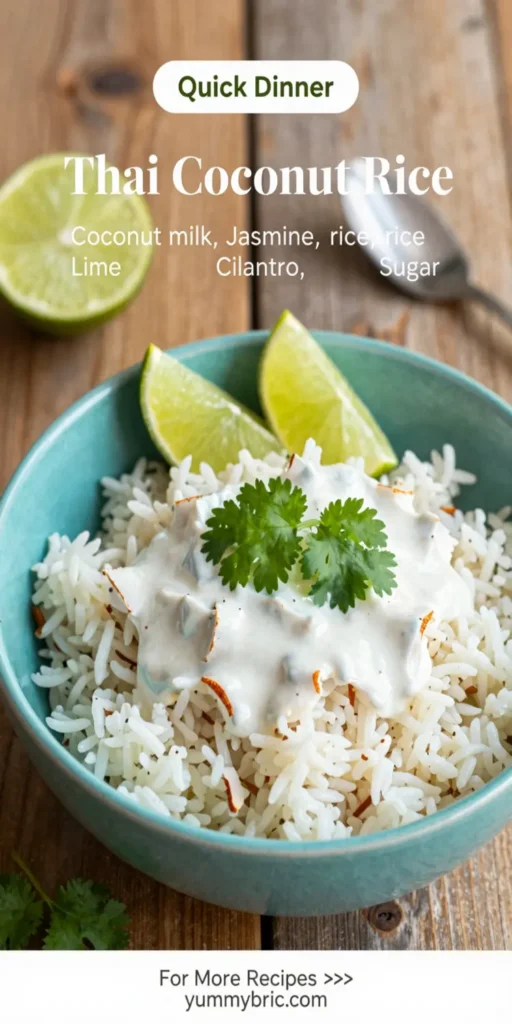
Thai Coconut Rice is a delightful dish that seamlessly marries fluffy rice with the rich, velvety taste of coconut milk. This recipe brings a taste of Thailand into your home kitchen, making it the perfect side dish for various meals, from spicy curries to grilled chicken. Given its simple preparation, it’s an ideal choice for busy parents and beginner cooks alike.
What Is Thai Coconut Rice?
Thai Coconut Rice is a traditional dish that originates from Southeast Asian cuisine. Unlike standard rice, this recipe incorporates coconut milk, yielding a creamy texture and a slight sweetness that enhances the overall flavor profile. The use of coconut milk is prevalent in many Thai dishes and elevates even the simplest meals into something special. With each bite, you experience the fragrant aroma of coconut, making it a heavenly complement to savory dishes.
Why You’ll Love This
There are countless reasons to fall in love with Thai Coconut Rice. The **rich coconut flavor** makes it a standout side dish that appeals to both adults and children. Furthermore, its unique taste sets it apart from regular steamed rice, offering something extraordinary for your family dinners or meal prep. Beyond its flavor, this dish is incredibly versatile: it pairs excellently with grilled meats, stir-fried veggies, and even spicy curries. Whether you’re prepping lunch for a busy week or planning a cozy dinner, Thai Coconut Rice is your go-to recipe that balances comfort and excitement on the plate.
Ingredients You’ll Need
- 2 cups jasmine rice: This fragrant rice variety helps to absorb the coconut milk, giving a sticky yet fluffy texture.
- 1 can (13.5 oz) coconut milk: Provides the creamy and rich flavor you want from this dish.
- 1 cup water: Necessary for cooking the rice; helps balance the richness of the coconut milk.
- 1 teaspoon salt: Enhances the flavors and balances the sweetness of the coconut milk.
- 1 tablespoon sugar (optional): Adds just a hint of sweetness, enhancing the overall taste of the rice.
- 1 pandan leaf (optional): This adds an aromatic layer that completes the Thai experience. If not available, feel free to skip this ingredient.
How to Make
- Begin by rinsing the jasmine rice under cold water for about 2-3 minutes. This step is crucial in removing excess starch, which helps achieve a non-sticky texture when cooked.
- In a medium-sized pot, combine the rinsed rice, coconut milk, water, salt, and sugar (if using). Stir well to ensure all ingredients are mixed evenly.
- Add the pandan leaf, if you’re using it. This will infuse the rice with a delightful fragrance. Bring the mixture to a boil over medium heat.
- Once it reaches a boil, reduce the heat to low and cover the pot with a tight-fitting lid. Allow it to simmer gently for 20 minutes without lifting the lid, as this will release steam and affect cooking.
- After 20 minutes, turn off the heat and let the rice sit covered for another 10 minutes. This resting time allows the rice to steam further, achieving a perfect texture.
- Finally, fluff the rice with a fork before serving. Be gentle to avoid breaking the grains, and serve warm alongside your favorite dishes.
Variations & Substitutions
Herbed Coconut Rice: For a refreshing twist, incorporate fresh herbs like chopped cilantro or mint into the rice before serving. These herbs add a lively freshness that pairs beautifully with the richness of the coconut. Simply toss them in right after fluffing the rice to allow their flavors to meld without losing their vibrant taste.
Spicy Coconut Rice: If you enjoy a bit of heat, consider adding sliced red chili or red pepper flakes while cooking. This will infuse the rice with a subtle spiciness that contrasts nicely with the creamy coconut milk. Start with a small amount to test your heat preference and adjust accordingly.
Vegetable Coconut Rice: For a more nutritious twist, add diced vegetables such as carrots, bell peppers, or peas into the pot before cooking. Not only will this increase the nutritional value, but it will also make the rice more colorful and appealing. Just be cautious not to overcrowd the pot, as it might affect the cooking time.
Common Mistakes to Avoid
When making Thai Coconut Rice, it’s essential to pay attention to a few common pitfalls. One mistake is not rinsing the rice properly. Failing to wash off excess starch can lead to overly sticky rice that may clump together. Ensure you rinse thoroughly in cold water until the water runs clear.
Another common issue is lifting the lid while cooking. Doing so can release steam, which is vital for properly cooking the rice. Keep the lid on during the cooking and resting periods to achieve fluffy rice.
Lastly, using too much liquid can result in soggy rice. Stick to the recipe’s measurements for coconut milk and water for the best results.
Storage, Freezing & Reheating Tips
Thai Coconut Rice can easily be stored for later use, making it a convenient option for meal prep. To store, let the rice cool completely before transferring it to an airtight container. It should last in the fridge for up to 3-4 days. For prolonged storage, you can freeze the rice. Make sure to portion it into freezer-safe bags, eliminating excess air before sealing. Frozen rice can last for about 1 month.
When reheating, you can use the microwave or stovetop. If using a microwave, add a splash of water to create steam, which helps prevent it from drying out. Cover the bowl with a microwave-safe lid or wrap to hold in moisture. On the stovetop, just add a couple of tablespoons of water to a non-stick pan and heat gently, stirring occasionally.
Frequently Asked Questions
Can I use regular rice instead of jasmine rice? Yes, you can substitute jasmine rice with other types of rice, such as basmati, although it may alter the flavor and texture. Jasmine rice offers a unique fragrance and stickiness that enhances the overall dish, so it’s recommended for the best experience.
Can I make this coconut rice ahead of time? Absolutely! You can prepare Thai Coconut Rice in advance. It’s best to store it in the fridge or freezer and reheat it when needed. This makes it a fantastic meal prep option, especially for busy weeks.
Is this recipe vegan-friendly? Yes, Thai Coconut Rice is entirely plant-based if you use coconut milk. The ingredients used are all vegan, making it an excellent choice for those following a vegan diet.
What can I serve with Thai Coconut Rice? This rice pairs wonderfully with various dishes, including Thai curries, grilled chicken, stir-fried vegetables, or even as a bed for your favorite protein. Its creamy flavor complements both rich and spicy entrees.
Can I add protein to this rice dish? Yes, you can enhance the dish by adding proteins like shrimp, chicken, or tofu. To do so, cook the protein separately and mix it into the rice just before serving, ensuring everything is warmed through together.
Conclusion: Thai Coconut Rice is an exceptional dish that enhances your meals with its unique flavor and creamy texture. With the right techniques, you can create this delightful rice dish in no time. From its rich cultural roots to its simple preparation, it provides flexibility and comfort, making it a staple for any kitchen. Enjoy experimenting with variations, and don’t forget to share it with friends and family!